
Families with delicate sportswear
You only tumble dry sportswear if its care label allows it, and choose a programme to suit the garment. GINETEX explains that care labels indicate how textiles can be treated.


First, choose a programme that suits the care label: a heat pump tumble dryer won’t make clothes that are marked ‘do not tumble dry’ suitable for tumble drying. Then compare the capacity for your usual family laundry, the programmes for smaller or synthetic loads, and the energy consumption per 100 eco cycles. A quick or sportswear programme isn’t automatically suitable for every garment.
You only tumble dry sportswear if its care label allows it, and choose a programme to suit the garment. GINETEX explains that care labels indicate how textiles can be treated.
You want enough capacity for your usual family laundry, but sometimes need to dry a smaller load of sportswear too. Milieu Centraal suggests that 8 or 9 kg may be suitable for a large family or anyone who uses their tumble dryer frequently.
You want to take energy consumption into account when choosing. Compare the current energy label and consumption per 100 eco cycles for the models you’re considering.
Check the care label and programme instructions first. Then compare the capacity for family laundry, the options for smaller loads and the energy consumption.
| What to consider | What to look for | Who it matters to |
|---|---|---|
| Sportswear and care labels | Check the drying symbol on each garment, then compare the fabrics and load size permitted by your chosen programme. | When drying sportswear, I want to be sure the label allows tumble drying and that the programme suits the fabric. Around 29% of consumers prioritise textile care. |
| Capacity for family laundry | Compare the drum capacity with the amount of everyday laundry you usually want to dry together; consider smaller loads separately. | For my family, I want the drum to suit our usual laundry load, not just a small sportswear wash. Around 23% of consumers consider family-sized capacity their top priority. |
| Energy consumption | Check the current A–G label and consumption in kWh per 100 eco cycles. To work out your own costs, use your typical usage and electricity tariff. | If I tumble dry frequently, I want to weigh up energy consumption against how much I use the dryer and its purchase price. Around 18% of consumers prioritise running costs. |
| Quick drying for small loads | Check the load size and fabrics allowed for the specific programme; the stated programme duration won’t necessarily apply to every load. | If I need a small sportswear wash quickly, I look for a suitable programme for that smaller load. Around 18% of consumers have this need. |
| Positioning and maintenance | Measure the space and access route; check the model dimensions, condensate drainage and filter instructions. | If space is limited at home, I want to know in advance whether the dryer will fit and how to maintain the water system and filters. Around 12% of consumers prioritise fitting the appliance into their home and its maintenance. |
A programme’s suitability doesn’t override the care instructions for an individual garment.
Check the care label first, then check the fabrics and load size specified in the manual for your chosen programme.
Since 1 July 2025, tumble dryers have been rated on the A–G scale. An older A+++ rating isn’t equivalent to a current A rating.
Compare models using the current label and their consumption in kWh per 100 eco cycles.
According to Bosch, the 40-minute programme on the Bosch WQG233DENL is intended for a small load of lightweight or synthetic laundry.
Check the permitted load for each programme and choose the drum capacity separately to suit your usual family laundry.
An unsuitable load may need extra drying time or another drying cycle.
The WQG233DENL is an 8 kg heat pump tumble dryer worth considering if you often dry small synthetic loads or half loads.
The TR86CBC86 from the 8000 AbsoluteCare range is worth comparing if you dry tumble-dryer-safe outdoor clothing as well as family laundry.
The BM3T3824W is an 8 kg heat pump tumble dryer to compare for its core features and energy consumption.
The Dutch DV90DG52A0ABEN from the 5000 series is a 9 kg model worth comparing if you often have larger everyday family loads.
The TEA528WP 8kg Active is an 8 kg heat pump tumble dryer to compare for its controls and features.
These Joybuy products are heat pump tumble dryers for family laundry; some models also list programmes for sportswear, synthetics or delicates. Always check the garment’s care label first: a programme name doesn’t make a garment marked ‘do not tumble dry’ suitable for tumble drying.
 No image available
An 8 kg model to compare for family laundry; check which programme suits the fabrics in your sportswear.
The product name lists a C energy rating, AI Smart Move and Wi-Fi via hOn. The product information lists 15 programmes, including 6 quick programmes, and a humidity sensor.
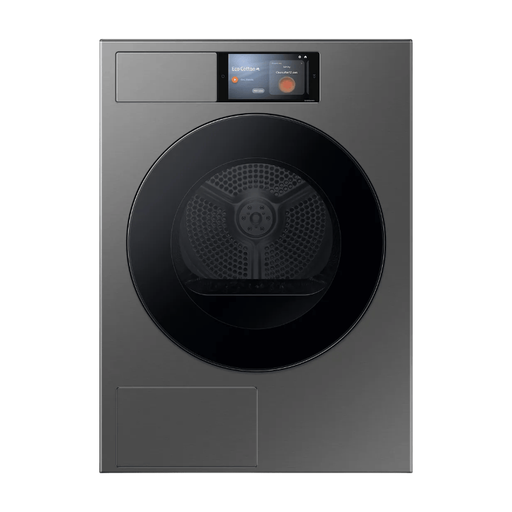 No image available
The 9 kg capacity is worth considering if you mainly want to compare models for larger everyday family loads; check the sportswear programmes separately.
The product name lists an A energy rating. The product information lists AI Dry+, Air Refresh and Hygiene Care.
 No image available
A 9 kg model with programmes for sportswear and synthetics; always choose a programme to suit the garment’s care label.
The product name lists a B energy rating and an NL/FR control panel. The product information lists Auto Dry, a self-cleaning condenser and Extra Quick 40'.
 No image available
A 9 kg model with programmes for sportswear and synthetics to compare for family laundry; check the instructions for each garment.
The product name lists a B energy rating and a German control panel. The product information lists AutoDry, a self-cleaning condenser and Sensitive Drying.
 No image available
An 8 kg model to compare for family laundry; check whether the synthetic or delicate programmes are suitable for the garment’s care label.
The product name lists an E energy rating. The product information lists 15 drying programmes and a humidity sensor.
No. Follow the drying symbol and instructions on the garment; a tumble dryer programme doesn’t override a ‘do not tumble dry’ warning. If tumble drying is allowed, choose a programme that suits the care label and the model’s manual.
No. A heat pump tumble dryer doesn’t vent moist air outside. The moisture collects in a tank or, if the model is connected to one, drains away through a condensate hose. Check the installation instructions for your chosen model.
Follow the model’s manual for filters and condensate. For dryers without Auto Clean, Bosch recommends cleaning the fluff filter after every use. If you use a condensate tank, Bosch recommends emptying it after every drying cycle.
According to the European Commission, since 1 July 2025 tumble dryers sold in shops and online have displayed the A–G scale. Also compare consumption per 100 eco cycles; an older A+++ rating isn’t the same as a current A rating.
No. The old A+++ rating isn’t directly equivalent to a current rating on the A–G scale. Compare models using the same label system and check their consumption in kWh per 100 eco cycles too.