If you regularly dry cotton in winter and also have smaller or mixed loads, compare heat pump tumble dryers by their energy use per 100 eco cycles, as well as by the programmes and load sizes that suit your washing. A larger capacity or short programme isn’t automatically the most economical choice, so check the load capacity for each programme and factor in drying time, space and maintenance.
Who is this choice relevant to?
People drying a mix of weekly washing
You dry cotton in winter, but also want to handle smaller or mixed loads. Check the programme and permitted load for each fabric type: the maximum drum capacity doesn’t tell you how much washing each programme can take.
Regular, energy-conscious users
You use your tumble dryer often and want to factor in its electricity consumption. Compare the current energy label and consumption per 100 eco cycles. Milieu Centraal and Energielabel.nl highlight energy use as an important point to consider when comparing models.
Buyers with limited laundry space
Your choice also depends on the space available, how condensation is drained and access to the filters. Check the dimensions and the installation and maintenance instructions for the specific model.
What should you look for when buying?
Start with the loads you actually dry. Then compare energy use and check that the tumble dryer will fit in your space.
| What to consider |
What to look for |
Who it’s for |
| Cotton and mixed washing |
Check the cotton and mixed-load programmes, the permitted load for each programme and the care symbols on your clothes. |
If you alternate between cotton and smaller or mixed loads, you’ll want a programme suited to both the fabrics and the load size; around 36% of consumers rank this flexibility as their top buying priority. |
| Energy use |
Compare the current A–G label and consumption in kWh per 100 eco cycles. Compare eco programmes on a like-for-like basis. |
If you dry clothes regularly, energy use may matter more than extra programmes or a lower purchase price; around 29% of consumers put energy consumption first. |
| Capacity |
Compare your usual cotton load with the stated capacity and check the lower limits for other programmes. |
If you alternate between larger cotton loads and smaller weekly loads, you’ll want a capacity that suits how you actually use the dryer; around 21% of consumers make suitable capacity their top priority. |
| Installation and maintenance |
Measure the available space and check the dimensions, water drainage and access to the lint filter. |
If your laundry area is short on space or needs a drain, installation and day-to-day maintenance are important practical considerations; around 14% of consumers put installation and maintenance first. |
Avoid common buying mistakes
-
Comparing an old A+++ label directly with a current A–G label
The energy label scale for tumble dryers has changed. The European Commission says the A–G scale has been used in shops and online since 1 July 2025. This means letters from different label systems aren’t directly comparable.
Compare current models using the current label and energy consumption per 100 eco cycles.
-
Using the maximum capacity for every programme
The maximum cotton load doesn’t tell you how much washing a mixed-load or other programme can take. A programme name also doesn’t guarantee that all your clothes can be dried together.
Check the permitted load in the manual and follow the care instructions on your clothes.
-
Looking only at the purchase price of an older drying technology
Milieu Centraal says that tumble dryers without a heat pump use more electricity than heat pump dryers. Vented dryers also need an outlet to the outside. The total cost depends in part on how often you use the dryer and your electricity tariff.
Weigh the purchase and installation costs against comparable energy use and the options available in your chosen space.
-
Assuming every model and load has a particular feature or short programme time
A brand’s description won’t necessarily apply to every version. For example, according to their product specifications, the Bosch WQG133DBNL and Siemens WT45H20MNL don’t have self-cleaning condensers. A short programme time doesn’t, by itself, mean a full cotton load will dry in that time.
Check the specifications and manual for the exact model, and make sure the lint filter is easy to reach.
If you use your dryer regularly, filter maintenance should be part of your routine: the Fire Service recommends cleaning the lint filter after every drying cycle.
Brands to consider
AEG
The AEG 7000 SensiDry TR7386T4B is an 8 kg heat pump tumble dryer with MixDry, a programme option for mixed loads.
- AEG states that this model uses 97 kWh per 100 eco cycles.
- This consumption figure applies to this model and the stated programme, not to MixDry or all AEG tumble dryers. The stated noise level is 67 dB.
Beko
The Beko BM3T3824W is an 8 kg heat pump tumble dryer with an OptiSense drying sensor.
- Beko states that this model has energy class C and a noise level of 64 dBA.
- The model specifications provide product information; on their own, they aren’t an independent assessment of drying performance.
Bosch
The Bosch WQG133DBNL is an 8 kg heat pump tumble dryer with cotton, mixed-load and bedding programmes.
- Bosch lists Auto Dry moisture sensing and a noise level of 63 dB(A) for this model.
- According to Bosch, the condenser on this version is not self-cleaning.
Siemens
The Siemens iQ300 WT45H20MNL is an 8 kg heat pump tumble dryer with autoDry and an easyClean filter.
- Siemens states that this model has a noise level of 62 dB(A) and comes with a condensation water drainage kit.
- According to Siemens, the condenser is not self-cleaning. An additional quick programme doesn’t tell you how long a full cotton load will take.
Miele
The Miele TWL780WP is a heat pump tumble dryer with a capacity of 9 kg.
- Miele states that this model has energy class C.
- The stated consumption of 101 kWh per 100 ECO Cupboard Dry cycles applies to this model and programme; it doesn’t tell you how much other programmes or models use.
Heat pump tumble dryers at Joybuy
These products are worth considering if you want to dry cotton and varying weekly loads in a heat pump tumble dryer. Check the programmes, load capacities and maintenance instructions for each model to make sure they suit your washing.
 No image available
Haier HD80-C367U1-DF heat pump tumble dryer
An option for cotton loads of up to the stated capacity of 8 kg.
Capacity: 8 kg of cotton. Energy class C. The product information lists I-Time and a drain hose included.
Clean the 3-in-1 filter after every cycle. Without the drain hose, you’ll need to empty the water tank.
Joybuy
 No image available
SHARP KDNHA8S6PWEBX heat pump tumble dryer
The product information lists both cotton programmes and a Mix programme for different types of washing.
Capacity: 8 kg. Energy class E. Programmes listed include Cotton Extra Dry, Eco Cotton and Mix; sensor drying is also mentioned.
According to the product information, the lint filter and water tank should be cleaned or emptied after use. The condenser needs regular cleaning.
Joybuy
 No image available
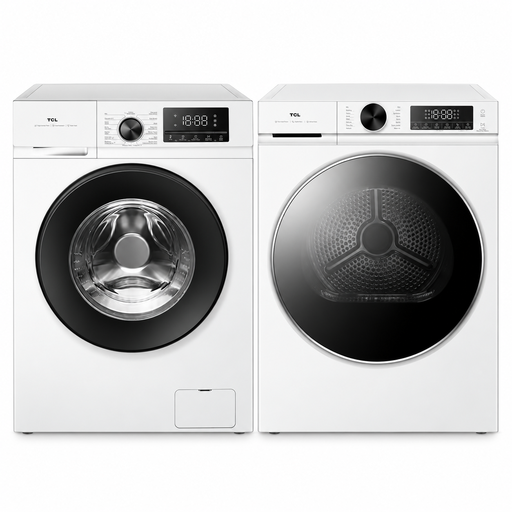
TCL washing machine and heat pump tumble dryer set
A set for anyone looking for both a washing machine and a separate tumble dryer; this isn’t a standalone dryer.
The product information lists an 8 kg washing capacity and 8 kg drying capacity, Eco Heat Pump technology and a spin speed of 1400 rpm.
The set includes two appliances. Check the space and connections needed for both.
Joybuy
 No image available
TCL DP4408WE1NL heat pump tumble dryer
The product information lists Auto Dry, which detects moisture and ends the programme when the washing is dry.
Capacity: 8 kg. Energy class E. 3D Drying and a 3-in-1 filter are also listed.
Joybuy
 No image available
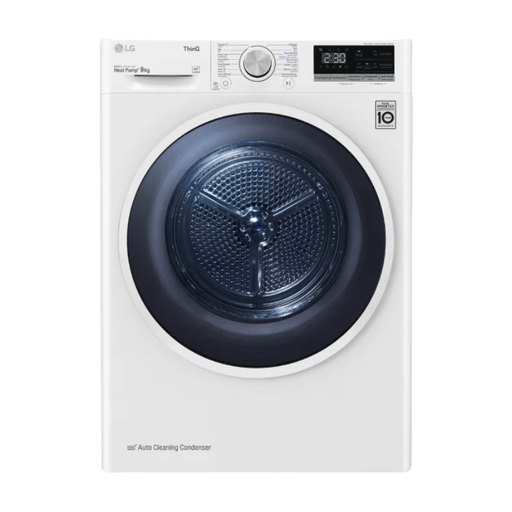
LG RH90V5AV6N heat pump tumble dryer
With a stated capacity of 9 kg, this model could suit anyone who dries larger loads.
Capacity: 9 kg. Energy class D. The product information lists Sensor Dry, a self-cleaning condenser and a noise level of 64 dB.
According to the product information, Eco Hybrid lets you choose between faster drying and more energy-efficient drying.
Joybuy
Frequently asked questions
Which energy figure should you compare if you dry clothes regularly?
Compare the energy use in kWh per 100 drying cycles for the eco programme on the current energy label. This gives you a basis for comparison, but your smaller, mixed or differently configured load may use a different amount.
Can you always dry cotton with other fabrics on a mixed-load programme?
No, not without checking the care instructions and programme requirements. First check the drying symbols, then consult the manual to see which fabrics and maximum load are permitted for the specific programme. A MixDry or Mix programme doesn’t mean every item of clothing is suitable for tumble drying.
How do you drain condensation water, and what maintenance is needed?
A condenser tumble dryer collects water in a tank or drains it through a connection; check which option is available with your chosen model and installation. The Fire Service recommends cleaning the lint filter after every drying cycle.
What are your rights when buying online and handing in your old tumble dryer?
When you buy online, you generally have a 14-day cooling-off period; check the applicable terms and conditions. In the Netherlands, statutory consumer guarantees apply, and you can contact the seller if there’s a problem. If a private individual buys a new, similar tumble dryer, the seller must, according to the Dutch government, take back the old appliance free of charge, including for online purchases.


