Start with where you’ll put it: check the ventilation, condensation efficiency and noise level, and make sure a drain or water tank will work practically in that spot. Then compare the capacity with your usual cotton load and check energy use on the same, current energy label. According to the Dutch Consumers’ Association, heat pump tumble dryers generally take longer to dry a load than traditional condenser dryers.
Who is this relevant to?
Someone with a small utility room
Wants to dry winter laundry indoors and is mindful of damp, ventilation and whether the dryer can be stacked in the available space. The Dutch Consumers’ Association covers condensation efficiency, while Bosch provides model-specific stacking information.
Someone in a flat with thin walls
Dries clothes close to a living room or bedroom, so compares the noise level of each model. The Dutch Consumers’ Association points out that noise levels vary between dryers.
Someone who regularly dries cotton laundry
Has regular cotton loads and weighs up capacity, programme duration and electricity use. The Dutch Consumers’ Association highlights the longer drying time of heat pump tumble dryers as something to bear in mind.
What should you consider when choosing?
First choose a setup that suits the space and drainage options. Then decide what capacity and drying time will work for your usual cotton loads.
Freestanding with a water tank
A good fit when: there’s no suitable drain nearby and you can easily access the water tank.
Bear in mind: you’ll need to empty the tank. Also check the ventilation and condensation efficiency.
Freestanding with a drain connection
A good fit when: there’s a drain nearby and your chosen dryer can be connected to it.
Bear in mind: check whether you’ll need a separate hose. A drain connection doesn’t remove the need to consider ventilation.
Stacked on a washing machine
A good fit when: floor space is limited and a suitable stacking kit is available for both appliances.
Bear in mind: check the appliance combination, dimensions and access to the water tank or drain before arranging installation.
The percentages below relate to the stated priorities when buying a heat pump tumble dryer for cotton winter laundry in an upstairs flat.
| What to consider |
What should you check? |
Who should pay extra attention? |
| Damp in the utility room |
Compare condensation efficiency on the current energy label and check the ventilation requirements for the intended location. |
If I dry winter laundry indoors, I want to avoid making a small room unnecessarily damp. Around 26% of consumers put damp control first. |
| Noise near a living room or bedroom |
Compare the stated dB rating for each model. The figure alone doesn’t tell you how intrusive the noise will sound. |
If the dryer is close to my living room or bedroom, I want to take its model-specific noise level into account. Around 21% of consumers give reducing noise top priority. |
| Energy use when drying regularly |
Compare the kWh information on the same current energy label and take the programme duration into account. |
If I dry cotton often, I want to be able to assess energy use across my regular drying cycles. Around 21% of consumers put electricity use at the top of their list. |
| Cotton load and drying time |
Compare the stated cotton capacity with your usual load and check the duration of the relevant programme. |
I want the capacity to suit my usual cotton laundry, rather than choosing solely on the basis of the largest load size. Around 16% of consumers prioritise a suitable capacity and drying time. |
| Positioning and installation |
Measure the space and access route. If stacking, check that the kit fits both appliances. |
If space is tight, I want to know in advance whether stacking and draining water will work practically in my home. Around 16% of consumers give positioning and installation top priority. |
Common pitfalls
-
Assuming a good energy rating means the room will stay dry
Energy use and condensation efficiency are two different things to compare. A good energy rating on its own doesn’t tell you how damp the utility room will get during use.
Compare both figures on the label and assess the ventilation where you’ll actually put the dryer.
-
Comparing an old A+++ rating directly with a current A–G rating
The energy label for tumble dryers was updated on 1 July 2025. The European Commission and Energielabel.nl describe the current scale as A to G, so older ratings aren’t directly comparable.
Compare models using the same labelling system and check which energy label applies to the exact appliance.
-
Assuming stacking or drainage is automatically taken care of
A stacking kit must be compatible with your chosen appliances. Direct drainage may require a separate hose.
Before buying, check the appliance combination, any parts you’ll need and the installation requirements for an upstairs location.
Allow for possible extra parts, such as a compatible stacking kit or drain hose, and make sure you have a practical plan for installation.
Brands to compare
Bosch
The Dutch Serie 6 models WQG235D2NL and WQG143DANL are heat pump tumble dryers with stated capacities of 8 kg and 9 kg respectively, according to Bosch Netherlands.
- Bosch provides information about stacking kits; check that the kit is suitable for your exact appliances.
- Compare the dimensions, connections and available space for each model before choosing a setup.
AEG
The AEG TR959M4C is a 9kg heat pump tumble dryer. The Dutch Consumers’ Association lists this specific model as energy class C under the label introduced in July 2025, and notes that it can be connected to a water drain.
- The stated capacity and drainage option give you practical points to compare when drying larger cotton loads.
- These features apply to the TR959M4C and don’t, on their own, tell you how noisy it is or whether it’s suitable for a cold location.
Beko
Beko Netherlands describes the BM3T3824B as an 8kg heat pump tumble dryer.
- The stated capacity gives you a practical point of comparison for cotton loads.
- Check the installation requirements for each model and compare noise levels and condensation efficiency separately.
Miele
According to Miele, the Dutch Miele T1 TEA528WP 8kg Active is a heat pump tumble dryer with an 8 kg capacity.
- Miele lists EasyControl, DryProtect and FragranceDos for this model.
- Check the noise level, condensation efficiency and installation requirements separately for your intended location.
Heat pump tumble dryers at Joybuy
These Joybuy products are freestanding heat pump tumble dryers with different stated capacities and energy ratings. Some models are described as having a water tank, while others offer a direct drainage option. Check the installation requirements for the exact model and the space where you plan to put it.
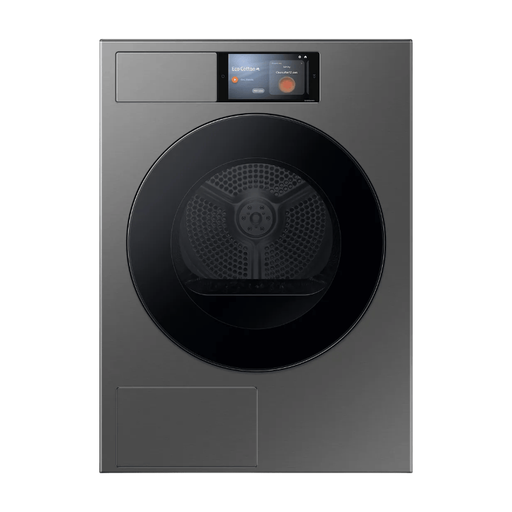 Image unavailable
Samsung DV90F09F4SU3 heat pump tumble dryer, 9 kg, energy rating A
A freestanding model with a water tank, worth comparing if the tank will be easy to reach in your chosen location.
Stated capacity: 9 kg. Energy rating: A.
Joybuy
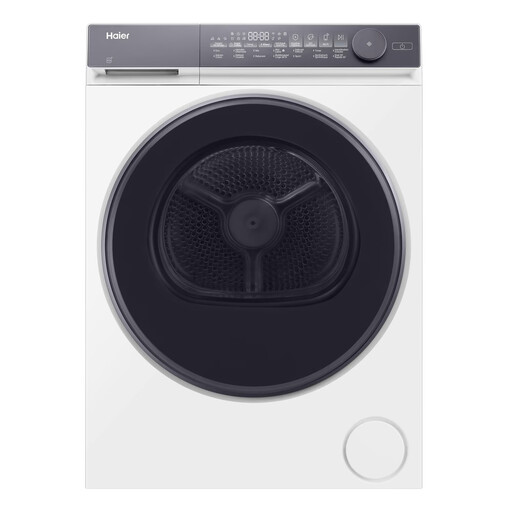 Image unavailable
Haier HD80-C367U1-DF heat pump tumble dryer, 8 kg, energy rating C
A freestanding model listed with a direct drainage option. Check that the connection will work in your chosen location.
Stated capacity: 8 kg. Energy rating: C.
Joybuy
 Image unavailable
Bosch WQH246DPFG Serie 6 heat pump tumble dryer, 9 kg, energy rating B
A freestanding model listed with a direct drainage option. Check the connection and installation space.
Stated capacity: 9 kg. Energy rating: B.
Joybuy
 Image unavailable
Bosch WQB245B40 Series 8 heat pump tumble dryer, 9 kg, energy rating B
A freestanding model listed with a hose drainage option. Check that the connection is suitable for your intended location.
Stated capacity: 9 kg. Energy rating: B. Version: German control panel.
Joybuy
 Image unavailable
SHARP KDNHA8S6PWEBX heat pump tumble dryer, 8 kg, energy rating E
A freestanding model with a water tank. Bear in mind that you’ll need to empty the tank after use.
Stated capacity: 8 kg. Energy rating: E.
Joybuy
Frequently asked questions
Can I put a heat pump tumble dryer in a cold, small room?
It depends on the instructions for your chosen model and the ventilation. For the dryers covered by its support guidance, Electrolux advises against use below 5 °C or above 35 °C and warns about condensation on cold surfaces. These limits don’t automatically apply to every model.
Can I put the dryer on my washing machine without a stacking kit?
Don’t put the dryer on your washing machine just because the external dimensions seem to fit. Bosch recommends using a suitable stacking kit to prevent vibrations from causing the dryer to fall. Check which kit is compatible with both appliances.
Do I need to clean anything after every drying cycle?
The Dutch Fire Service advises cleaning the fluff filter after every drying cycle because of the fire risk from built-up lint. Also follow the cleaning instructions for your exact appliance.
Which energy label should I use to compare tumble dryers?
Since 1 July 2025, the revised EU energy label has applied to household tumble dryers, with ratings from A to G. The European Commission says the new ecodesign requirements apply to appliances newly placed on the market, not retrospectively to appliances that were already on the market before that date and are still in shop stock. Check which label applies to the exact appliance.
What warranty applies in the Netherlands if my tumble dryer is faulty?
According to the Dutch government, the seller must put a faulty product right; the Netherlands doesn’t have a fixed statutory warranty period of two years. The solution depends on the product and the problem.


