Choose a heat pump tumble dryer based on the size of your usual cotton load, then check the programme duration for a full load, the current energy label and the space available. Milieu Centraal says that 8 or 9 kg may be suitable for a large household or frequent use. A short programme for a small load won’t give you a reliable indication of how long a full week’s washing will take to dry.
Who should consider this?
A family with a large weekly wash
You want to dry several cotton loads after the school week, so you’ll need a drum that suits the amount of washing you actually put in at once. Milieu Centraal says that 8 or 9 kg may be suitable for a large family or frequent use.
A household with a tight drying schedule
You need certain cotton clothes back quickly, so you pay attention to the programme duration for a full, relevant load, rather than just looking at a quick programme.
A frequent, cost-conscious tumble dryer user
You also use your tumble dryer regularly in winter, so you compare electricity consumption, condensation efficiency and maintenance requirements alongside the purchase price.
What should you look for in a heat pump tumble dryer?
First compare the drum capacity with your usual laundry load, then check the programme duration for a full load, followed by the energy label and installation requirements.
| What to consider |
What to look for when buying |
Who should pay particular attention? |
| Capacity for the weekly wash |
Compare the stated cotton capacity with the usual load in your washing machine, and consider whether you dry towels and bedding separately. |
After a busy school week, I want to dry large cotton loads in manageable batches. Around 36% of consumers put capacity first. |
| Drying time |
Check the duration of the cotton programme at full load and the amount of washing the quick programme is designed for. |
If clothes are needed again quickly after school or sport, I want to be able to estimate the time for a full cotton cycle. Around 29% of consumers prioritise a predictable drying schedule. |
| Electricity consumption |
Compare the current A–G label and the stated consumption per 100 eco cycles on a like-for-like basis. |
If I dry clothes regularly in winter, I want to factor consumption into the running costs. Around 21% of consumers prioritise electricity consumption. |
| Installation and maintenance |
Check the dimensions and installation instructions, condensation efficiency, filter access and water drainage options. |
If my laundry room is cold, cramped or prone to damp, I want to know whether the model can be installed there according to the instructions and is practical to maintain. For around 14% of consumers, installation and maintenance are the top priorities. |
Common buying pitfalls
-
Assuming a quick programme shows how long a full weekly wash takes to dry
Whether a short programme is suitable depends on the amount of washing and the setting. Its drying time won’t tell you how long a full cotton load will take.
Compare the same cotton programme at the same load size, and check how much washing the quick programme is designed for.
-
Comparing old and new energy labels directly
From 1 July 2025, the EU energy label scale for tumble dryers changed from A+++ to D to A to G. Ratings on the old and new scales aren’t directly comparable.
Compare current product information and consumption per 100 eco cycles on a like-for-like basis.
-
Assuming a self-cleaning condenser means no maintenance
Even with a self-cleaning condenser, the fluff filter still needs maintenance.
Follow the instructions for the exact model and clean the fluff filter after every drying cycle.
-
Overlooking your laundry room and water drainage
A cold, unheated room can make drying less effective and increase energy consumption. Suitable drainage can save you from having to empty the tank, but you’ll need a suitable drain point.
Consider the installation instructions, condensation efficiency and water drainage together. Also check whether you need an extra hose for the connection.
Brands to compare
Samsung
The DV90DB7845GBU3 is a heat pump tumble dryer with a capacity of 9 kg.
- Samsung lists an A energy rating and QuickDrive for this model.
- Claims about speed or savings don’t show how long a full cotton weekly wash will take. Check the exact model number.
Miele
The TWA520WP 8kg Active is an 8 kg heat pump tumble dryer with EasyControl and DryProtect.
- Miele also lists FragranceDos for this model.
- These features don’t tell you whether the model dries faster than other tumble dryers. Check that 8 kg is enough for your largest load.
Hisense
According to Hisense, the DH3S802BW3 is a heat pump tumble dryer with an 8 kg capacity and energy rating C.
- Hisense lists an automatic moisture sensor.
- A short programme doesn’t indicate how long a full cotton weekly wash will take to dry. Compare the programme details for your load.
AEG
The TR869T4C is a heat pump tumble dryer with a 9 kg capacity and energy rating B.
- This model has a stated condensation efficiency class of A and a maximum depth of 657 mm.
- Manufacturer information and claims about fabric care aren’t an independent comparison. Check the dimensions of the space available.
Beko
According to Beko, the BM3T3824B is a heat pump tumble dryer with an 8 kg capacity and energy rating B.
- Beko lists a moisture sensor for this model.
- The stated figures are 64 dBA and a depth of 67,2 cm. Consider noise and available space as well as capacity.
Heat pump tumble dryers for cotton loads
These heat pump tumble dryers have a capacity of 8 or 9 kg, making them worth comparing for larger cotton loads.
 No image available
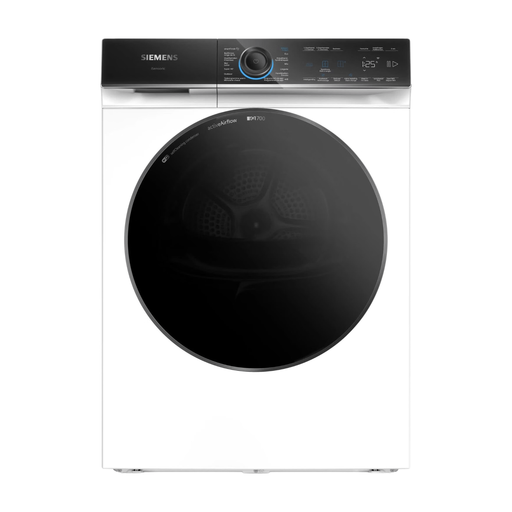
Siemens WR47B2C5FG iQ700, 9 kg
The 9 kg capacity is worth considering for larger cotton loads; compare it with the amount you usually dry at once.
Energy rating A.
View at Joybuy
 No image available
Bosch WQB245B40 Series 8, 9 kg
The 9 kg capacity is relevant for larger cotton loads; check that it suits the amount of washing you usually do.
Energy rating B and AutoDry. According to the product name, the control panel is in German.
View at Joybuy
 No image available
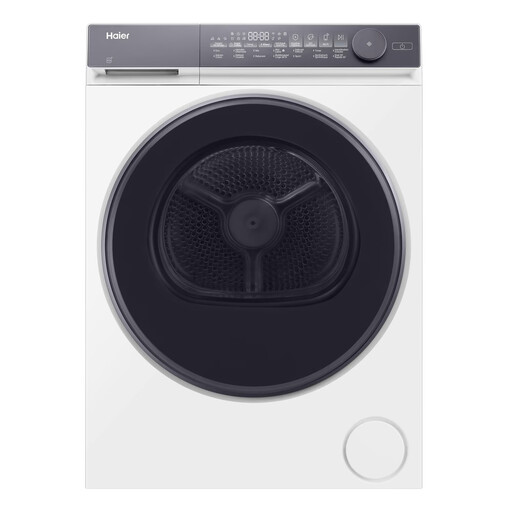
Haier HD80-C367U1-DF, 8 kg
With a stated capacity of 8 kg, this model is worth comparing for cotton loads that fit within that weight limit.
Energy rating C; Wi-Fi and Bluetooth are listed in the product name.
View at Joybuy
 No image available
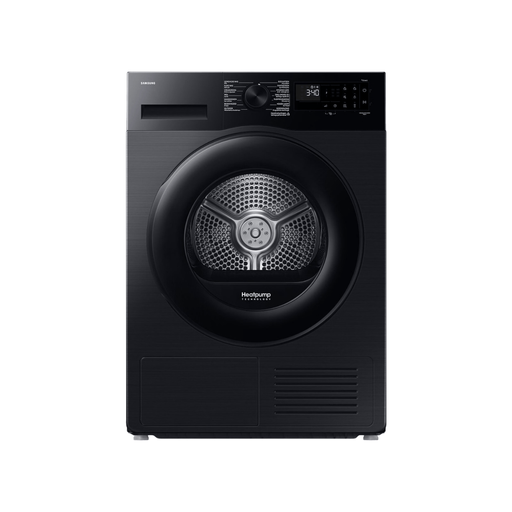
Samsung DV9UDG52A0AB 5000 Series, 9 kg
The stated 9 kg capacity is a useful point of comparison for larger cotton loads.
Energy rating C, 1400rpm and 64dB according to the product name.
View at Joybuy
 No image available
Midea MD205H80WB/W-NL, 8 kg
The 8 kg capacity can be compared with the size of your usual cotton load.
Energy rating C and sensor drying. According to the product information, the 30-minute quick-dry programme is designed for small amounts of lightly damp clothing, not for drying a full weekly wash.
View at Joybuy
Frequently asked questions
Can I put a heat pump tumble dryer in an unheated garage?
According to the Consumentenbond, a cold, unheated room can increase energy consumption and make drying less effective. Before buying, also check the permitted temperature range and installation instructions for the exact model.
Do I need to clean the fluff filter if the condenser is self-cleaning?
Yes, clean the fluff filter after every drying cycle. Also follow the model-specific instructions for the condenser and other parts.
Do I need a water drain for a heat pump tumble dryer?
Not necessarily: condensation water can be collected in a tank. If your model supports it, you can use a suitable water drain if there’s an appropriate drain point; you may need an extra hose.
Do I need an extra warranty to have my statutory rights?
No, you don’t need an extra warranty to have statutory rights. According to the Dutch government, there is no fixed statutory warranty period in the Netherlands; contact the seller if a product is faulty. Compare the terms of an extra warranty with what it actually offers.
Which energy label scale applies to a new tumble dryer?
Since 1 July 2025, the EU product information for tumble dryers has used the A to G scale, according to the European Commission. So don’t compare an old label such as A+++ directly with a current A rating. This is about how the product is labelled, not which rating you should buy.


