What should you look for when buying?
In a shared utility room that may be cold, first check that the location and moisture management are suitable for your chosen model. Then compare your usual cotton load, noise, energy consumption and maintenance routine.
| What to consider |
What to look for |
Who is this important for? |
| Location and moisture |
Check the condensation efficiency and the model-specific requirements for the room and ventilation. |
If I’m putting the tumble dryer in a shared utility room that may be cold, I want to limit moisture and make sure the location is suitable. Around 26% of consumers give the suitability of the location and moisture management top priority. |
| Cotton load and drying performance |
Match the capacity to your usual load. Where available, compare the measured results and programme duration for cotton. |
If I regularly dry towels or bedding, I want a suitable load size that comes out sufficiently dry at the end of the programme. Around 21% of consumers give cotton load size and drying performance top priority. |
| Energy consumption and running costs |
Compare the current energy label and consumption on a like-for-like basis, taking your own number of drying cycles and electricity tariff into account. |
If I dry laundry frequently in winter, I want to consider energy consumption alongside the purchase price. Around 21% of consumers give total running costs top priority. |
| Noise |
Compare the noise levels of the exact models and, if available, look at independent reviews of noise disturbance. |
If other people use the utility room or an adjoining room, I want to know how noisy the tumble dryer is during a cycle. Around 16% of consumers give noise for other users top priority. |
| Controls and maintenance |
Check how to maintain the filter and condensate tank, and whether a condensate drain will work in the chosen location. |
If several people use the tumble dryer, I want everyone to know who cleans the filter and empties the tank or checks the drain after each cycle. Around 16% of consumers give shared use and maintenance top priority. |
Heat pump tumble dryers at Joybuy
These Joybuy picks are 8 or 9 kg heat pump tumble dryers to compare for cotton laundry and moisture management in a shared utility room. Before buying, check that the programme duration, installation requirements and maintenance routine suit your needs.
 No image available
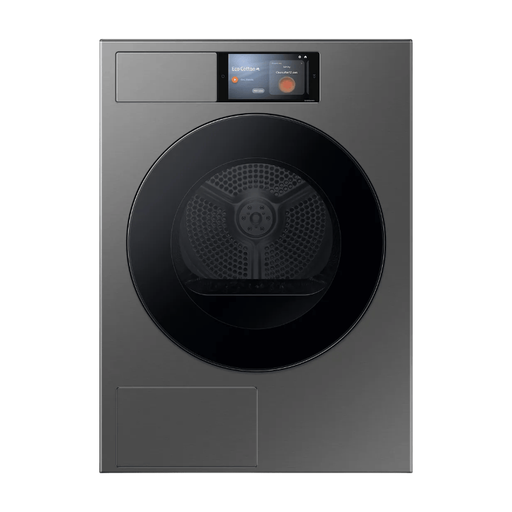
Samsung DV90F09F4SU3 heat pump tumble dryer, 9 kg, AI Home
An option to compare if you regularly dry cotton laundry and want to take condensation efficiency into account.
9 kg capacity; condensation efficiency class B; stated noise level 60 dB; A energy rating according to the product name.
The description mentions a condensate tank and cleaning the filter after every cycle.
Joybuy
 No image available
Haier HD80-C367U1-DF heat pump tumble dryer, 8 kg
An option to compare if your usual cotton load suits an 8 kg drum.
8 kg capacity; condensation efficiency class B; stated noise level 62 dB.
The product description mentions a supplied drain hose and cleaning the filter after every cycle.
Joybuy
 No image available
Bosch WQH246DPFG Serie 6 heat pump tumble dryer, 9 kg
An option to compare if you have a larger cotton load and want to consider noise and moisture management.
9 kg capacity; condensation efficiency class B; stated noise level 59 dB(A); Auto Dry and a self-cleaning condenser.
The description lists a drain hose as an option and says the lint filter needs cleaning after use.
Joybuy
 No image available
Bosch WQB245B40 Serie 8 heat pump tumble dryer, 9 kg, German control panel
An option to compare if you dry larger cotton loads and want to consider the cotton programmes.
9 kg capacity; Cotton programme, Auto Dry and a self-cleaning condenser; B energy rating according to the product name.
This variant has a German control panel. The description lists a condensate drain hose as an option and says the filter needs cleaning after use.
Joybuy
 No image available
SHARP KDNHA8S6PWEBX heat pump tumble dryer, 8 kg
An option to compare if your usual cotton load suits an 8 kg capacity and you want to explore different cotton programmes.
8 kg capacity; several cotton programmes; moisture sensors; stated noise level 64 dB(A); E energy rating according to the product name.
The description mentions a water tank and says the filter and tank need attention after use.
Joybuy
Frequently asked questions
What should I check if the shared utility room gets cold in winter?
Check the permitted installation and operating conditions in the manual for the exact model. Make sure the room meets them, and don’t treat a temperature limit in another model’s manual as a general rule.
Does a heat pump tumble dryer need to be connected to an external air vent?
No. Moisture is collected as condensate in a tank or, with a suitable connection, drained away. AEG describes both options. You should also follow the ventilation and installation requirements for your chosen model.
How can I estimate the electricity costs of drying my cotton laundry?
Use the energy consumption figure on a comparable basis, your expected number of drying cycles and your own electricity tariff. Multiply the consumption in kWh per cycle by the number of cycles and the price per kWh. The energy label is based on the eco programme; a different cotton programme may use a different amount of energy.
Which energy label must a newly marketed tumble dryer display in the Netherlands?
Tumble dryers offered in shops or online since 1 July 2025 must carry the EU energy label with its A–G scale. The European Commission notes that the former A+++ class isn’t the same as an A rating on the new scale.
Who should clean the lint filter when the tumble dryer is shared?
Agree that the person using the tumble dryer will clean the filter after every cycle, following the manual. The Netherlands Fire Service recommends cleaning it after every cycle. A self-cleaning condenser doesn’t replace this task.


