
Households with large bedding loads
You want to dry large, tumble-dryer-safe items after a busy week and need to know exactly what each programme can handle. Milieu Centraal and the Consumers’ Association offer useful guidance.


First, choose a tumble dryer whose programme instructions suit the bedding load you want to dry. The stated capacity alone won’t tell you whether every duvet is suitable for a particular programme. Then compare programme duration and energy use on a like-for-like basis, and check the dimensions, drainage options and filter instructions before you buy.
You want to dry large, tumble-dryer-safe items after a busy week and need to know exactly what each programme can handle. Milieu Centraal and the Consumers’ Association offer useful guidance.
You dry clothes regularly and compare the current energy label and energy use per 100 eco cycles, without losing sight of the time needed to dry your laundry. Energielabel.nl explains which figures you can compare on the label.
Your choice depends largely on the dimensions, water collection and drainage options, and how easy the appliance is to access for maintenance. The Consumers’ Association points out that a drain hose may be needed for drainage.
Start with the programme instructions for your bedding, then compare drying times, energy use and practical installation requirements.
| What to consider | What should you check? | Who is this important for? |
|---|---|---|
| Suitable bedding load | Compare the capacity with the manual and the load limit for the bedding or down programme. | If I want to dry large items, I need to know whether my particular fabric and load are allowed on the selected programme. Around 33% of consumers are primarily concerned with finding a suitable bedding load. |
| Drying time | Check the stated eco programme duration and the model-specific instructions for the load and bedding programme. | If I need my bedding on time after a busy week, I want to fit the programme duration around my schedule. Around 27% of consumers prioritise drying time. |
| Energy use | Compare the current A–G rating and the number of kWh per 100 eco cycles on the same type of product label. | If I dry clothes regularly, I want to factor in energy use without assuming that the eco figure also applies to every bedding programme. Around 27% of consumers are primarily concerned with energy use. |
| Installation and maintenance | Measure the space and check the installation instructions, drainage options and access to the filter. | If my utility room has limited space or I want maintenance to be straightforward, I need to know in advance which connections and tasks are required. Around 13% of consumers are primarily concerned with installation or maintenance. |
The stated capacity doesn’t guarantee that every duvet will fit in every programme. Load limits can vary between programmes.
Check the tumble-drying symbol on the fabric and compare the load limit in the manual for the programme you plan to use.
If the programme instructions specify a smaller load, or a large item is still damp at the end, you may need to run another drying cycle.
A claim about time or energy use may relate to a different load or programme from the bedding you want to dry.
Read the conditions attached to the claim, and use the stated eco programme duration only as a guide to that eco cycle.
The fluff filter still needs attention, even with a self-cleaning condenser. The Consumers’ Association recommends cleaning it after every drying cycle; a dirty filter can increase drying time and energy use.
Check how to access the fluff filter and follow the maintenance instructions for the model you choose.
Filter maintenance takes time on a regular basis, so bear in mind the tasks listed in the model manual.
The TR969V6C is a 9 kg heat pump tumble dryer with 3DScan. AEG also presents this model as suitable for duvets.
According to Beko, the BM3T3923W combines a 9 kg capacity with a down programme. The Consumers’ Association also lists a programme for duvets and down.
The WQG245D5NL is a 9 kg model with moisture sensing, a self-cleaning condenser and an option to drain condensation water.
Samsung describes the DV90DG6845LKU3 as a 9 kg model with an A energy rating and AI Dry+ moisture sensing.
According to Miele, the TED648WP 9kg is a heat pump tumble dryer with a 9 kg capacity, a reversing drum and separate drying programmes.
Joybuy’s selection of heat pump tumble dryers for larger laundry loads, with different things to consider for energy use, programmes and maintenance for each model.
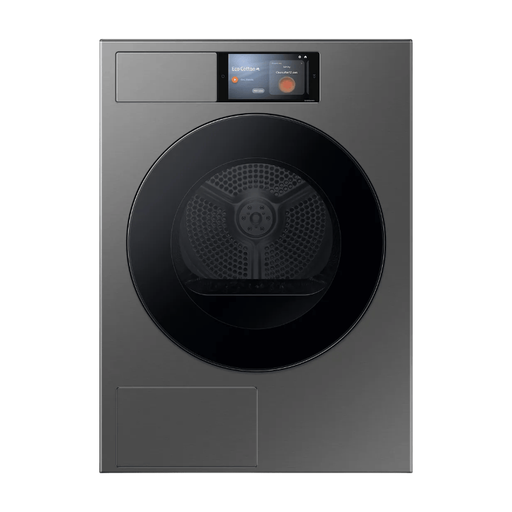 No image available
The 9 kg capacity may suit larger loads; always check the programme instructions before drying bedding.
The product information lists an A energy rating and 79 kWh per 100 drying cycles.
The product information also mentions moisture sensors and Hygiene Care for items including bedding.
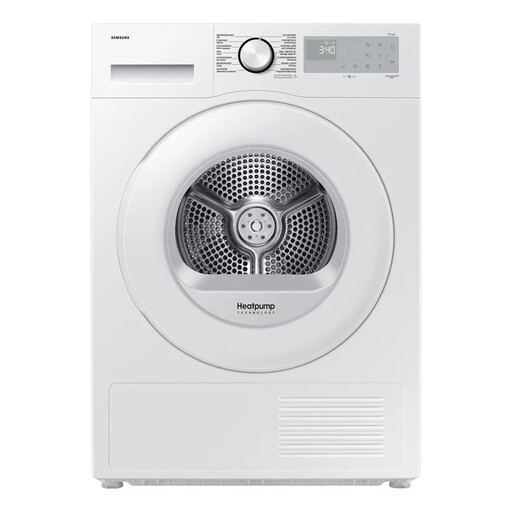 No image available
The 9 kg capacity may suit larger drying loads; check the maximum bedding load for each programme.
The product information lists moisture sensing, Optimal Dry and a self-cleaning condenser.
 No image available
The product name lists a 9 kg capacity, and the product information mentions a separate Bedding programme. Check the instructions and load limit for your bedding.
The product name lists energy rating B (German panel). Check which energy label and product information sheet apply to this version.
The product information mentions a self-cleaning condenser.
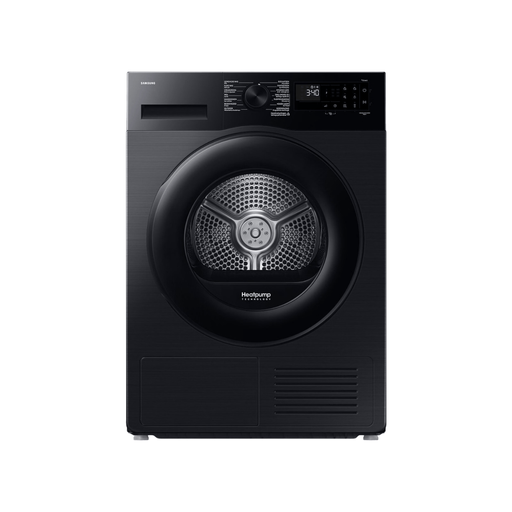 No image available
The 9 kg capacity may suit larger loads; check the limit for the selected programme before drying bedding.
The product name lists energy rating C. The product information mentions OptimalDry, which measures moisture and temperature.
 No image available
The 8 kg capacity may suit larger loads; check that your bedding load fits within the programme instructions.
The product name lists energy rating C. The product information mentions sensor drying and 14 drying programmes.
According to the product information, the 30-minute Quick Dry cycle is intended for small, slightly damp loads. Don’t assume it will dry a full bedding load in that time.
No, it depends on the item of fabric. According to GINETEX, a crossed-out tumble-drying symbol means the item must not go in the dryer; the dots indicate the permitted temperature setting. You should also stick to the load limit for the programme you choose.
No, a permanent drain isn’t always necessary: without a connection, the water collects in a tank that you’ll need to empty. The model and location must be suitable for a permanent drain; according to the Consumers’ Association, an extra hose may be needed.
Clean the fluff filter after every drying cycle and empty the water tank if you aren’t using a permanent drain. Follow the model manual for the condenser and moisture sensor. A self-cleaning condenser doesn’t mean the filter needs no maintenance.
Compare the current A–G rating and the stated number of kWh per 100 eco cycles on the product label. Energielabel.nl lists both figures as points to consider. The eco figure applies to that programme basis and not automatically to a different bedding programme.