
Family with large duvets
Regularly tumble-dries large, tumble-dryer-safe items and wants to avoid the outside being dry while the inside is still damp.


Choose a heat pump tumble dryer based on the quantity and size of your bedding, then compare drying performance, programme duration and energy use per 100 eco cycles. For large families or frequent use, Milieu Centraal recommends considering an 8 or 9 kg capacity. But capacity or a dedicated function does not guarantee dry bedding: check the maximum load for the programme on each model and make sure the item can move freely.
Regularly tumble-dries large, tumble-dryer-safe items and wants to avoid the outside being dry while the inside is still damp.
Wants to dry duvet covers and sheets in manageable loads and is looking for a capacity that suits the household’s laundry.
Takes energy use and day-to-day maintenance into account, without overlooking drying time and available laundry space.
Your choice largely depends on what you find most challenging at home: large items that roll up, a full family load or frequent drying.
Choose this when: you regularly dry large, tumble-dryer-safe duvets or duvet covers.
Consider: check the programme’s maximum load; a dedicated function does not guarantee that every item will dry evenly.
Choose this when: large duvet covers often become tangled in the drum.
Consider: Bosch lists this feature for the WRB247C9NL. Check how it works in the relevant programme, and don’t assume it will prevent problems with every load.
Choose this when: you tumble-dry often and want to consider both energy use and the time each cycle takes.
Consider: the energy label compares the standardised eco programme; it does not automatically show the energy use or duration of a bedding programme.
| What to consider | What should you check? | Who is this important for? |
|---|---|---|
| Even drying | Check the fabric care label, the programme’s maximum load and whether the model has moisture sensors or a reversing drum. Also feel inside a thick duvet when the cycle is finished. | When I dry large items, I want to avoid them rolling up and staying damp inside. Around 33% of consumers prioritise even drying. |
| Capacity for family laundry | Compare your load with the programme’s maximum load and check that bulky bedding can move freely. Milieu Centraal recommends considering an 8 or 9 kg capacity for large families or frequent use. | When I have a full load of bedding, I want to know whether it will fit into manageable cycles. Around 27% of consumers give suitable capacity their top priority. |
| Energy use and drying time | Compare the current A–G label and kWh per 100 eco cycles for a suitable capacity; check the programme duration separately. | When I tumble-dry frequently, I want to weigh energy use against the time a bedding programme takes. Around 20% of consumers prioritise energy use and drying time. |
| Installation and maintenance | Measure the space and access routes, and check drainage options, filter access and the installation instructions for the exact model. | In a small laundry space, I want to know in advance whether the dryer will fit and how much maintenance it requires. Around 20% of consumers give installation and maintenance their top priority. |
The stated capacity alone does not tell you how a bulky duvet will dry in a specific programme.
Check the fabric care label, the programme’s maximum load and whether there is enough room for the item to move. Where available, compare independent information on even drying.
If a large item cannot move freely or stays damp inside, you may need to run another drying cycle.
Since 1 July 2025, tumble dryers have used the European Commission’s revised A–G scale. An old label rating is therefore not directly comparable.
Compare the current label and energy use in kWh per 100 eco cycles for a suitable capacity.
A manufacturer’s description does not confirm that every fabric, filling or load will dry evenly.
Read the programme instructions for the exact model and check large items when the cycle is finished.
If items roll up, you may need to untangle the load or dry it for longer.
A drainage connection is only useful if the model supports it and you have a suitable drain. Dirty filters can affect drying performance.
Check the drainage options, any parts you may need and how easy the filters are to reach. Follow the manual when cleaning them.
You may need an extra drain hose. Without a suitable drain, you’ll need to empty the water tank by hand.
The 9000 AbsoluteCare Plus TR9HAMBURG is a 9 kg heat pump tumble dryer worth considering if you’re looking for a function for large items.
The Serie 8 WRB247C9NL is a 9 kg option for comparing drum movement and moisture-sensing features.
The T1 TEH788WP 9kg is worth considering if you want to compare a bedding programme with a reversing drum.
The DV90DG6845LBU3 is a 9 kg heat pump model to consider when comparing energy labels and smart controls.
This selection features 8 or 9 kg heat pump tumble dryers for household bedding. For each model, compare the programme’s maximum load and make sure large items have room to move.
 No image available
The stated 8 kg capacity is worth comparing with the bedding loads you usually dry.
Heat pump tumble dryer; 8 kg; energy label C; Wi-Fi (hOn).
 No image available
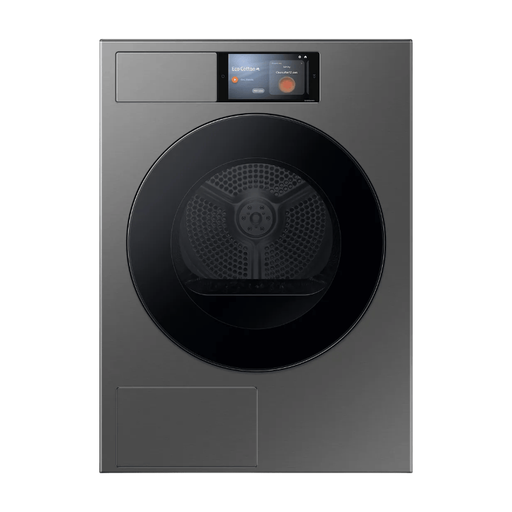
The stated 9 kg capacity can be compared with the size of your family’s laundry loads and the maximum load for the programme you choose.
Heat pump tumble dryer; 9 kg; energy label A; AI Dry+; Wi-Fi (SmartThings).
 No image available
This model lists a bedding programme; check the maximum load for the items you want to dry.
Heat pump tumble dryer; 9 kg; AutoDry; Sensitive Drying; energy label B (German panel).
The user instructions recommend filling the drum to around two-thirds of its capacity for optimum drying results.
 No image available
The 8 kg capacity gives you a starting point for comparing the model with your usual load; also check the maximum load for the bedding programme.
Heat pump tumble dryer; 8 kg; energy label E; white.
 No image available
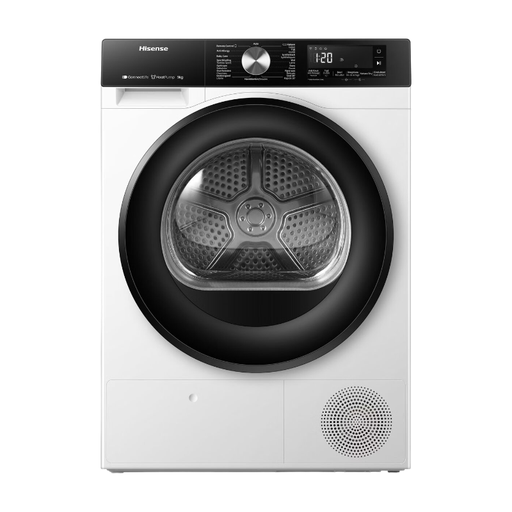
The stated 9 kg capacity can help you compare it with your usual household load; check the bedding programme’s maximum load.
Heat pump tumble dryer; 9 kg.
You can’t tell from the stated drum capacity alone. Check whether the care label says the duvet can go in the tumble dryer, how many kilograms the chosen programme allows and whether there’s enough room for the item to move. A thick or large duvet may still be unsuitable for a single drying cycle.
Untangle large items and check inside them for damp patches. Miele warns that large items can become tangled and recommends distributing large and small items more evenly. Also follow the fabric care label and your tumble dryer’s manual.
Not always: condensation can be collected in a tank. Many models also offer drainage as an alternative, provided the exact model supports it and you have a suitable drain. You may need an extra hose.
According to Brandweer Nederland, remove lint from the filter after every use, and follow the model manual for other filters and the heat exchanger. AEG lists dirty filters and a dirty condenser as possible causes of poorer drying results.
For tumble dryers, use the current A–G scale and also compare energy use in kWh per 100 eco cycles. The European Commission says the revised label scale has been in effect since 1 July 2025; energy use on the eco label does not automatically predict the energy use of a bedding programme.