
If you regularly dry bedding
You often dry large duvet covers or a filled duvet that is safe to tumble dry, and want to avoid damp patches. Check the care label and programme, and make sure the bedding can move freely in the drum.


Choose a heat pump tumble dryer with a programme that suits your bedding that’s safe to tumble dry, as well as features that handle small loads effectively. Check the care label and programme instructions. For small loads, compare features such as half-load settings and moisture sensors, and don’t treat the energy label as an exact prediction of the energy used for every load.
You often dry large duvet covers or a filled duvet that is safe to tumble dry, and want to avoid damp patches. Check the care label and programme, and make sure the bedding can move freely in the drum.
You’re looking for suitable programmes and moisture sensing for small loads. Bear in mind that a short programme isn’t automatically designed for bedding.
If you dry laundry regularly, you weigh up electricity use, purchase price and maintenance. The label figure relates to the eco programme and doesn’t directly predict the energy used for your small loads.
First check that your bedding can go in the tumble dryer and is suitable for the programme you’ve chosen. Then compare the features for small loads and assess energy use on a like-for-like basis.
| What to consider | What should you check? | Who is this important to? |
|---|---|---|
| Drying bedding effectively | Check the care label and programme instructions, as well as the permitted load size. | I regularly dry a duvet that’s safe to tumble dry or large duvet covers, and want to know whether my laundry can move freely. Around 34% of consumers put suitable bedding-drying performance first. |
| Small loads | Look for a half-load setting and moisture sensing; check which fabrics and load sizes a short programme is designed for. | I often run small loads and want a programme that suits the load, without mistaking a quick setting for a duvet programme. Around 33% of consumers give handling small loads their top priority. |
| Energy use | Compare the energy efficiency class and kWh per 100 eco cycles on the energy label. | I dry laundry regularly and want to weigh up energy use against the purchase price. Around 20% of consumers put running costs first. |
| Fitting and maintenance | Measure the available space and check the drainage options, filter access and maintenance instructions. | I have limited space or want to know how much maintenance is involved when drying laundry frequently. Around 13% of consumers start by considering fitting or maintenance. |
Manufacturer Bosch describes the WQG233DLNL’s 40-minute programme as suitable for a small load of synthetic or lightweight laundry. That doesn’t automatically make it suitable for bedding.
For each model, check the programme’s purpose, the fabrics it accepts and the permitted load size before drying bedding.
A capacity in kilograms doesn’t tell you by itself whether a particular duvet or large duvet cover can move freely around the drum. The programme and the size of the item matter too.
Check the care label, the instructions for the bedding programme and the amount of space available in the drum.
The energy efficiency class and consumption figures on the label are based on the eco programme. The Consumentenbond points out that two half-full cycles can use more energy than one full cycle.
Use the label figures to compare models on the same basis; don’t treat them as an exact measure of energy use for your small loads or duvet programme.
Even with a self-cleaning condenser, the fluff filter still needs maintenance. The Consumentenbond recommends cleaning the filters after every drying cycle.
Read the maintenance instructions for the exact model and check which filters you need to clean yourself.
The WQ33G1DENL is a model worth comparing if both bedding and small loads are important to you.
The Serie 6 WQG233DLNL is an example of a model to consider if you often run small loads.
The TR968V4C is worth considering if you’re weighing up a filled duvet that’s safe to tumble dry and the energy label.
The BM3T3823WMM is a specific 8 kg model to compare with dryers that have dedicated bedding features.
The DV90DG52A0ABEN is a 9 kg model to compare if larger loads and a reversible door are relevant to you.
These heat pump tumble dryers are worth comparing for small loads and bedding that’s safe to tumble dry. Check the programme instructions for each model against your laundry.
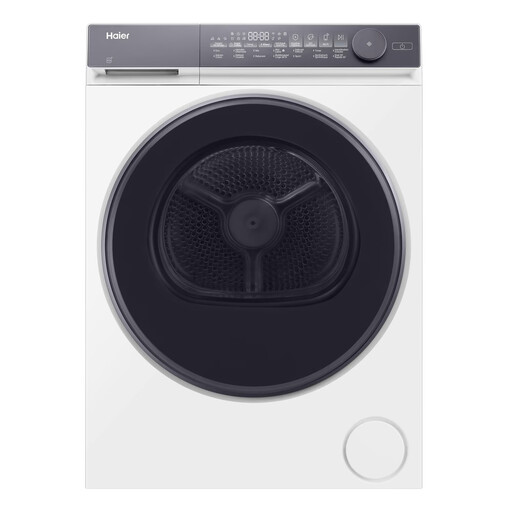 No image available
The product description mentions app notifications when lightweight items in a load are dry, which could be useful for mixed loads.
8 kg; energy efficiency class C; Wi-Fi and Bluetooth.
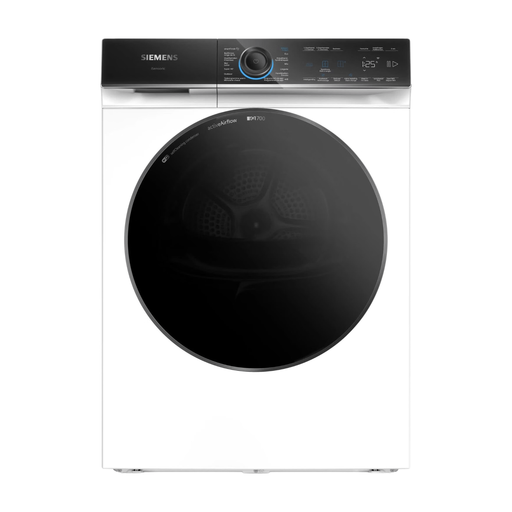 No image available
The description mentions a bedding programme with Reversible Drum Plus and automatic moisture sensing.
9 kg; energy efficiency class A; NL/FR control panel; AutoDry.
 No image available
The product description mentions a Bedding programme and AutoDry; check that the instructions are suitable for your bedding.
9 kg; energy efficiency class B; German control panel; self-cleaning condenser.
 No image available
The product description mentions sensor drying and two-way drum rotation; check separately whether there’s a programme for your bedding.
8 kg; energy efficiency class E.
 No image available
The product description mentions Auto Dry with moisture sensing; the stated programme duration alone doesn’t tell you whether a programme is suitable for bedding.
8 kg; energy efficiency class E; 30-minute programme.
No. A duvet can go in one only if the care label allows tumble drying and the programme instructions are suitable for the duvet. A bedding or duvet programme doesn’t make a duvet that must not be tumble dried suitable for the dryer.
That depends on the fabric and the programme instructions. Bosch describes the WQG233DLNL’s 40-minute programme as suitable for a small load of synthetic or lightweight laundry, so check whether your duvet cover meets those conditions.
Since 1 July 2025, the EU energy label for household tumble dryers has used the A to G scale, according to the European Commission. So don’t compare an old A+++ label directly with a current A, B or C rating.
Use the kWh per 100 eco cycles on the energy label as a standard basis for comparison. To calculate your own costs, you’ll need the relevant energy use per cycle, the number of cycles you run and your electricity price. The label figure isn’t a measure of the energy used for every small load or duvet programme.
Clean the fluff filters after every drying cycle, as recommended by the Consumentenbond. Follow the manual for the exact model when it comes to the condensate tank, condenser and moisture sensor. Even a self-cleaning condenser doesn’t mean the fluff filter needs no maintenance.