You're considering a smart investment for your household. A new tumble dryer is a significant expense, and choosing the right model can make a real difference to your energy bills and daily routine. It's easy to make the wrong choice: a model that consumes too much power, is too small for your family, or lacks the features you really need. This guide will help you make an informed decision for a new heat pump dryer based on facts and specifications.
What to Look for When Buying an Energy-Efficient Tumble Dryer?
The tumble dryer market is vast. To help you navigate the options, focus on a few objective criteria. These parameters, based on EU standards, provide a clear picture of long-term performance and costs.
- Energy Label and Consumption: Since 2021, tumble dryers use an energy label ranging from A to G. A heat pump dryer is typically the most energy-efficient option. Don't just look at the letter grade; pay close attention to the energy consumption in kWh per 100 drying cycles. This figure gives a tangible indication of the annual running costs.
- Load Capacity: The load capacity indicates how many kilograms of laundry the drum can hold. A drum that's too small means more frequent drying, which costs more energy. A drum that's too large is an unnecessary upfront expense. As a guideline:
- 1-2 people: 7 kg capacity.
- 3-4 people: 8 kg capacity.
- 5+ people: 9 kg or more capacity.
- Noise Level: The noise level is expressed in decibels (dB). A quiet tumble dryer produces less than 65 dB. This is especially beneficial if the dryer is located in or near a living area. The energy label also shows a noise class (A to D), with A being the quietest.
- Condensation Efficiency: This class (A to G) indicates how much moisture the dryer condenses and collects. Class A means that over 90% of the moisture is captured in the water tank or drained away, rather than being released into the room. This prevents damp walls and mould growth.
Our Top Picks for Your Investment: Popular Heat Pump Dryers
Based on the criteria above, we have highlighted several models that may be of interest. This selection is based on manufacturer specifications.
Beko B5T4824W - 8 kg capacity
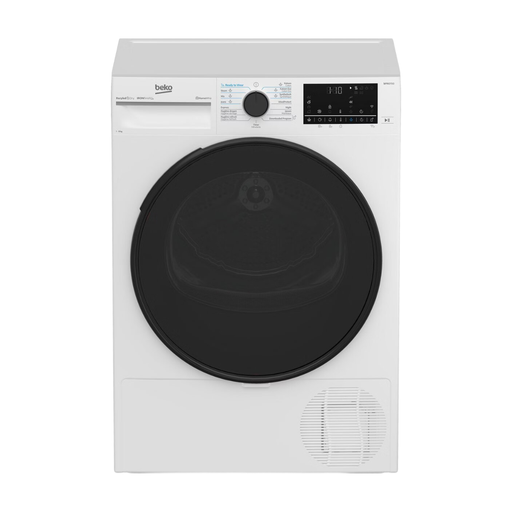
- Why this product: This Beko heat pump dryer combines very low energy consumption with an exceptionally low noise level. The IronFinish technology, which Beko claims reduces wrinkles with steam, is a practical addition for those who want to spend less time ironing.
- Benefits:
- Load Capacity: 8 kg
- Energy Consumption: 73 kWh per 100 cycles
- Noise Level: 60 dB (Class A)
- Condensation Efficiency: Class A
- Extras: Control via the HomeWhiz app, ProSmart inverter motor, and an anti-crease phase.
- Who is it for?: Families of 3 to 4 people looking for a very quiet and energy-efficient dryer with the convenience of a steam function to reduce ironing.
Beko BM3T3722W - 7 kg capacity
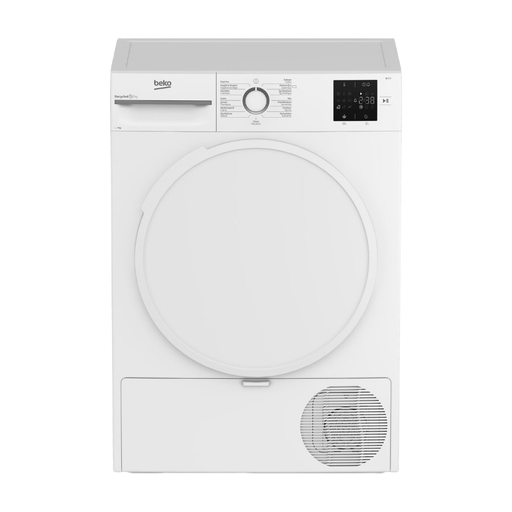
- Why this product: This model is a functional and more compact option for smaller households. It offers the core technology of a heat pump dryer, such as the EcoGentle technology which, according to the manufacturer, helps preserve colours.
- Benefits:
- Load Capacity: 7 kg
- Programmes: 15 different drying programmes
- Ease of Use: Digital display and delay start
- Extras: Humidity sensor and anti-crease phase.
- Who is it for?: Smaller households (1-2 people) looking for a functional heat pump dryer with a lower purchase price who use their dryer less frequently. However, note the higher energy consumption (133 kWh per 100 cycles, energy label E) compared to A-label models.
Samsung DV90DB7845GEU3 - 9 kg capacity
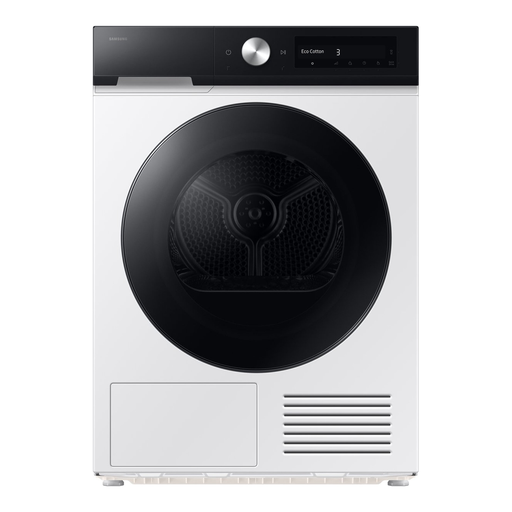
- Why this product: This Samsung heat pump dryer is designed for large families and users who value smart technology and speed. With a 9 kg dryer capacity, you can dry large loads in one go. According to Samsung, the SuperSpeed programme can dry a full load in just 81 minutes.
- Benefits:
- Load Capacity: 9 kg
- Energy Consumption: 79 kWh per 100 cycles (Energy Label A)
- Noise Level: 64 dB (Class B)
- Smart Features: SmartThings app integration, which the manufacturer claims helps select the optimal drying programme (Auto Cycle Link).
- Extras: Air Refresh to remove odours, QuickDrive for faster drying, and an anti-crease function.
- Who is it for?: Larger families (4+ people) who do a lot of laundry and can take advantage of the efficiency of a large drum and smart features. A great choice for those who want to buy a tumble dryer that offers smart assistance.
Didn't Find What You Were Looking For? Explore More Options
The models above are just a sample of the available options. You might be looking for a different brand, a specific size, or another budget. Every household has unique needs. For a broader overview of models with different specifications, you can browse our full range.
Explore our full range of freestanding tumble dryers for more choices.
Frequently Asked Questions about Heat Pump Dryers
What is the advantage of a heat pump dryer?
The main advantage is energy efficiency. Unlike a traditional condenser dryer, which expels hot, moist air, a heat pump dryer reuses the warm air. This process occurs at a lower temperature, which not only significantly saves on your energy bill but is also gentler on your clothes.
How much energy does a heat pump dryer consume?
Consumption varies greatly by model and is indicated on the energy label as 'kWh per 100 cycles'. Highly efficient A-label models consume around 70-80 kWh per 100 cycles. Less efficient models (for example, with an E-label) can use up to 130 kWh or more. It therefore pays to compare this figure carefully.
Can a heat pump dryer be placed in a cold room?
A heat pump dryer functions best in a room with an ambient temperature above 5 to 10 degrees Celsius. This is because the heat pump extracts warmth from the surrounding air. In an unheated shed or garage, drying times can become significantly longer in winter, and energy consumption may increase.
Written by the Joybuy Product Recommendation Officer
Our Product Recommendation Officers analyse product data to help you make an informed choice based on facts and specifications.