Choose a heat pump tumble dryer that suits your usual towel load, and compare its drying results and programmes for your fabrics; a towel programme or moisture sensor alone won’t guarantee dry, thick towels. Also compare energy consumption per 100 eco cycles, programme duration, condensation efficiency and the space available, as advised by Energielabel.nl and the Consumers’ Association (Consumentenbond).
Who is this choice relevant to?
People who dry thick towels
You want to avoid finding damp patches on thick towels after a cycle. So compare the drying results and suitable programmes before weighing up extra features; the Consumers’ Association and AEG highlight this as something to consider.
Households with larger seasonal loads
You wash several or larger loads when changing over your clothes for the season. Choose the capacity to suit your usual load, rather than relying on the highest figure on the appliance; Milieu Centraal recommends choosing a suitable size.
Buyers with limited space for a tumble dryer
The space available, condensate drainage and ventilation can all affect your choice. Compare each model’s dimensions and installation requirements; the Consumers’ Association and Bosch Nederland highlight these as important checks.
What should you consider when choosing?
Start with the towel load you usually dry and check which programmes are suitable. Then weigh up capacity, energy use and installation requirements based on your own laundry space and schedule.
| What to consider |
What to look for when buying |
Who is this important for? |
| Getting thick towels dry |
Check whether the model has a suitable towel or cotton programme and an adjustable dryness level. If necessary, dry thick towels separately from T-shirts. |
I don’t want to find damp patches on my thick towels after a suitable cycle; a suitable programme matters more to me than extra features. Around 31% of consumers say evenly dried towels are their main buying concern. |
| Capacity for your usual load |
Compare the stated capacity with your usual towel load and consider how many drying cycles you’ll need during the change of season. |
If I’m drying several towel loads when changing over my clothes for the season, I want a capacity that suits my usual needs, not just an occasional peak. Around 25% of consumers focus mainly on choosing the right capacity. |
| Energy use versus drying time |
On the current A–G label, compare the number of kWh per 100 eco cycles and the duration of the eco programme. Energielabel.nl identifies these as useful points of comparison; don’t compare them with other programmes as though they were measured on the same basis. |
I want to weigh up electricity use against the time I have available for a drying cycle; a shorter programme doesn’t tell me anything about energy use on its own. Around 25% of consumers put this trade-off first. |
| Suitability for your laundry room |
Measure the available space, compare the model dimensions and check the condensation efficiency. Also check whether a condensate tank will be sufficient or if a suitable drain connection is available. |
If my laundry room has little space or ventilation, I want to know in advance whether the appliance can be installed there in practice and how to drain the condensate. Around 19% of consumers say installation and drainage are their main buying concerns. |
Common buying mistakes
-
Mistaking a short programme for a quick full load of towels
The 40-minute programme described by Bosch is designed for a small amount of synthetic fabrics and lightweight textiles, not a full load of thick towels.
Check the permitted fabric type and load size for each programme. Only assess claims about drying time under the conditions specified for that programme.
An unsuitable cycle could mean you have to dry the towels again, using extra time and electricity.
-
Comparing an old A+++ label directly with a new A–G label
The energy label scale for tumble dryers was revised on 1 July 2025. The Consumers’ Association explains that the letters on the old and new scales are not directly comparable.
Compare current product information on the same label basis, and look at energy use in kWh per 100 eco cycles as well as the rating.
-
Ignoring condensation and ventilation when installing the appliance
According to the Consumers’ Association, moist exhaust air in a poorly ventilated laundry room can contribute to mould growth.
Compare the model’s condensation efficiency and check that the room has adequate ventilation.
Relevant brands to consider
Bosch
According to Bosch Nederland, the WQG133DANL is an example of an 8 kg heat pump tumble dryer with a dedicated towel programme and Auto Dry.
- Bosch lists continuous moisture monitoring and a condensate drain connection for this model.
- This model doesn’t have a self-cleaning condenser; the features listed don’t prove how your thick towels will dry.
Beko
According to Beko Nederland, the BM3T3824W is an 8 kg heat pump tumble dryer with an OptiSense drying sensor.
- Beko lists an energy rating of C for this model on the EU label scale in effect since 2025, and a noise level of 64 dBA.
- These model specifications alone don’t tell you how dry it will get thick towels.
LG
LG describes the RT90X8 as a 9 kg model with Eco Hybrid, which the manufacturer says lets you choose between faster drying and greater energy savings.
- LG also lists Sensor Dry and a self-cleaning condenser for this model.
- Check the conditions attached to programme and time claims before applying them to a towel load.
Siemens
According to Siemens Nederland, the WQ32J209NL is a 9 kg heat pump tumble dryer with autoDry.
- Siemens lists a noise level of 62 dB(A) for this model.
- This model doesn’t have a selfCleaning Condensor; the specifications don’t show that towels will dry faster or more evenly than in other models.
Miele
According to Miele, the TEC655WP is an 8 kg T1 heat pump tumble dryer with PerfectDry and app features.
- The features and the claim about gentle drying come from Miele.
- Miele’s statement that the appliance has been tested for 20 years of laundry care isn’t a confirmed individual lifespan or an independent towel test.
Heat pump tumble dryers at Joybuy
This selection focuses on heat pump tumble dryers with a stated capacity of 8 or 9 kg, so you can compare them with your usual towel and seasonal loads.
 No image available
Candy BR 8N3BX-S, 8 kg, energy rating C
Compare the stated capacity with your usual towel load; capacity alone doesn’t guarantee a particular drying result.
Heat pump tumble dryer; 8 kg; energy rating C.
Joybuy
 No image available
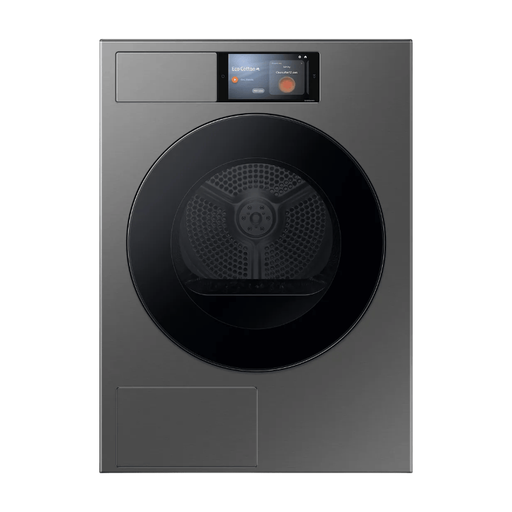
Samsung DV90F09F4SU3, 9 kg, energy rating A
The stated capacity may be useful if you’re planning to dry larger loads; compare it with your usual laundry and the space available.
Heat pump tumble dryer; 9 kg; energy rating A.
Joybuy
 No image available
Bosch WQH246DPFG Series 6, 9 kg, energy rating B
Compare the stated capacity with the loads you expect to dry when changing over your clothes for the season; drying results also depend on the load and programme you choose.
Heat pump tumble dryer; 9 kg; energy rating B; NL/FR panel.
Joybuy
 No image available
Bosch WQB245B40 Series 8, 9 kg, energy rating B
The stated capacity may help when planning larger loads; also check that the panel version suits your needs.
Heat pump tumble dryer; 9 kg; AutoDry; energy rating B; German-language panel.
Joybuy
 No image available
SHARP KDNHA8S6PWEBX, 8 kg, energy rating E
Compare the stated capacity with your usual load; choose a programme based on the fabric type and the care label instructions.
Heat pump tumble dryer; 8 kg; energy rating E.
Joybuy
Frequently asked questions
Can every towel go in the tumble dryer?
No. Check the care label on each towel before putting it in the tumble dryer. GINETEX distinguishes between tumble drying at a normal or lower temperature and textiles that must not be tumble dried; follow the instructions given.
Why do my towels still feel damp when lightweight clothes are dry?
Thick and lightweight fabrics can dry differently in the same cycle. AEG recommends sorting the load by fabric type, choosing a suitable programme and, if necessary, checking the selected dryness level.
What maintenance steps can help if drying results are disappointing?
Check that the load and programme are suitable for each other, and clean the filters and condenser as instructed in your model’s manual. AEG recommends these checks if drying results are poor; always follow the appliance manual for instructions.
Do I need a condensate drain?
Not always: you can use a condensate tank. For direct drainage, both the model and the location must be suitable; check whether a drain hose is needed and whether you have an appropriate drain connection.
Which energy label details should I compare?
Compare models using the same current label basis, and look at the rating, energy use in kWh per 100 eco cycles and the duration of the eco programme. Energielabel.nl lists energy use per 100 eco cycles as a useful comparison; don’t assume those figures apply to a different programme.


