
Vandaag of morgen in huis

Kwaliteit gegarandeerd

Welkomstaanbiedingen ontgrendelen: GRATIS bezorging | Tot 80% korting | Gratis 30 dagen JoyPlus-proefperiode
Download de app
The energy bill remains a key concern for many households. While washing and drying are necessary chores, they don't have to put a strain on your budget. A heat pump dryer is a smart investment that treats your clothes with care while significantly reducing your energy consumption.
But with so many models and features, the choice can be overwhelming. What load capacity suits your family? Which features are genuinely useful, and which are just marketing buzz?
My name is Joybuy, and as a Product Recommendation Officer at Joybuy, I'm here to help you navigate the options. In this article, I'll provide practical tips and present a selection of popular models, so you can make a well-informed decision that fits your needs and your budget.
Before we dive into the models, here are three key points to consider in your search for the right tumble dryer with a heat pump.
The load capacity, expressed in kilograms (kg), indicates how much laundry you can dry at once. A drum that's too small means drying more often, while a large drum that runs half-empty consumes unnecessary energy.
An energy-efficient dryer is the core of your savings. Heat pump dryers are inherently much more efficient than traditional condenser dryers because they dry at a lower temperature. Pay close attention to the energy label. Since 2021, the classes range from A (most efficient) to G (least efficient). An A-rated model can save you dozens of euros annually on your energy bill compared to an older or less efficient model.
Modern dryers offer more than just 'cupboard dry' or 'iron dry'. Features that make a real difference include:
Based on specifications and features, we have highlighted a few interesting models for you.

Why it stands out: This model from Comfee combines the efficiency of heat pump technology with a unique hygiene function. The built-in UV light is designed to eliminate bacteria and allergens, an interesting feature for families with young children or allergy sufferers.
Key benefits:
Who is it for? For households looking for a functional 8kg heat pump dryer with a focus on hygiene, without paying a premium price.
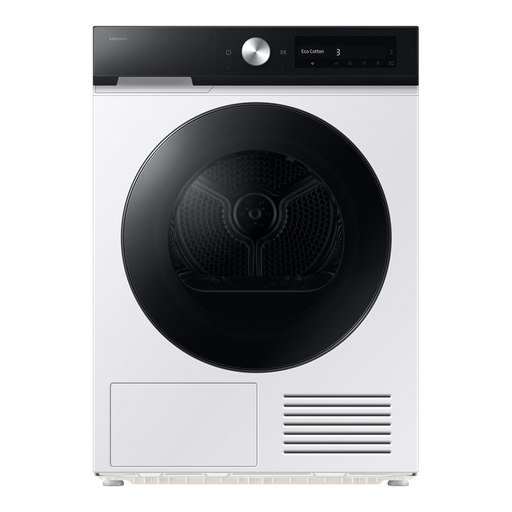
Why it stands out: This Samsung dryer sets the standard for energy efficiency with an energy class A rating. It is packed with smart technologies that optimise the drying process and enhance user convenience.
Key benefits:
Who is it for? For the tech-savvy user and families who want maximum energy savings and smart integration into their household. The 9kg heat pump dryer capacity is ideal for an average-sized family.
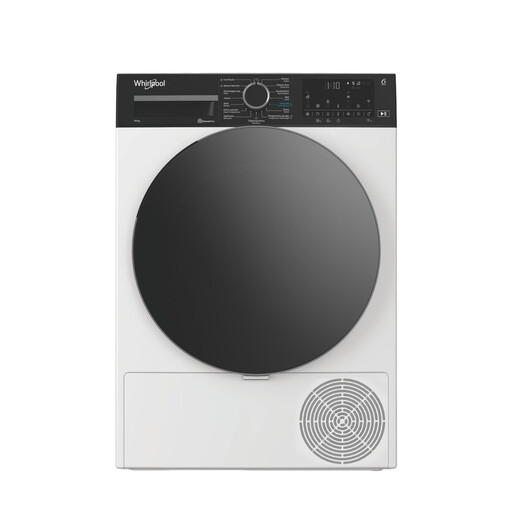
Why it stands out: With a drum capacity of a whopping 10 kg, this Whirlpool model is a powerhouse for large families. The focus is on smart and quiet drying, thanks to its 6TH Sense technology and advanced Inverter Motor.
Key benefits:
Who is it for? For large families who do a lot of laundry and value a large capacity and a quiet tumble dryer. The 10kg heat pump dryer is perfect for those who want to combine efficiency with volume.
Every household is unique. Perhaps you're looking for a different brand, a specific size, or another colour. The models above are a starting point, but there are many more options that might be a better fit for your specific situation.
Browse our full range and find the perfect match for your needs. See all our freestanding tumble dryers here.
The primary benefit is energy efficiency. A heat pump dryer reuses hot air instead of venting it. This allows it to dry at a lower temperature, which not only saves up to 50% more energy compared to a condenser dryer but is also much gentler on your clothes.
The exact savings depend on your current dryer and how often you use it. Switching from an old condenser dryer (energy class C or lower) to a new heat pump dryer (energy class A) can easily save you over €100 per year on your energy bill.
Maintenance is simple but crucial for efficient operation. Empty the lint filter in the door opening after every cycle. Most models also have a second filter or condenser at the bottom of the appliance that needs to be cleaned periodically, depending on the model. Always consult the user manual for your specific model for instructions.
