
Vandaag of morgen in huis

Kwaliteit gegarandeerd

Welkomstaanbiedingen ontgrendelen: GRATIS bezorging | Tot 80% korting | Gratis 30 dagen JoyPlus-proefperiode
Download de app
Healthy crackers might seem easy to compare, but the packaging doesn’t always tell the full story. A product may be marketed as “light”, “low-carb” or “high in fibre”, yet the nutritional values can vary significantly between different varieties. What’s more, a larger pack isn’t automatically better value if the crackers lose their crunch soon after opening.
As a Joybuy Product Recommendation Officer, I’ve filtered the most important information based on verifiable product data. This way, you can see which healthy crackers suit your breakfast, lunch or snack time, and which pitfalls are best avoided.
“Light” can refer to the weight or thin texture, not necessarily to a lower calorie count. For example, Bolletje Light Whole Grain Crackers contain 414 kcal per 100g. That’s comparable to many other crunchy crackers. With Leev Organic Low-Carb Tomato Oregano Crackers, the carbohydrate content is listed as 10.9g per 100g according to the product information, but the fat content is 31g per 100g.
Always check the nutritional values per 100g rather than just the front of the packet.
Wholemeal crackers and high-fibre crackers can be a practical way to include more grains and fibre in your diet. However, portion size, salt, fat and toppings still matter. Wasa High-Fiber Crackers contain 26g of fibre per 100g according to the product information, while Wasa Delicate Crackers Sea Salt contain 5.4g.
A higher fibre content doesn’t make a product suitable in every respect. Always check the ingredients list and choose a portion that fits your usage occasion.
Many crackers contain gluten, wheat, rye, barley, sesame or milk. Crackers with seeds can also contain multiple allergens at once. So read the allergen information before you order.
Also pay attention to the packaging. A product with several smaller packs, such as 4 individual wrappers, can stay crunchier for longer than one large bag that’s opened frequently. Store crackers according to the label in a cool, dry place and seal the packaging well after opening.
With wholemeal crackers, wholemeal flour or whole grain should ideally be clearly listed in the ingredients. The order indicates which ingredients were used most. Bolletje Whole Grain Crispbread is made with 100% whole grains according to the product information. g’woon Wholemeal Crispbread contains 48% wholemeal rye flour and 16% wholemeal wheat flour, among other ingredients.
Also look out for additions such as oil, syrups, sugar and salt. A cracker made with wholemeal flour can still contain various other ingredients.
Use the nutritional information table to compare products fairly. Here are a few examples:
These figures come from the supplied product information. Always check the current label at the time of purchase, as recipes and packaging can change.
For breakfast and lunch, sturdy crispbreads and multigrain crackers are a handy base for toppings. Think of cheese, cottage cheese, vegetable spread or slices of vegetables. For a snack, small, crunchy crackers or individually wrapped sandwich products are more practical.
Crackers with seeds, such as sesame, linseed and pumpkin seeds, add extra flavour and a more distinct bite. Bear in mind allergens and the fact that seeds and oils can increase the fat content.

Why this fits the profile: An accessible wholemeal option for breakfast, lunch or a simple snack. The pack contains 4 sets, which is handy for regular use.
The choice is based on the mention of 100% whole grains and 14g of fibre per 100g, not just a marketing claim on the front.
100% whole grains; 14g fibre per 100g; suitable for breakfast and lunch.

Why this fits the profile: Ideal for those who value a clear fibre listing and a firm rye crunch for everyday crackers with toppings.
The product information states 26g of dietary fibre per 100g. This allows you to compare the fibre claim directly against energy, fat and salt.
26g fibre per 100g; 300g pack; ingredients include wholemeal rye, wheat and oats.
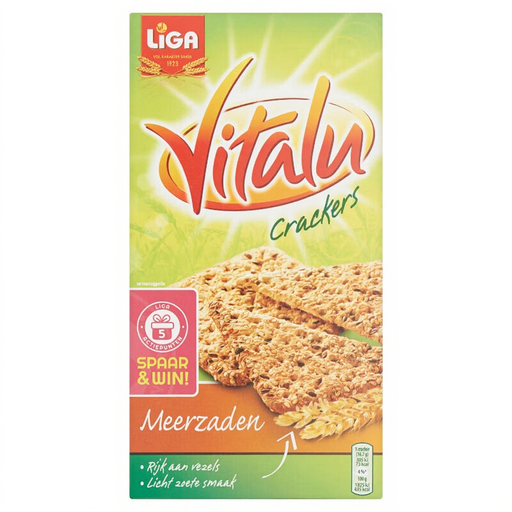
Why this fits the profile: Ideal for those who consciously choose crackers with seeds and a pack that’s practical for multiple eating occasions.
The product information lists the amounts of sesame seeds, linseeds and pumpkin seeds. This makes the composition more specific than a general reference to “multigrain”.
69.2% wholemeal wheat flour; sesame, linseed and pumpkin seeds; 2 resealable packs inside the outer packaging.
We’ve put together a full, up-to-date list of products that fully meet these strict selection criteria and comply with current European safety regulations.
Choose wholemeal crackers or crispbread with a clear mention of wholemeal flour and a fibre content that suits your preference. For breakfast and lunch, sturdy varieties are handy for crackers with toppings such as cheese, egg, vegetable spread or tomato. Also consider the salt content of the whole meal, including the toppings.
Not automatically. Crackers with seeds can add extra flavour and texture, but check the full ingredients list and nutritional information table. Look at the amount of fibre, fat, saturated fat, sugar and salt. Also check whether sesame, soya, egg, milk or other allergens are listed.
Store the packaging in a cool, dry place away from direct sunlight. Seal an opened bag well or use a resealable container. Individual portions can be practical when you take crackers to work or school. Always follow the storage advice and the best-before date on the label.
