
Livraison le jour même et le lendemain

Qualité garantie

Débloquez vos offres de bienvenue: Livraison GRATUITE | Jusqu'à -80 % | 30 jours d'essai gratuits à JoyPlus
Téléchargez l'application
A health monitor for home use may seem easy to choose. However, blood pressure monitors, blood glucose monitors, thermometers, pulse oximeters and smart bathroom scales can vary considerably in how they work, what accessories they need and how reliable their readings are. A low price may not mean much if you later need to buy extra parts or use the device incorrectly.
The main pitfalls to watch out for:
Don’t just look at the large numbers on the packaging. For a blood pressure monitor, check:
The Sinocare Arm Type Electronic Sphygmomanometer comes with an upper-arm cuff, four AAA batteries and a manual. The product description also lists a 3.6-inch LCD screen, one-button operation and irregular heartbeat detection. These features make it straightforward to use, but you should still take measurements in accordance with the instructions.
With a thermometer, it’s important to know whether it measures temperature on the forehead, in the ear or from an object. These methods are not directly comparable. If you want to monitor changes, always use the same method.
A complete set can be practical for families and carers. Check whether batteries, a storage case, cuff, test strips, lancets and cables are included.
Compatible strips are essential for a blood glucose monitor. According to the product information, the Sinocare Safe AQ Smart comes with 50 test strips, 50 lancets and a lancing device. The monitor only works with the matching strips. The Sinocare Safe AQ Pro I set also includes a monitor, a lancing device, 50 strips and 50 lancets. Always check the expiry date and store strips as directed on the packaging.
A blood glucose monitor is intended for personal self-monitoring. Don’t share a lancing device or lancets with anyone else, and dispose of used lancets safely.
For day-to-day health monitoring at home, a clear screen and simple controls are often more important than a long list of features. Look for:
A smart bathroom scale can show your weight, BMI and other readings. The Smart Body Fat Scale lists 25 measurements, Bluetooth 5.4, a maximum capacity of 180 kg and a measurement increment of 0.05 kg up to 100 kg. The manufacturer states that bioelectrical impedance measurements are intended for health monitoring only, not for diagnosis or treatment. According to the product information, the body fat and heart rate functions must not be used by people with implanted electronic medical devices, such as a pacemaker.
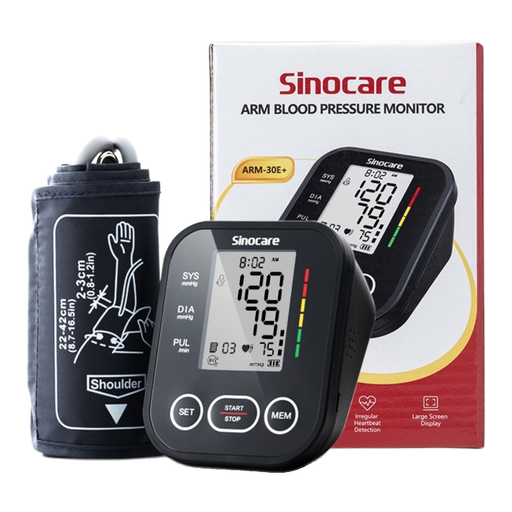
Why it suits this profile: One-button operation and a large LCD screen make this a practical first blood pressure monitor for home use or for sharing with the family.
The set includes an upper-arm cuff, four AAA batteries and a manual, so the essential accessories are ready to use straight away.
3.6-inch LCD screen, one-button operation and memory to support a home monitoring routine.
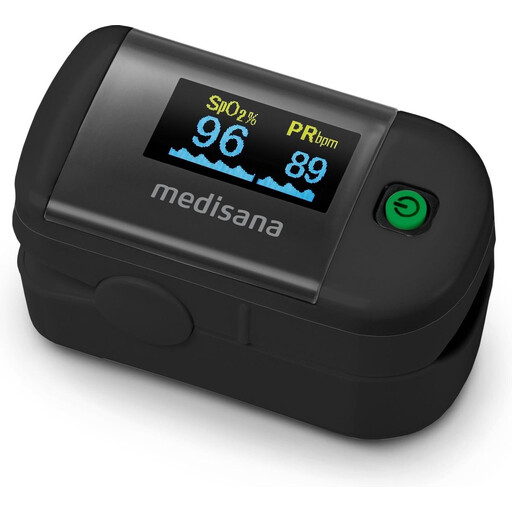
Why it suits this profile: This compact model is a good choice if you want a pulse oximeter to use at home and take with you when you’re out and about.
The product information specifies the measurement range, battery power and clear usage warnings. This helps you decide in advance whether it suits your needs.
Weighs 53 grams, with automatic switch-off and screen brightness adjustable across ten levels.
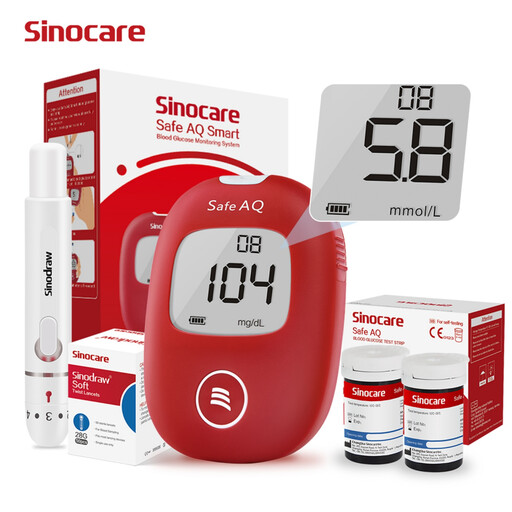
Why it suits this profile: If you use a blood glucose monitor regularly, this set brings together a meter, lancing device, strips and lancets in one pack.
The product details specify the compatible strips, a blood sample of 0.6 μl and a shelf life of six months after opening the pack.
No manual coding, results in five seconds according to the product description, and 50 test strips included.
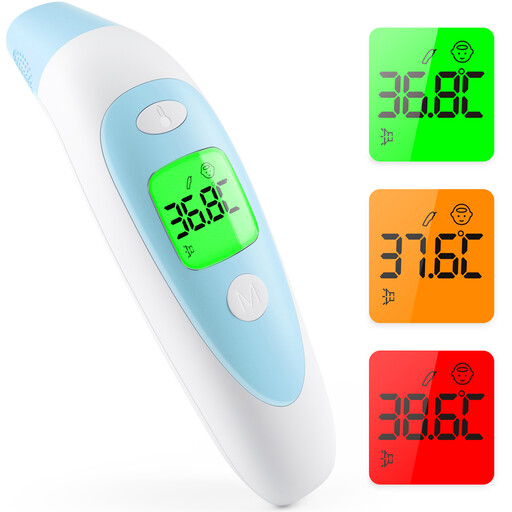
Why it suits this profile: The three measurement modes are handy for families who want to check body temperature and, for example, the temperature of milk or an object.
Choose between forehead, ear and object modes. Always check that the mode you select is suitable for what you’re measuring.
Memory for 32 readings, silent mode and a choice of Celsius or Fahrenheit.
We’ve put together a complete, up-to-date list of products that meet these strict selection criteria and comply with current European safety regulations.
It depends on what you want to measure. Choose a blood pressure monitor for blood pressure, a blood glucose monitor for glucose and a thermometer for body temperature. A pulse oximeter measures oxygen saturation and heart rate. A smart bathroom scale is mainly intended for tracking weight and trends in body composition.
Lifespan varies by device. Batteries, cuffs, sensors and test strips may need replacing before the main device does. Check the stated product lifespan, warranty and availability of consumables. The product information for the Sinocare blood pressure monitor gives a product lifespan of five years; this is not a guarantee for every use case.
No. Most home measurements are intended as an indication or to help you track readings. Manufacturers also state this for various products. If readings remain outside the normal range, or if you have concerns or symptoms, contact a healthcare professional. Don’t adjust your medication yourself based on a single reading.
