If you’re recording directly on a computer, a USB headset is the simplest option. A separate headworn microphone gives you more choice over positioning and polar pattern when used with a compatible recorder or audio interface. Keep the microphone consistently close to your mouth and make a test recording in the gallery. Before buying, check the exact connection and any power requirements: a headset designed for calls won’t necessarily give you the sound you want for a spoken audio guide.
Who is this choice relevant to?
Presenter with a soft voice
If you speak softly, you’ll want to position the microphone close to your mouth at a consistent distance, without straining your voice. Shure recommends positioning the SM35 beside the mouth to help reduce plosive sounds; make a test recording with the microphone you choose.
Recording in a reverberant space
If you’re recording in a gallery with reverberation or background noise, you’ll need to assess both the recording location and the direction of the microphone. Shure notes that a microphone cannot effectively separate direct speech from captured reflections.
Creator with a computer or recorder
If you want to use equipment you already own, check that the input, microphone variant and any power supply are compatible. For example, RØDE states that the HS2 requires a 3.5 mm microphone input with plug-in power.
What should you look for when choosing?
USB headset for a computer
Choose this if: you want to record directly on a computer and connect easily while monitoring your audio.
Trade-off: Logitech says the H390 is designed for computer use and calls; this doesn’t prove that its sound is suitable for published narration.
Separate wired headworn microphone
Choose this if: you have a recorder or audio interface with the right microphone input and want to choose the microphone position or polar pattern deliberately.
Trade-off: the Shure WH20-XLR and RØDE HS2 require different connections and positioning; also check that your recording chain supplies any power required.
Headworn microphone with a wireless bodypack system
Choose this if: you genuinely need to move around while recording and the transmitter, receiver and recorder are compatible.
Trade-off: the Sennheiser HSP 4 is a microphone, not a complete wireless system; the right connection variant and additional equipment are essential.
Before buying, compare the input and power requirements of your recording device. Shure explains that a microphone cannot effectively separate recorded reverberation from direct speech, so assess the space with a test recording too.
| Concern |
What should you look for? |
Who is this most relevant to? |
| Clarity when speaking softly |
Check that the microphone boom is easy to adjust, and record the presenter reading the actual script. |
If I speak softly, I want to keep the microphone steadily close to my mouth without straining my voice; around 33% of consumers are primarily concerned with clarity when speaking softly. |
| Reverberation and background noise |
Listen for reverberation at the recording location and assess a short test recording made there. |
In a reverberant gallery, I want to know how the space sounds in the recording before choosing a microphone; around 27% of consumers prioritise room noise and reverberation. |
| Connection and power |
Check the exact model variant, input and any power requirements; a plug that fits is not enough on its own. |
If I want to use my existing computer or recorder, the microphone needs to connect to it and work properly; around 20% of consumers cite compatibility as their main concern. |
| Ease of use and comfort |
Look at the fit, adjustability, monitoring and controls you can reach while recording. |
When recording repeatedly, I want a comfortable, easy-to-use setup; around 20% of consumers prioritise ease of use and comfort. |
Common buying mistakes
-
Focusing only on the type of plug
USB, XLR, TRS and bodypack system connections all have different requirements for your recording chain. A plug that fits doesn’t guarantee that the microphone will work with your recorder’s input or power supply.
Make a note of the exact model of your recording device and check its input, the power required and the microphone variant before ordering.
If the test recording doesn’t match the sound you want, re-recording could take extra time.
-
Trying to fix reverberation by turning up the microphone gain
According to Shure, a microphone cannot effectively separate direct speech from reflections that are picked up in the recording.
First, find a quieter place to record and keep the microphone at a suitable, consistent distance from your mouth.
Brands and product ranges to consider
Shure
The WH20 range includes wired headworn microphones with different connection variants.
- Shure specifies a dynamic cardioid capsule for the WH20; the WH20-XLR has an XLR connection.
- The XLR variant cannot connect directly to USB; check your recording chain and the exact variant.
RØDE
The HS2 is an adjustable condenser headworn microphone for use with a suitable microphone input.
- RØDE lists an omnidirectional capsule and a 3.5 mm TRS output.
- The microphone input must supply plug-in power; an omnidirectional capsule won’t eliminate reverberation in the room.
Sennheiser
The HSP 4 range is designed for hands-free speech and includes variants for specific wireless systems.
- For the HSP 4 reviewed, Sennheiser specifies a cardioid condenser capsule and an adjustable neckband.
- The microphone is not a complete receiver and recorder setup; check the connection for the variant you choose.
Logitech
The H390 is a USB-A headset for computer use and calls.
- Logitech lists USB-A, a microphone boom and in-line controls.
- These features don’t show that the H390 delivers the sound you want for a softly spoken audio guide.
Jabra
The Evolve2 30 range is designed for computer use and comes in USB-A and USB-C variants.
- Jabra describes two microphones for calls.
- Specifications for call clarity are not an independent assessment of published narration.
Headsets at Joybuy
This Joybuy selection features headsets with microphones for headset and computer use. Check the connection for each model and make a test recording with the presenter before choosing one for a gallery audio guide.
 No image available
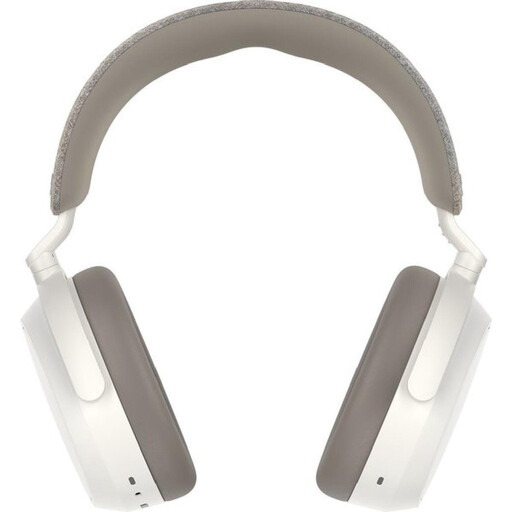
Sennheiser MOMENTUM 4 Wireless – wireless over-ear headphones, white
Make a test recording with the presenter and assess how their voice sounds in the space where you’ll be recording.
Features stated in the product name: wireless over-ear design, noise cancellation, 60-hour battery, fast charging and 4 microphones.
Joybuy
 No image available
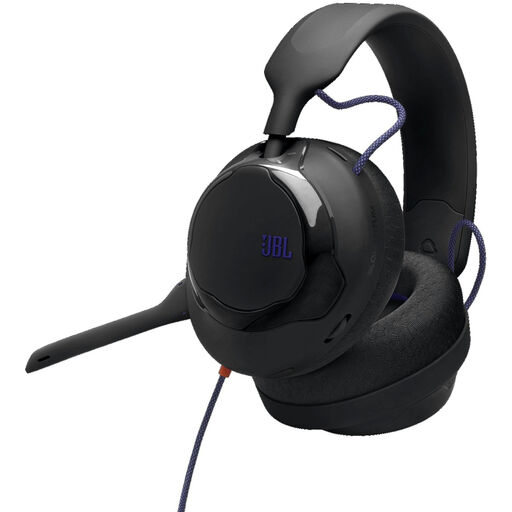
JBL Quantum 120 – wired multi-platform gaming headset
Assess the voice recording separately; the product name describes a gaming headset, but doesn’t determine how an audio guide will sound.
Features stated in the product name: wired and designed for multiple platforms. Before buying, check which connection is right for your recording device.
Joybuy
 No image available
Kingston USB Hi-Fi headphones with microphone
Check that the USB connection is compatible with your recording computer and make a test recording using the script you plan to read.
Features stated in the product name: USB connection and microphone.
Joybuy
 No image available
Trust Ayda – wired headset with USB Type-A
If you want to record on a computer, check that you have a suitable USB Type-A port and listen to a test recording.
Features stated in the product name: wired, USB Type-A and a headband headset.
Joybuy
 No image available
Razer BlackShark V2 X 7.1 – wired multi-platform gaming headset
Check that the connection is compatible with your recording device and make a test recording before using this headset for spoken audio guides.
Features stated in the product name: wired, 7.1 and designed for multiple platforms.
Joybuy
Frequently asked questions
Where should you position the microphone for a soft-spoken presenter?
Position the capsule beside the mouth and make a test recording to assess the distance and sound. Shure recommends this position for the SM35 to help reduce plosive sounds; for precise adjustment, also follow the instructions for the model you choose.
Will the RØDE HS2 work with any 3.5 mm connection?
No. The connection must be suitable for a microphone and provide plug-in power. RØDE lists these requirements for the HS2, so check your recorder’s specifications rather than just the shape of the plug.
What are the cancellation period and warranty for gallery equipment?
For online purchases made as a consumer in the Netherlands, ACM ConsuWijzer says you generally have a 14-day cancellation period from delivery; the legal guarantee is separate. If you’re buying the equipment mainly for business use, consumer rights don’t automatically apply. Check which terms and conditions apply to your purchase.
Do you need to consider the GDPR when publishing a spoken recording?
A recognisable voice recording may be personal data. The Dutch Data Protection Authority explains that processing personal data requires a valid GDPR legal basis; consent is one possible basis, but not necessarily the only one. Also agree with the presenter how the recording will be used.


