
Solo script reader
You practise at a fixed computer setup, record your own lines and want to listen back without needing separate recording equipment.


If you mainly record your own lines at a fixed computer setup, start with a wired USB headset: it combines a microphone and headphones for recording and listening back. A separate wired headset microphone may be a better fit if you already have a mixer or audio interface, but check the exact connection and power requirements first. Going wireless offers no automatic advantage at a fixed position, and in the UK you should check which frequency it uses.
You practise at a fixed computer setup, record your own lines and want to listen back without needing separate recording equipment.
You practise with others or with other sound sources nearby, and want to consider microphone placement and how clearly your own voice is captured.
You use a mixer, audio interface or bodypack and need to check before buying that the connection and power requirements are compatible with your recording equipment.
For a fixed recording setup, your choice mainly depends on your computer, the equipment you already have and how you want to listen back to your recordings.
| What to consider | What to look for | Who will find this important? |
|---|---|---|
| Easy recording and playback | Check that the USB connection is compatible with your computer and that your recording software can select the headset as its microphone. | If I want to record a passage at my fixed computer setup and listen back straight away, I want to connect as little separate equipment as possible. Around 33% of consumers say easy recording is their main priority. |
| Hearing your own lines above other sounds | Consider the microphone’s polar pattern and how adjustable the boom is. Test the intended position in relation to your mouth, fellow performers and speakers. | When I practise with others, I want to hear how my voice sits alongside the sounds around me. Around 27% of consumers prioritise being able to distinguish their own voice. |
| Connecting to existing equipment | Note the microphone’s full model name and check the input and power requirements of your recording device. A plug that fits is not enough to confirm compatibility. | If I already use a mixer or audio interface, I want to know whether the microphone will connect to my recording setup without an unsuitable workaround. Around 20% of consumers make equipment compatibility their top priority. |
| Fit and positioning during repeated practice | Check the adjustability, cable routing and fit. Make a short test recording using your usual speaking movements. | When recording several takes, I want a comfortable headset that keeps the microphone in a useful position. Around 20% of consumers focus mainly on comfort and consistent positioning. |
According to Shure, the Shure SM35-TQG needs a suitable preamp for wired use. The TQG version and the SM35-XLR setup have different connections.
Check the full model name and map out the route from the microphone to the recording input before you buy.
A bodypack setup may also require a compatible transmitter.
According to RØDE, the HS2 requires a 3.5mm microphone input that provides plug-in power.
Check whether your recorder or interface supplies this power through its microphone input.
A wireless system will not automatically solve a recording problem at a fixed position. The available frequencies can vary from one location to another.
Compare wired options first. If you choose wireless, check the frequency for your rehearsal location with the Dutch Authority for Digital Infrastructure.
A wireless setup requires a compatible transmitter and receiver, and checking frequencies also takes time to prepare.
The H390 is a wired computer headset for recording and listening back at a fixed position.
The PC 8 USB is a wired USB headset for use with a compatible computer.
The PRO8HEx is a separate wired headset microphone for a compatible XLR recording setup.
The SM35 range is an option if you need a separate headset microphone for an existing stage or recording setup.
The HS2 is a separate headset microphone for equipment with a compatible microphone input.
This selection features wired headsets for computer use, so you can record and listen back from a fixed position.
 No image available
The headset and microphone combination is designed for recording and listening back on a computer.
The product description mentions a USB audio adapter and a microphone that flips up to mute.
 No image available
A wired USB headset for recording on a computer and listening back while you practise.
The headset has stereo earpieces, an adjustable microphone boom and volume and mute controls.
 No image available
This wired USB headset is described as being for computer use and may suit recording from a fixed position.
The product information lists an adjustable microphone and stereo audio.
 No image available
According to the product information, this wired headset is designed for use with a PC.
The product description mentions a detachable microphone and volume and mute controls.
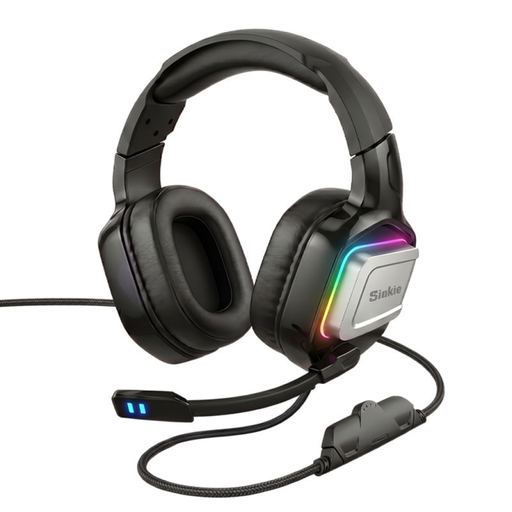 No image available
The headset combines headphones and a microphone for practising and listening back.
The product information lists USB and 3.5mm connections, an adjustable headband and an omnidirectional microphone. Check which input is compatible with your computer.
Connect the headset to a compatible input, select it as the microphone in your recording software and read a passage at your normal speaking volume. For the SM35, Shure recommends positioning it beside the corner of your mouth, rather than directly in front, to reduce plosive sounds.
Not necessarily: the Audio-Technica PRO8HEx has an XLR output; Shure specifies a preamp for wired use of the Shure SM35-TQG; and, according to RØDE, the RØDE HS2 needs a 3.5mm microphone input with plug-in power. Before buying, check the exact input and power requirements of your computer or audio interface.
According to the Dutch Authority for Digital Infrastructure, wireless microphones usually do not need a licence, provided you use the right frequency band and comply with the conditions. Availability can vary by location, and some bands do require a licence, so check the frequency of your system for your rehearsal location.
It depends on the circumstances and purpose, so there is no single answer that applies to every private or group rehearsal. If an organisation processes identifiable voices as personal data, the Dutch Data Protection Authority says it needs a lawful basis under the GDPR. Consent is one possible lawful basis, but not the only one. Before recording and sharing, discuss the purpose and arrangements with everyone involved.
For online purchases from a professional seller, you generally have a 14-day cooling-off period from delivery, subject to conditions and exceptions. The Netherlands also has statutory consumer guarantees, with no fixed statutory guarantee period. If a product is faulty, contact the seller.