
Speaking alongside housemates
You’re discussing design details while other people in your home are talking or typing, so what the other person on your call hears through your microphone comes first.


Start by thinking about what the other people on your call can hear: choose a headset with a microphone you can position close to your mouth, then test your voice with the usual background noise. Next, decide between a wired connection that never needs charging and the freedom to move around wirelessly. Microphone filtering, noise reduction for your own ears and wearing comfort are separate considerations; manufacturers’ claims don’t guarantee how a headset will sound in your room.
You’re discussing design details while other people in your home are talking or typing, so what the other person on your call hears through your microphone comes first.
You listen for extended periods and give feedback while there’s noise around you. Bear in mind that noise reduction for your ears is different from filtering your microphone signal.
You move around during meetings or use different devices, so connectivity, freedom to move and charging may all be factors.
First, check that the other person can hear you clearly, then decide how much surrounding noise you want to hear yourself. Finally, make sure the connection, freedom to move and fit suit your workspace and the length of your meetings.
For consumers looking for a headset for design brief discussions in a shared home, the most important buying priorities can vary. The percentages link each consideration to the corresponding group of consumers.
| Consideration | What should you check? | Who might prioritise this? |
|---|---|---|
| Clear speech | Check whether the microphone boom can sit close to your mouth and whether you can mute the microphone. If possible, test a recording with the usual household noise in the background. | When I discuss design details while housemates are talking or typing, I want my explanations to come across clearly. Around 33% of consumers make clear speech their top priority. |
| Concentration | Check whether the model you’re considering has noise-reducing ear cups and how well they fit. Microphone filtering is no substitute for noise reduction for the wearer. | When noise around me makes it harder to listen to feedback, I pay attention to how much the headset reduces noise for my ears. Around 27% of consumers prioritise concentration while listening. |
| Connectivity and freedom to move | Compare the connection with your device’s ports and check whether you’ll need an adapter. If you choose a wireless model, also consider charging and connection management. | If I work on different devices or want to get up during a meeting, the connection and freedom to move need to suit my needs. Around 20% of consumers give connectivity or freedom to move top priority. |
| Wearing comfort | Compare the headband, ear cushions and mono or stereo design; try the fit if possible. A stated weight alone doesn’t prove that a headset will feel comfortable. | For longer meetings, I want a model that feels comfortable to wear and suits how much surrounding noise I want to hear. Around 20% of consumers make wearing comfort their top consideration. |
The microphone sends sound to the other person on your call, while the ear cups can reduce noise for you. These features therefore solve different problems.
Check the microphone features and ear-cup noise reduction separately, and test both in your shared home.
Different versions within a model range may have different connections or come with different accessories.
Before ordering, compare the full product version and box contents with your device.
If the connection isn’t compatible, you may need a suitable adapter.
The Dutch government explains that the Netherlands has no fixed statutory warranty period that applies equally to every product. If a product is faulty, the retailer is your point of contact for a solution.
Keep your proof of purchase and report any fault to the retailer.
The features mentioned apply to the specific product ranges and versions below; they are not a general assessment of the entire brand.
The H390 is a wired headset for computer calls; Zone Wired is a separate product range.
The Evolve2 40 SE is a wired range; the Evolve2 65 is a separate range of wireless office headsets.
The IMPACT 100 range includes wired meeting headsets in mono and stereo versions.
The information given relates to the Blackwire 3320 Stereo Microsoft Teams Certified USB-C Headset +USB-C/A Adapter, product number 8X220AA.
These Joybuy product picks are headsets with microphones for computer and video meetings. Compare the connection, design and freedom to move you need. The Dutch Authority for Digital Infrastructure states that electrical and electronic equipment must carry the correct CE marking; check this on the specific device.
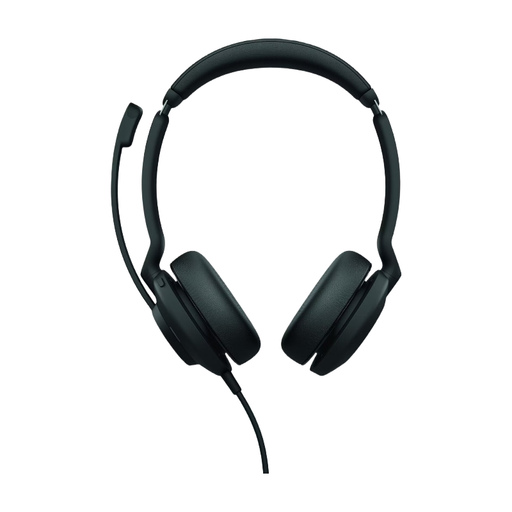 Image unavailable
A wired USB-A model for computer meetings; check that your device has the connection you need.
If your device only has USB-C, the product information indicates that you may need a compatible adapter.
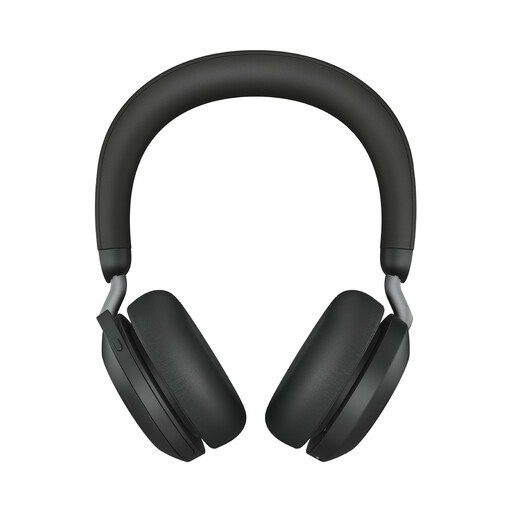 Image unavailable
An option to compare if being able to move around during meetings is important to you.
Check the exact version, the connection you need and how it charges; wireless use means you’ll need to recharge it.
 Image unavailable
A wired USB headset for computer use; the cable is best suited to a workspace where you don’t need to move far.
Bear in mind how much freedom the cable gives you to move around.
 Image unavailable
A wired USB model to consider for internet calls on a computer.
The USB cable gives you less freedom to move around than a wireless headset.
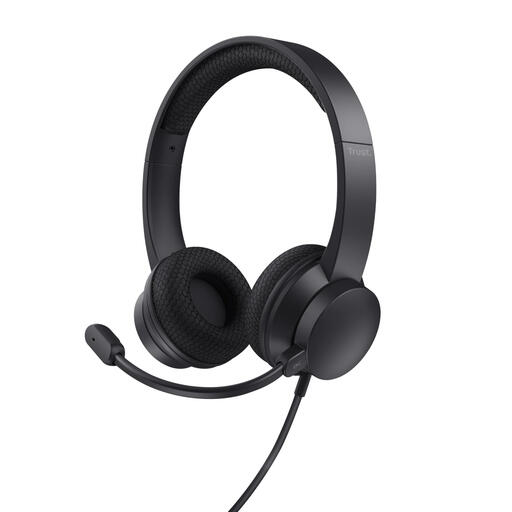 Image unavailable
A wired headset for online meetings and video calls; check that USB Type-A is compatible with your device.
The product information also mentions a USB-C adapter cable; check which accessories are included with the version you choose.
Position the microphone boom close to your mouth and select the headset’s microphone and speakers in your meeting app. If available, use a test call and try it with the background noise you expect at home; app settings can also affect what the other person hears.
No. Manufacturers describe microphone filtering and passive noise reduction from ear cushions as different features. Check which feature the exact version offers and assess the result in your own surroundings.
Report a faulty product to the retailer. The Dutch government explains that there is no fixed statutory warranty period covering all products in the Netherlands, and that the retailer must provide a solution when there’s a problem with a product.
No. The Dutch Authority for Digital Infrastructure states that electrical and electronic equipment must carry the correct CE marking and advises against using equipment without one. Check the specific device; a product listing or brand name alone doesn’t confirm that it has the correct marking.