If you’re the only person speaking at the table, a headset with a boom microphone suits a setup where you’ll mainly stay by your laptop. A wired model means you won’t need to charge it, while a wireless one gives you more freedom to move around. If several people at the table need to join in remotely, consider a conference speakerphone and check that its stated microphone pickup range covers everyone’s seats. Before the meeting, test which microphone and speaker are active in your meeting app; Microsoft Support explains how to select your audio devices in Teams.
Which option is right for you?
The only person speaking at the table
If you’re leading the meeting from your laptop, the main thing is making sure remote participants can hear you clearly. Check that the connection is compatible with your laptop, and consider whether a boom microphone and easy-to-reach mute control would suit you. Logitech and Jabra describe wired headsets for individual calls.
A small team sitting around the same table
If several people need to speak in the same online meeting, don’t assume a personal headset will pick up everyone’s voice. A shared speakerphone offers a different setup; Microsoft describes speakerphones for shared meeting spaces.
The only person speaking in a busy kitchen
If you’re the only person speaking locally, there are two separate things to consider: how much background noise your microphone picks up and how much noise you hear through the earcups. Logitech, EPOS and HP Poly describe features for the microphone and for what you hear, respectively; these features do different things.
What should you look for when choosing?
Wired headset for one speaker
A good fit if: you usually stay by your laptop and don’t want to charge a headset battery. Choose a USB-A or USB-C version to match your laptop’s port.
Bear in mind: the cable limits how far you can move from your laptop, and a boom microphone isn’t designed to pick up everyone around the table.
Wireless headset for one speaker
A good fit if: you want to get up while planning or switch between devices. Check that the connection and any included adapter are compatible with your laptop and meeting app.
Bear in mind: you’ll need to charge it, and the stated talk time may depend on settings such as ANC.
Speakerphone for several people around the table
A good fit if: more than one person at the table needs to join in using a shared audio connection. Compare the stated microphone pickup range with the seating arrangement.
Bear in mind: the conversation will be audible in the room. Microsoft warns that multiple active microphones in coordinated Teams rooms can cause echo and feedback.
| What to consider |
What should you check? |
Who is it important to? |
| Connection and controls |
Check whether the exact model has USB-A, USB-C or another suitable connection. Test the headset as a microphone and speaker in your meeting app, and check how to mute it and adjust the volume. |
If I’ll mainly be speaking from my laptop, I want the headset to connect directly to my equipment and be easy to use. Around 36% of consumers facing this choice put a straightforward connection first. |
| Multiple voices |
Compare the table layout with the stated microphone pickup range. Decide which microphone and speaker in the room should be active. |
If several people at the table need to join in online, I want to know whether one shared audio setup will cover their seats. Around 29% of consumers give picking up multiple voices around the table top priority. |
| Household noise |
Check microphone noise cancellation and any ANC separately. Test the microphone where you’ll be holding the meeting. |
If I’m the only person speaking in a busy kitchen, I want to check both what my microphone transmits and what I hear myself. Around 21% of consumers prioritise being heard clearly over household noise. |
| Freedom to move |
Check whether the headset connects to your devices via Bluetooth, an included USB adapter or both. Compare like-for-like talk times; settings can affect the stated battery life. |
If I want to get up while planning or switch devices, I want the connection to suit the way I work. Around 14% of consumers cite freedom to move or switching between devices as their main reason for buying. |
Common buying mistakes
-
Choosing a personal headset when everyone at the table needs to join in
A headset is designed for the person wearing it; a conference speakerphone is designed to pick up voices from several directions. Check who needs to speak locally and compare the distance between seats with the stated microphone pickup range.
If the setup doesn’t meet your needs, you may still need a suitable shared audio solution.
-
Assuming microphone noise cancellation and ANC do the same thing
Microphone noise cancellation affects the sound sent to other people. ANC affects the noise you hear; HP describes these separately for the Voyager Focus 2.
Choose the feature that addresses your problem, and test the microphone in the kitchen where you’ll be meeting.
-
Assuming the manufacturer’s warranty covers all your statutory rights
According to the Dutch Government, there is no fixed statutory warranty period for all products in the Netherlands. If a product is faulty, the retailer is your point of contact for a solution.
Consider any stated manufacturer’s warranty alongside your statutory rights; it doesn’t replace your legal protection.
Brands to compare
Logitech
The H390 is a wired USB-A headset for one speaker, while the H151 uses a 3.5 mm connection. The right product line for you will therefore depend on your laptop’s connection.
- Logitech lists a noise-cancelling microphone, in-line controls and a 1.9 m cable for the H390.
- A headset with a boom microphone isn’t designed to automatically pick up everyone around the table, and the cable also limits how far you can move.
Jabra
The wired Evolve2 40 SE is designed for one speaker, while the Speak2 55 is a separate speakerphone option for a group around the table.
- Jabra lists three microphones and USB-A or USB-C versions for the Evolve2 40 SE. For the Speak2 55, Jabra gives a microphone pickup range of up to 2.3 m.
- According to Jabra, a USB-C version of the Evolve2 40 SE won’t work with every mobile app or device. Also check that the stated microphone pickup range covers the seating arrangement.
HP Poly
The wireless Voyager Focus 2 is an option for one speaker who wants to move around and use ANC to reduce the noise they hear.
- HP lists Bluetooth and connection to a PC via the included BT700 adapter or a USB cable.
- The talk time stated by HP varies according to the ANC and indicator settings. Compare like-for-like talk times and check the exact version.
EPOS
According to EPOS, the wired IMPACT 100 range includes mono and stereo versions for individual calls, with USB-C and a USB-A adapter.
- EPOS describes a unidirectional microphone and a mute control.
- The 76 g weight stated by EPOS applies to the stereo versions; on its own, it says nothing about picking up a group around the table.
JLab
The wireless GO Work Gen 2 is worth considering if one speaker wants to switch between devices. This is a different model from the GO Work POP.
- JLab lists Bluetooth multipoint and a USB-C dongle for the GO Work Gen 2.
- JLab gives different figures for talk time and total playback time. These figures aren’t interchangeable and don’t necessarily indicate how long your meeting will last.
Joybuy products for meetings around the table
These products include wired and wireless headsets for one speaker, as well as a shared speakerphone for several people around the table. Choose based on who needs to speak, how much freedom to move you want and the connections available on your equipment.
 No image available
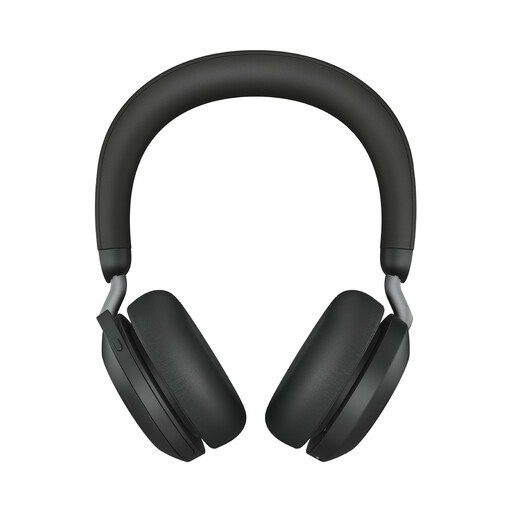
Jabra Evolve2 75 USB-A MS Teams, black
A wireless headset for one speaker who wants more freedom to move during meetings.
The product information lists Bluetooth, connection to two devices and adjustable ANC.
View at Joybuy
 No image available
Logitech PC 960 USB headset
A wired USB headset for one speaker who mainly holds meetings at their computer.
The product information lists an adjustable boom microphone, a noise-cancelling microphone, and in-line volume and mute controls.
View at Joybuy
 No image available
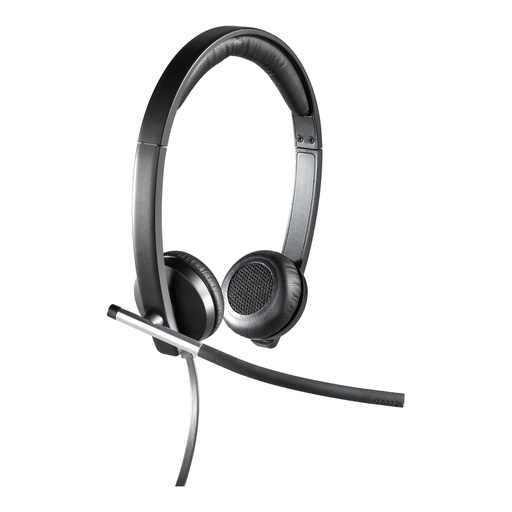
Logitech H650e Stereo, wired headset
A wired USB stereo headset for individual calls on your computer.
The product information lists in-line volume controls. Logitech describes the microphone as noise-isolating and lists acoustic echo cancellation.
View at Joybuy
 No image available
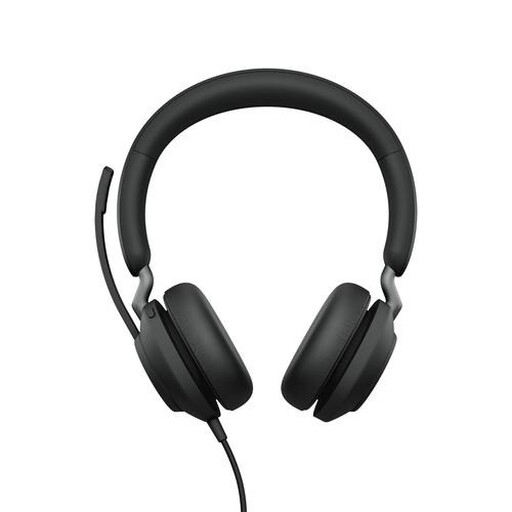
Jabra Evolve2 65 USB-A MS Mono, black
A wireless mono headset for one speaker who wants to move around during meetings.
The product information lists Bluetooth, a USB-A adapter and a dedicated Teams button. Check that the connection and controls suit your meeting app.
View at Joybuy
 No image available
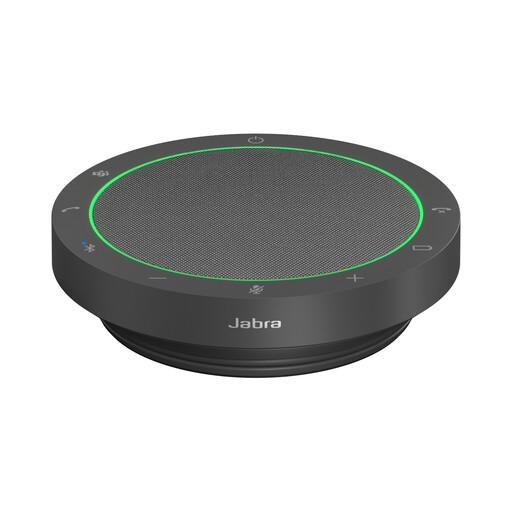
Jabra Speak2 55 MS Teams, dark grey
A shared speakerphone for meetings where several people around the table need to join in.
Jabra lists four microphones and a pickup range of up to 2.3 m. Compare this with the seating arrangement; the speakerphone makes the conversation audible in the room.
The product information lists USB and wireless use.
View at Joybuy
Frequently asked questions
Can the people around my table join in using my headset?
Don’t assume they can without testing it: a headset is designed for the person wearing it. If several people around the table need to be heard remotely, compare a speakerphone’s pickup range with the seats and the distance between them. Jabra lists a pickup range of up to 2.3 m for the Speak2 55.
How do I set up the audio for my meeting?
Before joining, select the microphone and speaker you want to use, then test them in your meeting app. Microsoft Support explains how to select audio devices and make a test call in Teams; menus may work differently in other apps.
How can I prevent echo when several laptops are in the meeting?
Don’t automatically leave a microphone and speaker active on every laptop for the same room audio. Microsoft warns that multiple active microphones in coordinated Teams rooms can cause echo and feedback; choose one suitable audio setup for the room.
What should I check after buying, and what should I do if the headset breaks?
Check the connection, included accessories and the retailer’s returns policy. According to the Dutch Government, online purchases from a business usually come with a 14-day cooling-off period. There is no fixed statutory warranty period for all products in the Netherlands; you’re entitled to a product that meets the required standards, and the retailer is your point of contact if there’s a fault.


