A personal microphone headset could be a good fit if you’re mainly leading the meeting and doing the talking. If other people in the room also need to be heard, choose a set-up with room audio, such as a suitable room microphone or speakerphone. Then compare the microphone features, connection and freedom of movement with the way you’ll use it. When buying, check that the specific device has the CE marking, as required by the Dutch Authority for Digital Infrastructure for electrical and electronic equipment.
Who is this choice relevant to?
Host with speakers in the room
You want remote participants to hear the other people in the room too. So decide in advance whether you need room audio. Microsoft Support distinguishes between personal audio and a set-up that lets people in the room join in.
Host in a noisy home
You’re the main speaker and want to position the microphone close to your mouth and mute it quickly. Logitech and Jabra describe microphone controls for the headset models mentioned; check what the version you choose offers.
Host who moves around
You don’t lead the meeting from the same chair throughout. Freedom of movement may matter more than avoiding charging and pairing, so compare a wired connection with a wireless model.
What should you consider when choosing?
First decide whether remote participants need to hear only you or other people in the room as well. Microsoft Support distinguishes between personal audio and room audio; a headset for one person is not the same as a set-up for several speakers.
Personal headset
Choose this when: you’re the main speaker and are leading the meeting from your computer.
Consider: the headset is designed for the wearer. Check the microphone controls, connection and how far you can move with a cable.
Room audio
Choose this when: several people in the room need to be able to speak to remote participants.
Consider: a room microphone or speakerphone picks up sound from the room, potentially including housemates. Test the set-up and agree when to mute it.
| What to consider |
What to look for when buying |
Who is this important for? |
| Who needs to be heard? |
Decide whether only the host will speak or several people need to join in, then choose the audio set-up accordingly. |
If several club members are joining in from the room, I want them to be heard remotely; a personal headset is designed for the wearer. Around 31% of consumers prioritise picking up voices from the room. |
| How clearly your voice comes across |
Check the microphone’s position and distinguish between muting the microphone and muting sound at your ears. |
If housemates can be heard, I want to position my microphone well and mute it quickly. Around 25% of consumers prioritise making their own voice come across clearly. |
| Freedom of movement |
Compare the cable length with a wireless connection. For wireless use, check the connection and make sure the headset is charged. |
If I want to move around while chairing the meeting, freedom of movement is a factor in my choice. Around 19% of consumers prioritise being able to move around during the meeting. |
| Connection |
Check your device’s ports and whether a 3.5mm connection also supports microphone input. Look at the exact headset version. |
If I want to connect the headset to my computer or another device, the plug needs to fit and the microphone needs to work. Around 13% of consumers let the available connection determine their first choice. |
| Comfort and controls |
Check the fit, ear cushions and how easy the mute button is to reach; a description of comfort is no substitute for trying it on. |
If I wear the headset for a long time, I want a comfortable fit and a mute button I can use quickly. Around 12% of consumers give comfort and controls top priority. |
Common pitfalls when choosing
-
Buying a headset when everyone in the room needs to join in
A personal headset and room audio suit different meeting scenarios. A headset just for the host won’t automatically let other people in the room be heard.
Decide in advance who needs to be able to speak remotely, then test the set-up with several speakers.
-
Assuming ‘noise cancelling’ means just one thing
Reducing the sound you hear is different from processing the sound your microphone picks up. One feature doesn’t automatically tell you anything about the other.
Check the microphone features and noise reduction at the ear cushions separately. Treat manufacturers’ statements as product claims, and test the headset with the sounds you expect during the meeting.
-
Assuming specifications or accessories apply to a different version
Products with almost identical names can differ in connection, version or generation. Jabra lists several Evolve 20 variants; JLab publishes separate information for GO Work and GO Work second generation.
Before ordering, compare the full model number, connection and package contents with your device.
Brands to consider
Logitech
The H390 is a wired option for a fixed computer set-up with USB-A; the H151 is designed for a device with a compatible 3.5mm headset connection.
- Logitech lists volume and mute controls for both models. For the USB-A version of the H390 described, Logitech specifies a 1.9 m cable.
- For the H151, check whether the 3.5mm port also supports microphone input. Manufacturer specifications are not independent performance tests.
Jabra
The Evolve2 65 is a wireless range; the Evolve 20 is a wired range designed for calls.
- Jabra describes the Evolve2 65 as suitable for wireless use and offers a Teams version.
- Check the exact Teams or UC version and the adapter included. The Evolve 20 is available in several USB versions.
HP Poly
The Blackwire 5200 series is a wired range for meetings, with the Blackwire 5210 mono and 5220 stereo as different models.
- HP describes a USB-C cable with a USB-A adapter for PC, and a 3.5mm connection for mobile phones or tablets.
- The choice between mono and stereo depends on the model. Treat the manufacturer’s claims about microphone noise reduction as claims, not as a guarantee of how clearly you’ll come across in your room.
EPOS
The IMPACT SC 60 USB ML is a wired, dual-sided USB headset for calls via a PC.
- The EPOS data sheet lists a noise-cancelling microphone and controls on the cable.
- These specifications don’t show how well other people in your room will be picked up.
JLab
The GO Work range is designed for wireless use; check the generation before comparing specifications.
- For GO Work second generation, JLab lists features including a microphone boom and USB-C dongle.
- Specifications for the original GO Work and second generation are not necessarily interchangeable.
Joybuy products for the meeting host
This Joybuy selection features personal headsets for a meeting host. If several people in the room need to be heard, compare these with a separate room microphone or speakerphone.
 No image available
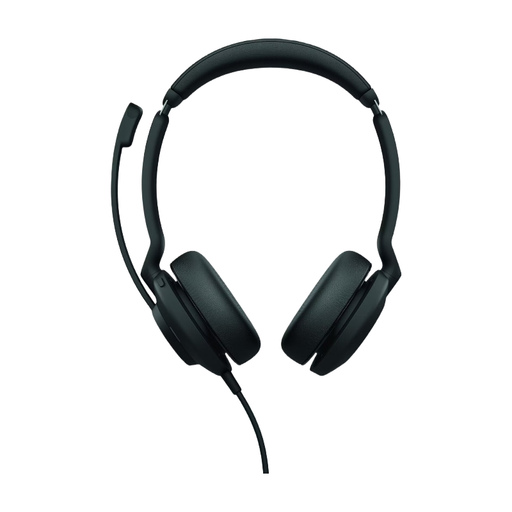
Jabra Evolve2 30 SE
A personal headset to consider if you’ll mainly be speaking from a computer. Check that the connection and any adapter are compatible with your device.
The product description lists USB-A and use with a compatible USB-C adapter.
View at Joybuy
 No image available
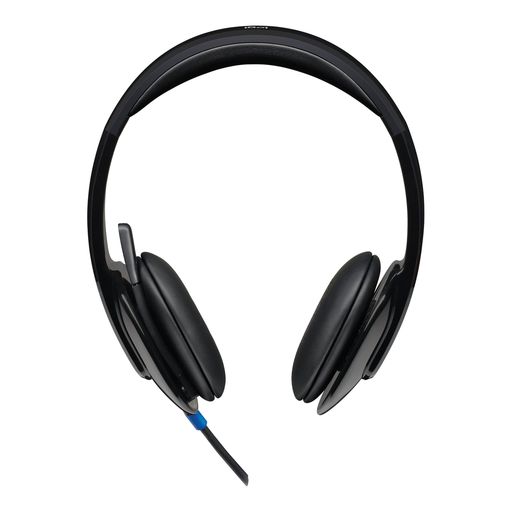
Logitech H540 USB Headset
A wired headset to consider if you speak from a computer and want to be able to mute yourself during calls.
The product description lists USB Type-A and a mute control on the ear cup; check that your device has this connection.
View at Joybuy
 No image available
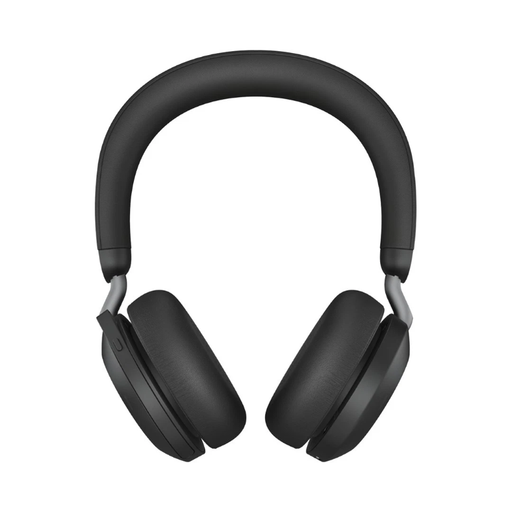
Jabra Evolve2 75
An option to consider if you want to move around while chairing the meeting. Check that the wireless connection is compatible with your device.
The product description lists Bluetooth and a USB-C cable. The headset needs charging for wireless use.
View at Joybuy
 No image available
Logitech PC 960 USB
A wired headset to consider if you speak from a computer and want to be able to mute yourself quickly.
The product description lists a USB connection, an adjustable microphone boom and controls on the cable.
View at Joybuy
 No image available
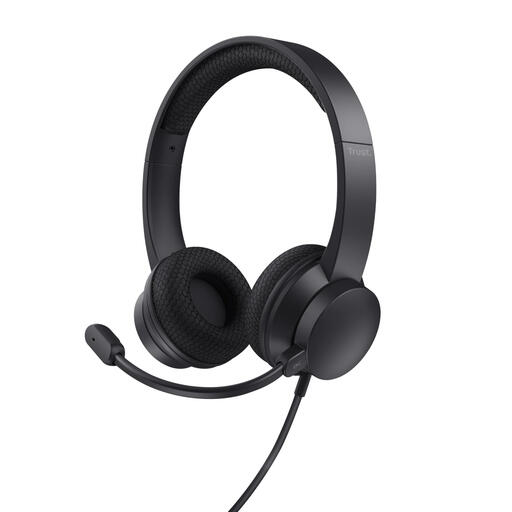
Trust Ayda Wired Headset
A wired headset to consider if you use a computer with USB-A; check which connection your device has.
The product title lists USB Type-A; the product description also mentions a USB-C adapter cable and a flip-up microphone that mutes when raised.
View at Joybuy
Frequently asked questions
Will remote participants hear the other people in the living room through my headset?
Don’t assume they will: a personal headset is designed for the wearer. If other people need to join in, test room audio with a suitable room microphone or speakerphone. Microsoft Support distinguishes this type of set-up from personal audio devices.
How do I set up the microphone before the meeting?
Select the microphone and speaker you want to use in your meeting app, then make a test call. Microsoft Support explains that you can choose these devices before or during a Teams meeting.
Should I always set microphone noise reduction to the highest level?
Not if other people in the room also need to be heard. Zoom Support explains that audio settings can reduce background noise and echo; test the setting you choose with the people who will speak during your meeting.
What are my rights if an online headset doesn’t suit me or breaks too quickly?
According to ACM ConsuWijzer, online purchases generally come with a 14-day cooling-off period after delivery, subject to legal exceptions. A product must also meet what you could reasonably expect under normal use; there isn’t a fixed legal guarantee period of exactly two years for every situation.
Which product marking should I check on a headset for use in the Netherlands?
Check that the specific device has the correct CE marking. The Dutch Authority for Digital Infrastructure states that electrical and electronic equipment placed on the market in the Netherlands must have the correct CE marking.


