For a presentation you want to record locally, a headset is suitable if its connection works with your device and your recording app uses its microphone as the input. Start by making a short test recording and listening back to it. Then compare the microphone position, comfort and freedom of movement. A noise-cancelling claim alone doesn’t tell you what your recording will sound like.
Who is this choice relevant to?
Practising to assess your own voice
You record your presentation several times so you can listen back to your word choice, pace and clarity. An adjustable microphone and a test recording are more useful for assessing these than a noise-cancelling claim alone.
Laptop user who wants to record locally
You want to check that the headset microphone works as the recording source and that you can find your practice recordings in the app you’ve chosen.
Student who practises for longer or while moving
You weigh up fit, cable length and freedom of movement against the convenience of plugging in and any need to charge a wireless headset.
What should you look for when choosing?
| What to consider |
What to look for when buying |
Who is this important for? |
| How clearly your voice comes through |
Check whether the microphone is adjustable and make a test recording where you usually practise. |
If you want to assess your wording and speaking pace clearly, sound clarity is your main priority; around 33% of consumers put it first. |
| Connection and recording file |
Check that the plug matches the port, select the headset as the input and find out where the app saves the recording. |
Want to make sure the microphone works and find out where your recording is saved before you practise? Around 27% of consumers prioritise this combination. |
| Comfort and freedom of movement |
Check the fit and make sure the cable is long enough for your practice space. If you’re using a wireless headset, check that its microphone works as the input. |
If you practise for longer or want to move around while presenting, comfort and freedom of movement matter more; around 20% of consumers start with this need. |
| A simple, suitable design |
Check the full model name, connection, included accessories and terms of purchase. |
If you mainly want a simple design that works with your device, there’s no need to choose features you don’t need; around 20% of consumers put this consideration first. |
On Windows, Microsoft Support explains how to select and test the microphone as an input. The headset doesn’t save the recording file itself, so also check how your recording app saves files.
Common mistakes
-
Assuming every version in a product range is the same
Trust lists the Ayda USB and Ayda USB-ENC as separate versions. Logitech also offers different USB options for the H390. Choosing based on the range name alone could mean the connection isn’t right for your device.
Before you buy, compare the full model name, plug and ports on your computer.
If the connection isn’t right, you may still need a compatible adapter.
-
Assuming noise cancellation guarantees a successful recording
Descriptions of noise cancellation are manufacturer claims. The microphone you choose, its position and the conditions where you practise all affect what you hear when you listen back.
Make a short recording where you usually practise and listen back to check whether you can assess your voice clearly enough.
-
Thinking the headset saves the recording file
Microsoft says recordings made in Windows Sound Recorder are saved in the app and deleted if you uninstall it.
Before making important practice recordings, check how to find and save them.
Brands to compare as a reference
Logitech
The H390 is an example of a wired computer headset. Check which USB version you choose.
- For the H390, Logitech lists a positionable microphone, in-line controls and a 1.9 m cable.
- The product page offers USB-A and USB-C options. The claim of reduced background noise is from the manufacturer; it isn’t a measure of how your presentation recording will sound.
Trust
The Ayda range includes separately described wired USB versions and a wireless ENC version.
- For the Ayda USB 25088, Trust lists a foldable microphone and a USB-C-to-A adapter. For the Ayda USB-ENC 25089, Trust describes a noise-cancelling microphone.
- These features don’t automatically apply to every Ayda version. Check the exact model number and connection.
EPOS
The PC 8 USB, article number 1000432, is a wired stereo headset for PC and Mac.
- For this article number, EPOS lists volume and mute controls, plus a noise-cancelling microphone.
- There are PC 8 USB pages with different article numbers, so check the full version.
HP Poly
According to HP, the Blackwire 3300 series includes wired headset versions, with options including mono and stereo.
- A mono version may suit you if you want to keep one ear free.
- HP lists a 3.5 mm option only for the Blackwire 3315 and 3325; don’t assume this connection is available across the whole range.
Headsets at Joybuy
These Joybuy products are wired headsets for practising and recording on a computer; the connection varies by model.
 No image available
Jabra Evolve2 30 SE
A USB-A headset for use with a computer. Check that the microphones are selected as the input in your recording app.
The product information lists two integrated microphones and memory foam ear cushions.
View at Joybuy
 No image available
Logitech PC 960 USB
A wired USB headset for a computer. Make a test recording to check that the microphone works in your app.
The product information lists an adjustable microphone boom, volume control, mute control and a mute indicator.
Stereo sound, an adjustable headband and soft ear cushions are also listed.
View at Joybuy
 No image available
Logitech H340 USB headset, black
A USB headset for recording on a computer. Test the microphone with your recording app before recording a full presentation.
Logitech describes the microphone as adjustable and noise-cancelling; use your own test recording to assess the result.
The product information lists digital stereo audio, an adjustable headband and soft ear cushions.
View at Joybuy
 No image available
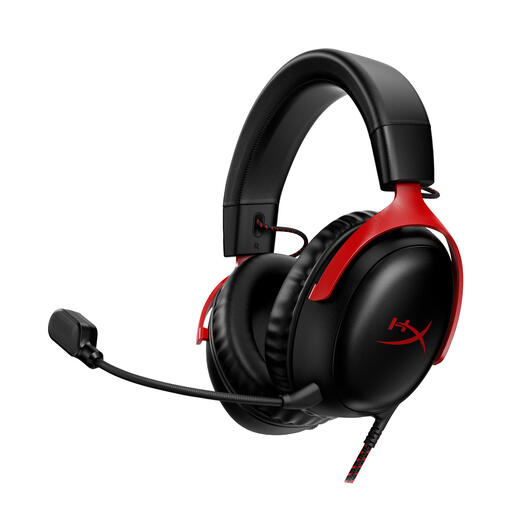
HyperX Cloud III
The product information lists compatibility with devices including PCs and mobile devices. Check which connection works with your recording device.
A detachable microphone and 3.5 mm and USB-C connections are listed. Check which cables and connection options come with the version you choose.
According to the product information, the headband and ear cushions contain memory foam.
View at Joybuy
 No image available
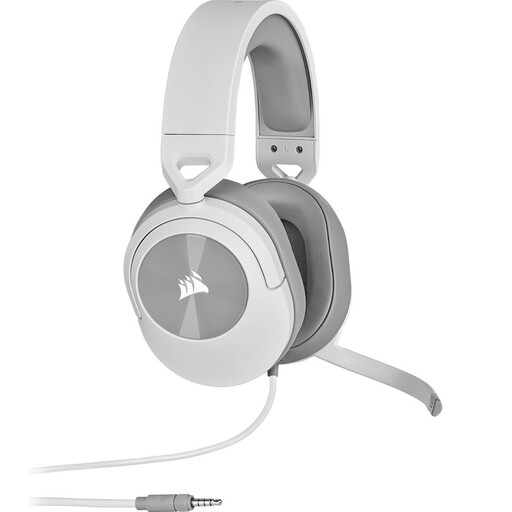
Corsair HS55 Stereo, white, 3.5 mm
A wired 3.5 mm headset to consider if that connection works with your recording device.
The product information lists a flip-up microphone with a mute function. The microphone isn’t flexible.
According to the product information, you’ll need the included Y-splitter if your PC has separate headphone and microphone ports.
View at Joybuy
Frequently asked questions
How can I check in Windows that my presentation is being recorded through the headset?
In Windows, select the microphone you want to use in the input settings and run the microphone test. Then select the right input in your recording app, make a short recording and listen back to it. If there’s no sound, also check that the app has access to your microphone; Microsoft Support explains these steps.
Where are my recordings saved in Windows Sound Recorder?
According to Microsoft, recordings made in Windows Sound Recorder are saved in the app and deleted if you uninstall it. So before relying on it for important practice recordings, check how to find and save your recordings.
Do I need extra recording software for every headset?
Not if your device already has a suitable recording app. Microsoft explains how to start and stop a recording with Windows Sound Recorder. If you use a different operating system or app, check separately which features are available.
What are my rights when buying a headset online in the Netherlands?
For an applicable online consumer purchase, you generally have a statutory 14-day cooling-off period after delivery, with some exceptions. ACM ConsuWijzer explains this cooling-off period. Your statutory guarantee is separate: if a product doesn’t perform as you could reasonably expect under normal use, contact the seller.
Can I share classmates’ voices in a practice recording without asking?
Don’t assume that you can. The Dutch Data Protection Authority classifies identifiable audio recordings as personal data. It describes an exception for images kept for private use, but this doesn’t establish that every audio recording or instance of sharing in a classroom is allowed. Consider sharing separately and follow your school’s rules.


