
Presenting at a laptop
You’ll be staying in one spot during the project update and want to speak clearly, mute quickly and get started without pairing a wireless device.


If you’re presenting from one spot, start with a wired headset that has a connection compatible with your computer, a microphone boom and easy-to-reach mute controls. Choose wireless if you need to move around during the update. Microphone noise cancellation affects what others hear, while ear cushions affect what you hear. A headset won’t fix backlighting, so assess your camera lighting separately.
You’ll be staying in one spot during the project update and want to speak clearly, mute quickly and get started without pairing a wireless device.
You’ll be standing up or walking over to a screen. Being able to move freely matters more to you than the convenience of a cable that doesn’t need charging.
You need to follow online responses but also hear what someone in the same room is saying. So consider whether you want to leave one ear uncovered or listen through both earcups.
First decide whether you’ll stay in one spot during the update. Then check which connection your computer has and whether you want to keep one ear free. Finally, test the microphone where you’ll be presenting.
| What to consider | What should you check? | Who is this important for? |
|---|---|---|
| How clearly your voice comes across | Check the microphone boom, mute controls and microphone on the exact model. Record a test in your meeting app where you’ll be presenting. | If I want online attendees to hear me clearly, I want to check the microphone position and make a test recording first. Around 33% of consumers prioritise how clearly their own voice comes across. |
| Connection and controls | Compare your computer’s ports with the full model name. Select and test the correct microphone and speaker in your meeting app. | If I want to get started without connection or app issues, I check in advance that the headset works with my computer. Around 27% of consumers prioritise connection and reliable controls. |
| Freedom to move | Think about whether you’ll actually walk around while speaking. For wireless use, check the connection, model and any adapter, then make a test recording. | If I want to walk over to a screen during the update, being able to move freely matters more to me than having a cable. Around 20% of consumers prioritise freedom to move. |
| Listening and staying connected to the room | Compare the mono and stereo versions and check the fit. Passive isolation for your ears is different from noise cancellation on the microphone. | If I need to follow online responses and stay available to people nearby, I consider how much background noise I can hear. Around 20% of consumers prioritise listening comfort and staying connected to the room. |
Audio features won’t change the lighting on your face.
Check your camera image separately and, if necessary, adjust your position or lighting before presenting.
USB-A, USB-C and 3.5 mm are different connections. Controls and accessories may also vary between models.
Compare the full product variant with your computer’s ports and check what’s included in the box.
Depending on the connection, you may need a suitable adapter or a different model.
A headset that reduces background noise for you doesn’t necessarily mean that people listening remotely will hear you clearly.
Assess both features separately and make a test recording where you’ll be presenting.
The adapter and controls can vary between models. Zoom Support also warns that people on the other end of a call may sometimes experience lower microphone audio quality with Bluetooth headphones.
Check the adapter and test a voice recording with the headset and meeting app you plan to use.
Allow time for charging and pairing.
The brands listed offer a range of wired and wireless headsets. Check the connection, fit and exact model for each one.
The H390 is a wired USB option. Logitech positions the Zone Wired for calls in noisy, open-plan workspaces.
The wired Evolve2 40 SE is an option for listening and presenting from one spot; the Evolve2 65 is available as a wireless model.
The Blackwire 3200 series offers wired mono and stereo models to suit different wearing preferences.
The IMPACT 100 series includes wired mono and stereo models with call controls.
This selection includes wired headsets for computer use and a wireless option for anyone who wants to move around during the update. For each model, check that the connection and controls are compatible with your equipment.
 No image available
A wired option for presenting at a computer when USB-A and quick mute controls are important.
USB-A connection, stereo earcups, two integrated microphones and in-line mute and call controls. The product description mentions memory foam ear cushions.
 No image available
Suited to a fixed computer setup if you want an adjustable microphone boom and mute controls.
The product description lists USB, stereo audio, an adjustable microphone boom, a noise-cancelling microphone and in-line mute controls with an indicator.
 No image available
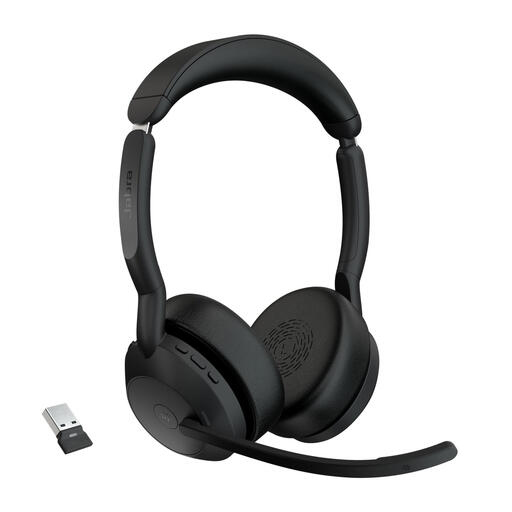
A wireless option if you want to move around during the update and can use Bluetooth or the adapter with your computer.
Bluetooth, call and mute controls, a pre-paired USB adapter and a stated battery life of up to 18 hours.
 No image available
A wired option if you want to use a 3.5 mm connection or the USB connection via the controller supplied.
The product description lists stereo sound, a 3.5 mm connection, a LINK MS controller for USB and a microphone for calls.
 No image available
A wired option for anyone looking for a USB-A connection and a microphone that’s quick to mute.
The product description lists a USB-C adapter cable, a noise-cancelling microphone, flip-to-mute controls, on-earcup volume controls and an adjustable headband.
No. A headset handles audio, not your camera lighting. Zoom Support notes that daylight affects how the camera captures a room, so check the image and adjust your position or lighting if needed.
Select the correct speaker and microphone in your meeting app and listen to a test recording. Zoom Support offers a speaker and microphone test; position the microphone boom close to your mouth, following the instructions for your model.
Not necessarily. Check whether the feature applies to the microphone or provides isolation for your ears. Logitech describes microphone noise cancellation for the Zone Wired; Jabra also describes passive isolation from the ear cushions on the Evolve2 40 SE.
According to Zoom Support, it can: people on the other end of a call may sometimes experience lower microphone audio quality with Bluetooth headphones. So make a test recording using the headset and meeting app you plan to use. This doesn’t mean every Bluetooth model performs the same way.