For a weather forecast recorded while seated, your choice depends mainly on your recording equipment and whether you’ll be on camera. A USB headset may suit a computer setup; a broadcast headset may be a better fit for an audio interface with separate inputs. A compact headworn microphone keeps earcups out of shot, but doesn’t provide headphones for monitoring.
Which setup is right for you?
Presenter recording directly to a computer
You want to record a single voice while seated, without a separate mixer. Check that the USB connection is compatible, which recording source is selected and where the microphone boom sits. Logitech describes the H390 as a USB computer headset.
Weather presenter on camera
You want to speak without large earcups dominating your presentation. A compact headworn microphone may suit your needs, but check the connection and how you’ll monitor the audio too. Sennheiser describes the HSP Essential Omni as a headworn microphone that connects to a bodypack.
Presenter using an audio interface or mixer
You want to monitor your recording as you go, and may need separate inputs for the microphone and headphones. Check both connections and any power requirements before choosing a broadcast headset. Audio-Technica specifies separate microphone and headphone connections for the BPHS1.
What should you look for when buying?
First, check the complete connection path between the microphone, computer or recorder and any headphones. Then decide whether the headset can be visible and how you want to monitor the recording.
| What to consider |
What should you check? |
Who is this important for? |
| Clarity of a single voice |
Check whether the microphone boom is adjustable and make a test recording of your voice in the room where you’ll be recording. |
If I’m recording a single voice, I want to position the microphone properly and reduce plosive sounds. Around 33% of consumers prioritise speech clarity. |
| Connection to your recording equipment |
Make a note of the available inputs and check the exact connectors, cables and any power requirements. |
With my computer, recorder or mixer, I want to know in advance that the entire connection chain will work. Around 27% of consumers give connection compatibility their highest priority. |
| Visibility on camera |
Decide whether the presenter will be on camera and check whether a headset with earcups or a compact headworn microphone will work better in the frame. |
If I’m presenting on camera, I want the microphone setup to suit the look of the shot. Around 20% of consumers prioritise a discreet appearance. |
| Monitoring and wearing comfort |
Check whether the setup you choose provides headphone monitoring, and whether fit and replaceable parts matter to you. |
When recording repeatedly, I want to be able to listen back and wear the headset comfortably. Around 20% of consumers prioritise monitoring and wearing comfort. |
Common mistakes
-
Assuming a compatible plug means the whole recording setup will work
A headset with TRRS, a model with separate microphone and headphone plugs, and a microphone for a bodypack don’t necessarily use the same connections. RØDE describes an additional XLR connection option for the NTH-100M; the BPHS1 has separate plugs for the microphone and headphones.
Before buying, map out the route from the microphone and headphones to the inputs on your own equipment.
For connection to separate mixer inputs, the RØDE NTH-100M may need a splitter; for an XLR microphone input, RØDE describes a compatible adapter that supplies plug-in power.
-
Confusing a compact headworn microphone with a complete headset
Sennheiser’s manual describes connecting the HSP Essential to a bodypack. This type of product doesn’t include headphones for monitoring.
Choose this type only if the connection and a separate way to monitor the audio suit your setup.
Your setup may need a compatible bodypack and a separate monitoring solution.
-
Taking a claim about calls as proof of the sound you want for narration
Logitech positions the H390 for video calls. That alone doesn’t predict how a recorded weather forecast will sound in your room.
Record a short script, listen back and assess speech clarity and plosive sounds before settling on your setup.
-
Assuming every wireless microphone frequency can be used everywhere
The Dutch Authority for Digital Infrastructure explains that some frequency bands require a licence and that the available frequencies vary by location.
Check which frequencies are available for the specific transmitter and recording location.
Depending on the available frequencies, you may need to choose a different transmitter or frequency.
Brands to consider
Logitech
The H390 is a wired USB computer headset for anyone who wants to record directly to a compatible computer.
- Logitech lists in-line controls, an adjustable headband and a positionable microphone.
- The manufacturer positions this model for video calls; that doesn’t establish its recording quality for a weather forecast. Check which USB version is compatible with your device.
RØDE
The NTH-100M combines over-ear headphones with a detachable microphone for anyone who wants to record and monitor audio.
- RØDE describes the microphone as detachable and specifies the supplied TRRS cable for using it.
- Separate mixer inputs may require a splitter; for an XLR microphone input, RØDE describes a compatible adapter that supplies plug-in power.
Audio-Technica
The BPHS1 is a broadcast headset for a setup with separate microphone and headphone connections.
- Audio-Technica specifies a cardioid dynamic microphone, closed-back earcups, and a replaceable cable and ear pads.
- The supplied cable uses XLR for the microphone and a 6.3 mm plug for the headphones; it doesn’t connect directly via USB.
Sennheiser
The HSP Essential Omni is a compact headworn microphone for presenters who want to keep equipment out of shot.
- Sennheiser lists an omnidirectional microphone and a weight of 25 g.
- The manual describes connecting it to a bodypack. This type of microphone doesn’t include headphones for monitoring.
Shure
The SM35 is a headworn microphone for use with a compatible bodypack or, with the specified preamp, a wired XLR setup.
- Shure recommends positioning it at the corner of your mouth, rather than directly in front of it, to reduce plosive sounds.
- For the TQG and XLR connections, check the connector and power requirements. The microphone itself doesn’t provide headphones for monitoring.
Joybuy products
These headsets are worth considering if you’re looking for a microphone for a spoken recording. For each model, check the connection and whether your recording device recognises the microphone as an input.
 No image available
Razer Kraken V3 X
Worth considering if you’re looking for a headset microphone for a spoken recording; check whether your recording device recognises the microphone and make a test recording first.
View at Joybuy
 No image available
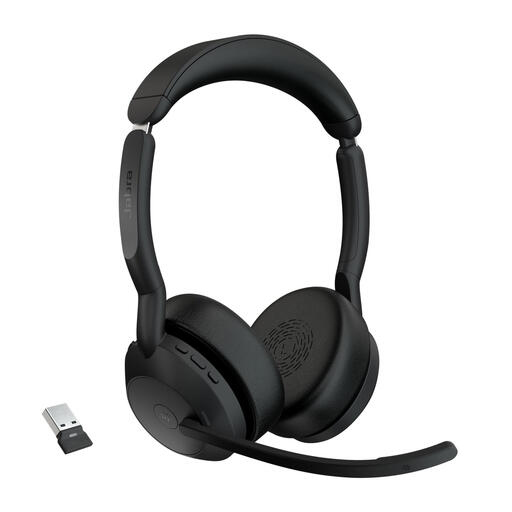
Jabra Evolve2 55 Link380a MS Stereo
An option to consider if you want to monitor the audio while recording; check whether the headset microphone is available as a recording source on your computer.
View at Joybuy
 No image available
Jabra Evolve2 75 headset
If you’re considering this headset for a spoken recording, check that it connects to your recording equipment and make a test recording to assess the microphone input.
View at Joybuy
 No image available
Jabra Evolve2 75 USB-A MS Teams Black
The product name specifies USB-A; check that this connection is compatible with your recording device and that your recording software uses the microphone you want.
View at Joybuy
 No image available
Jabra Evolve2 55 Wireless Stereo Headset
With this wireless model, it’s a good idea to test the connection and selected microphone input with your recording device before you start recording.
View at Joybuy
Frequently asked questions
Should the microphone be directly in front of your mouth?
Not with every headset. For the SM35, Shure recommends positioning it at the corner of your mouth, rather than directly in front, to reduce plosive sounds. Follow the instructions for your model and check the position with a test recording.
Can the RØDE NTH-100M connect directly to an XLR microphone input?
Not with just the TRRS plug. RØDE specifies the supplied TRRS cable and describes a compatible adapter that supplies plug-in power for an XLR microphone input. Also check how to connect the headphones if you want to monitor the recording as you go.
How can you monitor audio with a compact headworn microphone?
Arrange a separate way to listen to the recorded audio. According to Sennheiser’s manual, the HSP Essential is a microphone that connects to a bodypack, not a pair of headphones. So check both the connection and the monitoring setup you’ll use.
Can you use any wireless microphone in the Netherlands without a licence?
No. It depends on the frequency and where you’re recording. The Dutch Authority for Digital Infrastructure says some frequency bands require a licence; a licence is generally not needed when using the appropriate licence-exempt frequencies. Check the frequency used by the specific transmitter and what’s available at your location.


