
Voiceover artist recording directly to a computer
You want to record and listen back using a single headset. Check whether your computer has a combined headset socket or separate input and output sockets.


Choose a headset microphone that works with both the microphone and headphone connections on your recording device, and make a test recording first. A headset with a combined TRRS connection can be used with a compatible computer; a broadcast headset with separate plugs is more likely to suit an existing audio interface. A standalone headworn microphone is only an option if you already have a separate way to monitor your recording.
You want to record and listen back using a single headset. Check whether your computer has a combined headset socket or separate input and output sockets.
You already use separate microphone and headphone connections and are looking for a headset with a positionable boom microphone. Check that the plugs are compatible with your interface.
You want to keep the microphone in a similar position across several passages. Also consider the fit and ear cushions: product features alone cannot tell you whether a headset will feel comfortable.
Start by checking the microphone and headphone connections. Then decide whether you need a complete headset for monitoring or already have a separate way to listen back.
| What to consider | What to look for when buying | Who is this important for? |
|---|---|---|
| Voice recording | Check the microphone position and make a test recording using the text and in the room where you plan to record. | If I’m recording several passages, I want my voice to be clear and the microphone to stay in a consistent position. Around 33% of consumers prioritise voice recording above all else. |
| Connection | Check both the microphone and headphone plugs, as well as any adapter or microphone power requirements. | If I want to use my existing computer or interface, every plug and power requirement must be compatible. Around 27% of consumers prioritise compatibility with their existing recording equipment. |
| Room noise | Make a test recording in the place where you plan to record. Closed earcups alone do not indicate how much ambient sound the microphone will pick up. | When there’s noise around me, I want to hear what makes it into the recording and what I can hear through the earcups. Around 20% of consumers put room noise at the top of their list. |
| Comfort and maintenance | Consider the fit and adjustability. If the cushions or cables are replaceable, check which parts are compatible with the model. | For frequent or long recording sessions, I want a comfortable headset and to know how to replace its parts. Around 20% of consumers prioritise comfort and maintenance. |
A plug can fit without the microphone and headphones both working properly. For the NTH-100M, RØDE describes an adapter that supplies plug-in power when connecting to an XLR microphone input.
Before buying, check the connections and power requirements of your recording device. Don’t rely on the shape of the plug alone.
You may need a suitable splitter or power adapter for certain connections.
The Shure SM35 is a headworn microphone and does not include headphones for listening back to your recording.
Choose this option only if you have already arranged a separate pair of headphones and a suitable connection.
You’ll also need a separate way to monitor your recording.
According to the manufacturer, beyerdynamic supplies the DT 297 PV MK II without a connection cable. Without a compatible cable, you won’t be able to use the headset with the intended connections.
First note the connections on your interface, then check which cable version is compatible with the headset and your equipment.
The connection cable must be chosen separately.
RØDE describes the NTH-100M as headphones with a detachable headset microphone, designed for listening and recording voiceovers.
Audio-Technica describes the BPHS1 as a broadcast headset with closed-back earcups and a dynamic microphone on an adjustable boom.
beyerdynamic describes the DT 297 PV MK II as a closed-back broadcast headset with a condenser microphone and a positionable microphone boom.
According to Shure, the SM35 is a headworn microphone for hands-free speech, not a complete headset for monitoring.
These product options combine a microphone with audio output for recording and monitoring. Check that the connection is compatible with your recording device.
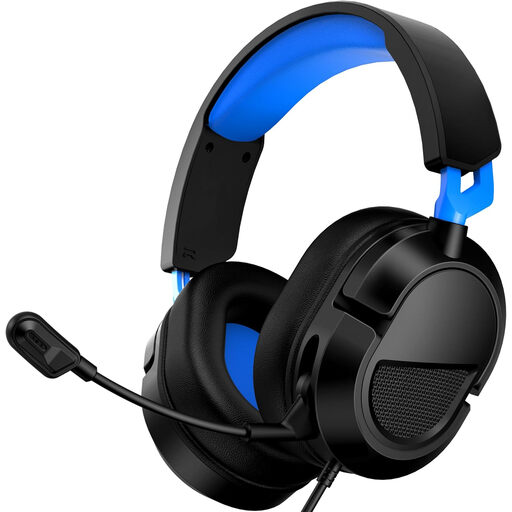 No image available
An option if your recording device has a compatible 3.5mm socket and you want to record and monitor using the same headset.
The product name describes a wired headset; the product information lists a flexible microphone and 3.5mm connection.
 No image available
A wired headset to consider if your recording device has a compatible 3.5mm socket and you want to listen through the same headset.
The product information lists a 3.5mm connection and a cardioid microphone.
 No image available
An option for recording on a computer with a compatible USB connection, if you also want to listen through the headset.
The product information lists USB, stereo audio and an adjustable microphone.
 No image available
An option if you want to monitor your recording and need a wireless connection to a computer. Check the connection and mono configuration.
The product information lists Bluetooth and a USB-A Bluetooth adapter in the box. This is the mono version.
 No image available
A wired headset to consider if your computer has a compatible USB connection and you want a detachable microphone.
The product information lists a detachable microphone, USB connection, 50 mm drivers, 7.1 surround sound and RGB lighting.
No. Check the microphone input, headphone output and any power requirements separately. The standard Audio-Technica BPHS1 has XLR for the microphone and 6.3 mm for the headphones. To connect the RØDE NTH-100M to an XLR microphone input, RØDE describes an adapter that supplies plug-in power.
Shure recommends positioning the SM35 microphone beside your mouth, rather than directly in front of it, and using a windscreen. Make a short test recording with your own headset before recording the full text.
If you’re a Dutch consumer, the seller is responsible for the statutory guarantee. ACM ConsuWijzer explains that the seller must provide a free remedy if a product breaks sooner than expected during normal use; this is separate from any manufacturer’s warranty. For online purchases from a business, you’ll usually also have a 14-day cooling-off period, subject to legal exceptions, as explained by the Dutch government.
First, consider which privacy rules apply to processing and publishing other people’s personal data. The Dutch Data Protection Authority explains that you need a valid legal basis under the GDPR; consent is required in many cases, but it is not the only possible legal basis.