
Expressive voice-over artist
You switch between speaking softly and loudly, and want to record clearly without distortion. Audacity recommends checking the loudest passage on the recording meter before making your final recording.


If you’re recording directly on a computer, choose a headset with a USB version that suits your device. If you want to monitor your voice closely while recording, compare broadcast headsets with the separate connections you need. A headworn microphone may suit you if you move around a lot, but check which transmitter or power supply it requires. Whatever you choose, make a test recording of the loudest passage and lower the input level if the audio distorts.
You switch between speaking softly and loudly, and want to record clearly without distortion. Audacity recommends checking the loudest passage on the recording meter before making your final recording.
You can’t completely avoid background noise, so you want to pay attention to microphone placement and room acoustics. A directional pickup pattern or closed ear cups won’t, on their own, guarantee a quiet recording.
You already have a computer, interface or recorder, and want to check that its microphone and headphone connections, as well as any power requirements, are compatible with your chosen headset. RØDE, Audio-Technica, Shure and Jabra describe different cables and connection options for their models.
First, check that the connection is compatible with your recording device and that you can adjust the input level. Then make a test recording in which you speak both softly and loudly.
| What to consider | What to look for | Who it matters to |
|---|---|---|
| Voice and distortion | Check the microphone placement and whether you can adjust the input level. Audacity recommends watching the meter during the loudest passage; its guide states that clipping in a recording can’t be fixed afterwards. | When I speak softly and loudly, I want to remain clear without distortion. Around 31% of consumers give voice reproduction their highest priority. |
| Noise in the room | Check the microphone’s pickup pattern and boom adjustability. Also check whether the headphones are closed-back if you want to monitor your recording as you go. | When I can’t record in a completely quiet room, I want to know how to position and shield the microphone. Around 25% of consumers prioritise controlling background noise. |
| Connection and power | Compare the microphone input, headphone output, cable type and any power requirements with your recording device. The Jabra Evolve2 40 SE is available in USB-A and USB-C versions, according to its guide; Shure’s SM35-XLR setup requires a preamp with phantom power. | If I already have a recorder or computer, I want to make sure the headset can connect to it. Around 25% of consumers put device compatibility first. |
| Comfort and movement | Check the design, adjustability and cable routing. A headworn microphone doesn’t have built-in headphones for monitoring. | For longer takes or lots of movement, I want a design that suits the way I record. Around 19% of consumers give comfort or freedom of movement their highest priority. |
According to RØDE, the NTH-100M requires the supplied TRRS cable for the microphone. The Audio-Technica BPHS1 uses a separate XLR microphone plug and a separate headphone plug.
Before buying, compare the full cable and input specifications with those of your recorder or computer.
Depending on your setup, you may need a suitable splitter or interface.
The SM35’s TQG and XLR versions have different connection requirements. For the XLR setup, Shure describes a preamp that requires phantom power.
First decide whether you need the TQG or XLR setup, then check the power requirements and included components.
Your chosen setup may require a suitable preamp or bodypack.
A forceful line can still distort. According to Audacity, clipping in a recording can’t be undone afterwards.
Record the loudest part of your voice-over, check the recording meter, then set the input level before you start recording properly.
RØDE positions the NTH-100M as an over-ear headset for uses including broadcasting, podcasting and content creation. This version is worth considering if you want to record and monitor through the same headset.
Audio-Technica positions the BPHS1 as a wired broadcast headset for speech and interviews, for setups with compatible separate microphone and headphone connections.
The wired Evolve2 40 SE is worth considering if you want to record directly on a compatible computer. Jabra positions this model for calls, not specifically for expressive voice-overs.
The SM35 is a headworn microphone for hands-free speaking, for example if you move around while talking and don’t need built-in headphones.
Sennheiser positions the wired HMD 26 for uses including radio and outside broadcasts. Check the exact version and cabling for this setup.
These Joybuy picks are headsets for speaking and listening, including USB versions for use with a computer. Check that the connection is compatible with your recording device and make a test recording: the product descriptions focus on calls and aren’t a comparative test of expressive voice recordings.
 No image available
A headset for speaking and listening at the same time; the description focuses on calls and doesn’t prove its recording quality for an expressive voice-over.
USB-A version; the product description lists eight microphones and beamforming for calls.
 No image available
A mono headset for speaking and listening; check whether this design suits the way you want to monitor your voice while recording.
The product description lists three microphones and a supplied USB-A Bluetooth adapter.
 No image available
A wired headset for speaking and listening; compare its available connections with those on your computer or recorder.
The product description lists a 3.5mm connection and a supplied USB controller.
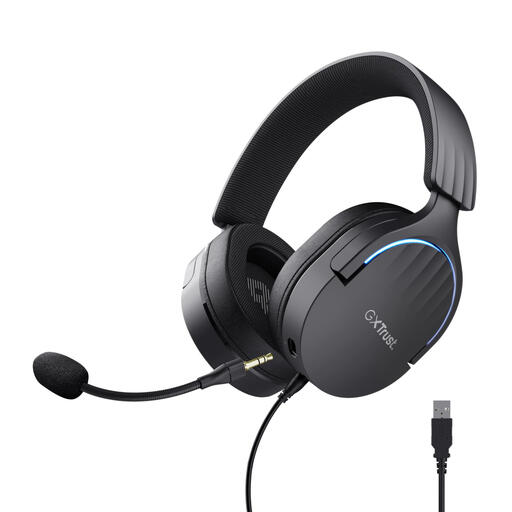 No image available
A USB headset with a detachable microphone for speaking and listening; check that its connection is compatible with your recording device.
The product description lists a flexible, detachable noise-cancelling microphone and connections for PC and PlayStation 4 and 5.
 No image available
A wired headset for speaking and listening; check whether USB-A or the supplied adapter is compatible with your computer.
The product description lists USB-A with a USB-C adapter cable and an adjustable headband.
Make a test recording of your loudest passage and watch the recording meter as you speak. Lower the input level if the meter reaches its upper limit; according to the Audacity guide, clipping in a recording can’t be undone afterwards.
Not without checking the inputs and outputs first. For the NTH-100M microphone, RØDE specifies the supplied TRRS cable; for devices with separate microphone and headphone connections, RØDE describes a supplied splitter.
Check the specifications for the exact version. Audio-Technica lists a replaceable cable and ear pads for the BPHS1; don’t assume the same applies to other models.
For qualifying consumer purchases made at a distance, the Dutch government generally states a 14-day cooling-off period. Check whether the seller and purchase meet that description; according to the Dutch government, purchases from a private individual aren’t covered by its explanation of distance selling.
Before publishing, consider which legal basis applies to processing other people’s personal data. The Dutch Data Protection Authority says that publishing personal data online requires consent in most cases. This doesn’t apply in the same way if you’re recording only your own voice.