Who is this buying guide for?

Narrators who speak close to the microphone

You want to keep the microphone in a consistent position while narrating and check for plosive sounds with a test recording. RØDE describes how to position the NTH-100M microphone to help reduce plosives, while Shure advises positioning the SM35 near the corner of your mouth.

Creators with a simple computer setup

You want to record directly onto a computer, so the right connection and selecting the headset as your input source are key. Logitech describes the H390 as a USB-A headset.

Creators who want to monitor their recordings

You want to listen back to longer recordings through your headset, so check that its style and headphone connection work with your equipment. Connections and designs vary by model; RØDE and Audio-Technica, for example, describe different headset setups.

What should you look for?

Wired USB headset

A good fit if: you want to record directly onto a computer and its USB connection is compatible with your device.

Keep in mind: Logitech primarily describes the H390 as a headset for calls. Make a test recording to assess how your voice sounds for a voice-over.

Headset with a 3.5 mm connection

A good fit if: you want to monitor your audio as you record and your recording device has a compatible headset input.

Keep in mind: check the connection and recording level of the exact model. RØDE describes the NTH-100M as an over-ear headset with a detachable microphone.

Broadcast headset with separate connections

A good fit if: you already have recording equipment with separate microphone and headphone inputs.

Keep in mind: according to its EU product specification, the Audio-Technica BPHS1 has a 3-pin XLR microphone connection and a 6.3 mm headphone connection.

What to consider What to check before buying Who should consider this?
Voice position and plosive sounds Check that the boom can be positioned near the corner of your mouth, then make a test recording with words containing p and b sounds. I want to keep the microphone consistently beside my mouth and assess plosive sounds in my own voice. Around 36% of consumers give voice position their highest priority.
Connection Compare the connectors on the exact model with the inputs on your computer, recorder or interface. Also check the input source in your software. I want to know in advance whether the headset will work with my existing recording equipment, without having to guess which connections to use. Around 29% of consumers put connection compatibility first.
Background noise Check the microphone’s direction and record a voice clip in the room where you plan to speak. I want to hear how sounds from my recording space come through before recording the full tour. Around 21% of consumers say managing background noise is their main concern when choosing.
Comfort and monitoring Consider the fit, adjustability and headphone connection. Check whether your software supports monitoring. For longer takes, I want to wear the headset comfortably and listen back to my recording. Around 14% of consumers prioritise comfort and monitoring.

Common mistakes

  • Confusing ‘close’ with directly in front of your mouth

    For the SM35, Shure advises against positioning the microphone directly in front of your mouth to help reduce plosive sounds. The ideal position can vary between headsets and voices.

    Start near the corner of your mouth and record a few sentences with p and b sounds before narrating the full tour.

  • Assuming all headset plugs are interchangeable

    The Audio-Technica BPHS1 has separate microphone and headphone connections, which is different from the USB-A connection Logitech specifies for the H390.

    Before choosing a headset, compare the connectors on the exact model with the inputs on your recording equipment.

  • Assuming call features mean good voice-over quality

    Logitech positions the H390 for calls, and Jabra describes features of the Evolve2 40 SE for calling. That alone doesn’t tell you how a virtual tour recording will sound in your space.

    Make a short test recording and assess clarity, vocal tone and background noise where you plan to record.

Brands to consider

RØDE

According to RØDE, the NTH-100M combines over-ear headphones with a detachable microphone, making it suitable for uses including media and podcasting.

  • RØDE highlights the microphone positioning to help reduce plosive sounds, as well as an adjustable headband.
  • Check the connection and recording level with your own equipment. The manufacturer’s description isn’t an independent recording test.

Audio-Technica

The BPHS1 is a broadcast headset with a flexible microphone boom, designed for uses including announcements and interviews.

  • The EU product specification lists a cardioid dynamic microphone, closed earcups, and a replaceable cable and earpads.
  • The microphone and headphone connections are 3-pin XLR and 6.3 mm respectively. Check that your recording equipment is compatible.

Logitech

The H390 is a wired computer headset for anyone considering a USB-A setup.

  • Logitech specifies a positionable microphone boom, mute and volume controls, and a USB-A connection.
  • The manufacturer positions this model primarily for calls. Check the exact version and assess how your voice sounds with a test recording.

Jabra

The Evolve2 40 SE is a wired business headset available in mono and stereo versions.

  • Jabra specifies a microphone boom, three digital MEMS microphones and several USB versions.
  • The stated reduction of background conversations is a brand claim for calling, not an independent assessment of narration recordings.

Headsets at Joybuy

These product picks focus on wired headsets and models with a positionable microphone for narration and monitoring. Check that each version has a connection compatible with your recording equipment.

Trust GXT 498W Forta wired over-ear gaming headset, white

Trust GXT 498W Forta wired over-ear gaming headset, white

Could suit you if you want to adjust the microphone position. Make a test recording to check that it sits beside your mouth and listen for any plosive sounds.

Wired; 50 mm drivers; over-ear; officially licensed for PS5; white.

View at Joybuy

Razer Kraken V3 X headset, black

Razer Kraken V3 X headset, black

If you’re considering this headset for voice recordings, check that its connection and input source work with your equipment, then make a test recording in your own space.

Headset; black.

View at Joybuy

Jabra Evolve2 55 wireless stereo headset

Jabra Evolve2 55 wireless stereo headset

Could suit you if you’re looking for a wireless stereo headset to listen back to recordings. Check how this version works with your recording equipment first.

Wireless; stereo.

View at Joybuy

Razer BlackShark V2 X 7.1 wired gaming headset, black

Razer BlackShark V2 X 7.1 wired gaming headset, black

Could suit you if you’re looking for a wired headset. Check the connection on this version, then assess the microphone position and how your voice sounds with a test recording.

Wired; 7.1; multiplatform gaming headset; black.

View at Joybuy
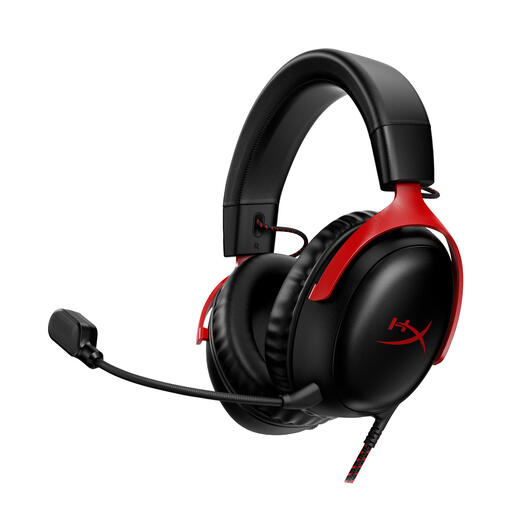
HyperX Cloud III gaming headset for PC, PS5 and Xbox Series X|S, black and red

HyperX Cloud III gaming headset for PC, PS5 and Xbox Series X|S, black/red

Could suit you if you’re looking for a headset for one of the listed platforms. Check which connection works with your recording equipment and make a test recording.

For PC, PS5 and Xbox Series X|S; black/red.

View at Joybuy

Frequently asked questions

Where should you position the microphone by your mouth?

Start near the corner of your mouth, rather than directly in front of it. Shure recommends this position for the SM35 to help reduce plosive sounds. Use a test recording to check the position of your headset.

Can you connect any headset directly to your laptop?

No, it depends on the connections on the headset and your laptop. The Logitech H390 version reviewed uses USB-A, while the Audio-Technica BPHS1 has separate XLR and 6.3 mm plugs. Check these connections against your computer, recorder or interface before buying.

What if a headset you bought online doesn’t meet your expectations or is faulty?

Many online consumer purchases generally come with a 14-day cooling-off period, although exceptions may apply. In the Netherlands, you’re also entitled to a product that meets legal requirements; there is no fixed statutory guarantee period. The Dutch government explains these consumer rights. Check the terms that apply to your specific purchase.

Can you record other people’s identifiable voices during a virtual tour?

If an organisation processes personal data in doing so, the Dutch Data Protection Authority says it must establish an appropriate legal basis before processing begins. Whether this rule applies to a particular recording, and which legal basis is appropriate, depends on the circumstances.
