For recording on a computer with a suitable USB port, a wired USB headset is a straightforward option. If you want to record and listen back through the same headset, a model with a detachable microphone may work, provided your device has the right microphone input. A broadcast headset with separate plugs requires compatible recording equipment, while a wireless model needs a compatible receiver and charging management. Before a long rehearsal, make a test recording with both quiet and louder passages, then assess the microphone position and playback volume for yourself.
Who is this choice relevant to?
Storytellers who listen back to each take
If you record passages repeatedly, look for a microphone position you can set consistently, and listen back to test recordings featuring both quiet and emphatic lines. Audacity’s manual explains how to check a test recording for clipping.
Storytellers who practise for long stretches
If you wear your headset during longer rehearsals, assess the fit and ear cushions during a session that reflects your usual practice. RØDE and Audio-Technica describe adjustable or replaceable parts on specific models, but that doesn’t mean everyone will find them equally comfortable.
Storytellers with an existing recording setup
If you want to record on your computer, recorder or interface, check that both the microphone and headphones work with the available connections. Product information from Logitech, RØDE and Audio-Technica lists USB, TRRS, XLR and 6.3 mm connections on various models.
What should you look for when choosing?
Wired USB computer headset
Best suited to: recording and listening back on a computer with a compatible USB port.
Consider: Logitech positions the H390 primarily for calls; that doesn’t tell you how a storytelling recording will sound in your room.
Over-ear headset with detachable microphone
Best suited to: using the same headset to record and listen back, if you have a suitable microphone input.
Consider: RØDE specifies the supplied TRRS cable for the NTH-100M, so check which connection your device has.
Broadcast headset with separate plugs
Best suited to: recording setups with separate microphone and headphone connections.
Consider: the standard Audio-Technica BPHS1 has a 3-pin XLR microphone plug and a 6.3 mm headphone plug, so it isn’t a USB headset.
Wireless headset with USB receiver
Best suited to: situations where freedom of movement matters and your device works with the USB receiver.
Consider: the Audio-Technica ATH-M50xSTS-WL needs charging. The manufacturer states up to 24 hours of use after a full charge, but this isn’t a real-world test for your sessions.
| What to consider |
What should you check? |
Who is this most important for? |
| Voice and delivery |
Check that you can position the microphone boom securely, and make a test recording with both quiet and emphatic lines. Check the input level and listen for distortion in louder passages. |
I want to compare my voice and delivery accurately across repeated takes. Around 31% of consumers prioritise comparing voice and delivery. |
| Connection |
Check the exact model version and supplied cable, along with both the microphone and headphone inputs on your device. |
I want the microphone and headphones to work with my computer, recorder or interface. Around 25% of consumers give connection the highest priority. |
| Comfort |
Look at the adjustability and ear cushions, and assess the fit during a full practice session. |
I want a fit that won’t distract me during longer rehearsals. Around 25% of consumers prioritise comfort. |
| Room and freedom of movement |
Make a test recording in your own room. With a wireless model, also check receiver compatibility and the stated battery life. |
I want to reduce background noise when listening back, or move around without a cable. Around 19% of consumers prioritise these room or movement needs. |
Common buying mistakes
-
Assuming one compatible plug connects both functions
A headphone connection doesn’t automatically mean the microphone will work too. The RØDE NTH-100M requires the supplied TRRS cable, while the standard Audio-Technica BPHS1 has separate XLR and 6.3 mm plugs.
Before buying, check the exact headset version and whether your device supports both microphone and headphone connections.
-
Treating call specifications as proof of suitability for storytelling recordings
Logitech describes the H390 primarily as a headset for calls. That doesn’t tell you how it will capture your voice, speaking style or room.
Make and listen back to a short test recording in the room where you plan to practise.
-
Focusing only on the microphone when practising repeatedly
Fit, cable and replaceable parts can also matter if you wear the headset often. When listening back, keep the volume moderate too.
Follow the care instructions for the exact model and assess the fit during a full rehearsal.
Brands to consider
RØDE
The NTH-100M is an over-ear headset with a detachable microphone, which RØDE positions for uses including podcasting and content creation.
- According to the RØDE manual, the headband can be locked in position and the ear cushions can be removed.
- RØDE specifies the supplied TRRS cable for the microphone. Check that your device has a suitable input; claims about voice quality and comfort aren’t independent recording tests.
Audio-Technica
The wired BPHS1 and wireless ATH-M50xSTS-WL offer different connection options for recording and monitoring.
- Audio-Technica lists a replaceable cable and ear cushions for the BPHS1. According to the manufacturer, the ATH-M50xSTS-WL works with a USB transceiver.
- The standard BPHS1 requires separate XLR and 6.3 mm connections. The stated battery life of the wireless headset isn’t a real-world test for your use.
Logitech
The H390 is a computer headset for use with a compatible USB connection.
- Logitech lists an adjustable headband, a positionable microphone and in-line controls for the H390.
- Logitech describes the H390 primarily for video calls; this isn’t an independent assessment of expressive storytelling recordings.
Jabra
The Evolve2 40 SE is an office headset to consider if you’ll also use the same headset for calls.
- Jabra describes this model as having passively isolating ear cushions and a flexible microphone boom.
- The benefits for calls and collaboration described by Jabra don’t prove that the model is suitable for a specific storytelling recording.
Shure
The WH20 series is an option if you’re looking for a headworn microphone that connects to suitable recording equipment.
- Shure describes an adjustable microphone boom and several connection options.
- The WH20 is a microphone, not a complete headset for listening back to recordings. You’ll need separate headphones for that.
Joybuy products for storytelling recordings
These wired headsets with microphones are intended for setups with USB or a suitable 3.5 mm connection. Before buying, check which connection your recording device uses.
 Image unavailable
Trust GXT 498W Forta, white, officially licensed for PS5
May suit recording and listening back if your recording device has a compatible 3.5 mm connection.
The product description lists a wired over-ear headset with a detachable, flexible microphone and soft ear cushions. The connection must be compatible with your device.
Joybuy
 Image unavailable
Jabra Evolve2 30 SE, USB-A
May suit recording and listening back on a computer with USB-A, if the stated connection works with your setup.
The product description lists two integrated microphones, stereo audio, an adjustable headband and memory foam ear cushions. For a device with USB-C only, the description recommends a compatible adapter.
Joybuy
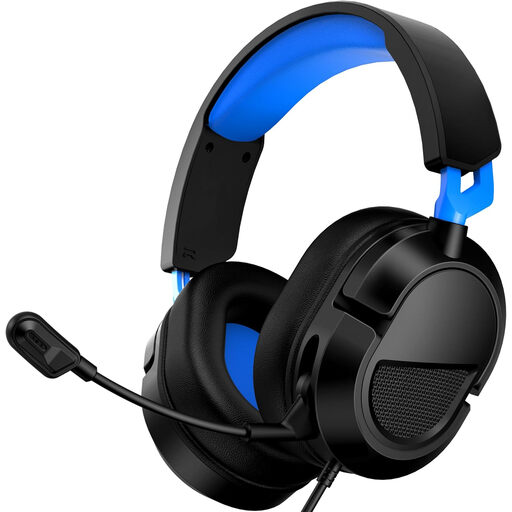 Image unavailable
AOC Wired Gaming Headset for PS5, Xbox Series X|S, Xbox One and PC
May suit a recording setup with a compatible 3.5 mm connection if you’re looking for a headset with a microphone.
The product description lists a flexible microphone, adjustable headband and soft ear cushions. Check that the 3.5 mm connection works with your recording device.
Joybuy
 Image unavailable
Logitech PC 960 USB headset
May suit recording on a computer with USB if you want to adjust the microphone position between takes.
The product description lists an adjustable, positionable microphone boom, stereo audio and in-line controls. The headset is designed to connect to a USB port.
Joybuy
 Image unavailable
Logitech H340 USB headset, black, wired
May suit computer recording via USB if you want to listen back through the headset between takes.
The product description lists plug-and-play USB, digital stereo audio, an adjustable microphone and a lightweight, adjustable headband. It’s designed to connect to a computer’s USB port.
Joybuy
Frequently asked questions
Can I connect the microphone on any headset to my headphone output?
No. Also check that your device has a suitable microphone input. RØDE specifies the supplied TRRS cable for the NTH-100M and describes a splitter for devices with separate 3.5 mm connections. The standard Audio-Technica BPHS1 has separate XLR and 6.3 mm plugs.
How can I prevent distortion in an emphatically delivered passage?
First, make a short test recording of the loudest passage and check the recording meter or waveform. Lower the recording level if the audio clips, then test again. Audacity’s manual gives a maximum peak of around −6 dB as a guide for this approach.
What should I look for in a headset I’ll wear often?
Assess the fit during a full practice session and follow the care instructions for the exact model. The RØDE manual describes removable ear cushions and headband padding for the NTH-100M; Audio-Technica lists replaceable ear cushions and a cable for the BPHS1.
What cooling-off period and guarantee apply to an online purchase in the Netherlands?
For eligible distance purchases from a business, the Dutch government generally provides a 14-day cooling-off period, although exceptions may apply. In the Netherlands, products are covered by a legal guarantee, with no fixed statutory guarantee period; if a product is faulty, contact the seller. Check the terms that apply to your purchase.
Does a headset always need a CE mark in the Netherlands?
No. A CE mark is required if the product is covered by EU rules that require it. According to Your Europe, CE marking is not a general quality certificate issued by the EU for every product. Check the rules for the product category and the exact version.


