
Storytellers who want to record quickly on a computer
If you want to record a short practice session and listen back without separate audio equipment, the Logitech H390 is described by Logitech as a USB headset that connects to a computer.


For recording and listening back on a computer, a wired USB headset is a sensible starting point, provided its connector is compatible with your device. If you want precise control over microphone positioning, you could also consider a headset designed for recording. RØDE specifies the supplied TRRS cable for the NTH-100M, while the Audio-Technica BPHS1 has separate microphone and headphone connectors. Before you buy, check the connection and make sure your recording software recognises the headset as a microphone input.
If you want to record a short practice session and listen back without separate audio equipment, the Logitech H390 is described by Logitech as a USB headset that connects to a computer.
If you’re recording longer practice sessions, you may want to consider comfort, an adjustable microphone position and a connector that suits your recording setup. RØDE and Audio-Technica describe headsets with a boom microphone and headphones.
If you want to connect a headset or headworn microphone to equipment you already use, check the microphone input and headphone connection separately. The Shure WH20 does not have built-in headphones.
Choose this option if: you want to practise at a suitable computer while seated and connect easily.
Bear in mind: the exact USB type and whether your recording software can use the microphone input.
Choose this option if: you want to position the microphone near your mouth and listen back through the headset.
Bear in mind: the connection. Some models need the supplied TRRS cable or have separate plugs for the microphone and headphones.
Choose this option if: you already have suitable recording equipment and separate headphones.
Bear in mind: a headworn microphone such as the Shure WH20 does not let you listen back on its own.
Make your choice based on the connection, microphone position and how you want to listen back to your recording. A product description can’t tell you exactly how your storytelling voice will sound.
| What to consider | What should you check? | Who should consider this? |
|---|---|---|
| How your storytelling voice sounds | Position the microphone boom and make a test recording, speaking both softly and more loudly. | I want to be able to assess my words and delivery clearly when listening back. Around 36% of consumers say how their voice sounds is their top priority. |
| Connecting and recording | Check that the plug fits your device and select the headset as both the input and output in your recording app. | I want to record on my computer without separate recording equipment. Around 29% of consumers prioritise a simple connection that works. |
| Comfort and listening back | Consider adjustability, ear cushions and whether you need built-in headphones. | For longer seated practice sessions, I want an adjustable fit and the ability to listen back to my takes straight away. Around 21% of consumers prioritise wearing comfort. |
| Sound in the room | Make a test recording in the room where you practise and listen for your voice and background noise. | I practise in a room where background noise is my main concern. Around 14% of consumers prioritise handling ambient noise. |
A USB-A headset, a TRRS headset and a model with separate XLR and 6.3mm plugs won’t necessarily work with the same recording setup.
Before you buy, map out the whole signal path: from the microphone to the recording app, and from the playback device to your ears.
Product descriptions about calls don’t show how a headset will sound for a Dutch storytelling practice session.
Make a test recording in your own space and listen back to assess it.
Additional cover does not replace your statutory rights if a product is faulty. The Dutch government explains that there is no fixed statutory warranty period in the Netherlands.
Check what extra cover an offer includes, and contact the seller if your product is faulty.
The NTH-100M combines headphones with a detachable headset microphone.
The BPHS1 is a broadcast headset with closed-back earcups and a movable microphone boom.
The H390 is a computer headset for anyone who wants to practise over USB.
The Evolve2 40 SE is a wired office headset available in mono and stereo versions.
The WH20 range consists of headworn microphones without built-in headphones.
These product picks are for anyone looking for a headset microphone to record while seated at a fixed spot and listen back to their narration through a headset.
 No image available
The detachable boom microphone and headset are worth considering if you want to record and listen back through the same headset.
The product information lists a mute indicator and USB-A and USB-C connections. Check which connection suits your setup.
 No image available
The product name suggests a USB headset with a microphone for anyone who wants to try recording and listening back through one headset.
The product information lists an adjustable headband and a rotating microphone boom. Check that your recording software can use the microphone input.
 No image available
This wired headset is worth a look if you’re after a USB headset for recording and listening back at your regular spot.
The product name specifies USB Type-A. The product information also lists a USB-C adapter cable and a fold-up microphone boom with a mute function. Check which version is included.
 No image available
According to the product information, this wired headset has a microphone and stereo audio, so you can listen back to recordings through the same headset.
It has a 3.5 mm connection. Check that your recording device can record a microphone signal through it.
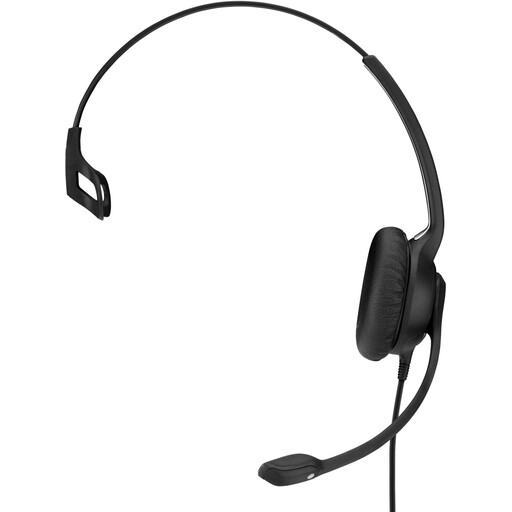 No image available
The product information describes a USB headset with a flexible microphone boom, which is worth considering if you record at a fixed spot.
The product information also lists an adjustable headband and a weight of 58 grams. Check the microphone settings in your recording software.
Select the headset as the microphone input in your recording software, then make a short test recording and listen back. Also check that the plug fits your computer: the Logitech H390 has a USB-A version, while the Audio-Technica BPHS1 uses separate connections for the microphone and headphones.
No, you can’t assume that. Jabra says that not all mobile USB-C devices or apps support an audio connection for the Evolve2 40 SE. So check your device, app and the exact headset version.
Check the position of the microphone boom and listen back to a test recording. Audio-Technica supplies windscreens with the BPHS1, while RØDE says the NTH-100M’s microphone position is designed to reduce plosive sounds. You’ll need to judge how it sounds with your own voice.
You’re entitled to a product that works properly, and you can contact the seller if it’s faulty. According to the Dutch government, there is no fixed statutory warranty period in the Netherlands. If you’re considering additional cover, check what extra protection it offers.
This depends, among other things, on how you use it and whether the GDPR applies. According to the Dutch Data Protection Authority, processing personal data purely for personal or household use falls outside the GDPR. If your use falls outside this exception, you’ll need a legal basis under the GDPR. This does not determine which other rules apply to every recording or publication.