
Soft-spoken narrator
Wants to capture even quiet words clearly. An adjustable microphone boom and a test recording in your own voice can help you find a suitable position and recording level.


Start with a headset microphone that has an adjustable boom and a connector that works with your recording device. A USB headset can make it easier to connect to a computer, while a broadcast headset with separate connectors needs compatible inputs and may require extra equipment. Make a test recording with the narrator and listen back to check that quiet words are clear, without distortion or distracting background noise.
Wants to capture even quiet words clearly. An adjustable microphone boom and a test recording in your own voice can help you find a suitable position and recording level.
Wants to find out how much room noise gets into the recording and whether the narration is still clear when played back.
Wants to check in advance that the microphone and headphone connections, and any power requirements, are compatible with their equipment.
Choose this option if: you want to record directly on a computer and a simple connection matters to you.
Worth considering: Logitech describes the H390 as being for calls and meetings. That alone doesn’t tell you how the headset sounds when recording softly spoken audio description.
Choose this option if: you want to record through a compatible microphone input and monitor the recording with the same headset.
Worth considering: RØDE specifies that the supplied TRRS cable is needed for the NTH-100M microphone to work correctly, so check your device’s input.
Choose this option if: you already have a compatible microphone input and headphone output, for example on an audio interface.
Worth considering: Audio-Technica states that the BPHS1 has separate XLR and 6.3mm connections, so your equipment needs to be compatible.
Choose this option if: you want to compare the BPHS2Ca with a dynamic version and can check the connections in your recording setup.
Worth considering: also check what power the condenser microphone needs in your setup. The microphone type alone doesn’t tell you how it will sound with a soft voice.
First, check which connection works with your equipment. Then assess the recording for clarity, background noise and comfort.
| What to consider | What should you check? | Who is this important for? |
|---|---|---|
| Clarity of quiet words | Record both quiet and louder passages. Check the recording meters and listen back to make sure the quiet words remain audible without distortion. Adobe describes clipping as distortion that occurs when the audio level exceeds the available limit. | When I record a soft voice, I don’t want quiet words to disappear when I play the recording back. Around 36% of consumers prioritise being able to hear quiet words clearly. |
| Background noise and plosives | Record a quiet section as well as words with p and b sounds. RØDE says the NTH-100M microphone is positioned to help reduce plosives; listen for yourself to see how it sounds in your room. | If I’m recording in a noisy room, I want to hear how much room noise and mouth noise are picked up. Around 29% of consumers prioritise reducing unwanted noise. |
| Compatibility with your recording setup | Check the exact headset model, microphone input and headphone output. If you’re using a condenser microphone, also check what power it needs. | If I already have a computer, recorder or interface, I want to know in advance whether I can connect both the microphone and headphones. Around 21% of consumers prioritise compatibility with their existing equipment. |
| Comfort and monitoring | Check the fit during a representative recording session and make sure you can listen back through the connection you’ve chosen. | During longer sessions, I want to be able to keep wearing the headset and check the recording without constantly adjusting the microphone position. Around 14% of consumers prioritise comfort and monitoring. |
A plug that fits doesn’t guarantee that your recording device will receive the microphone signal. RØDE specifies the supplied TRRS cable for the NTH-100M; the BPHS1 has separate connections for the microphone and headphones.
Before you buy, compare the required plugs with the actual inputs and outputs on your computer, recorder or interface. You may also need a compatible cable, adapter or interface for the connection you choose.
Logitech presents the H390 as a headset for calls and describes it as having a noise-cancelling microphone. This isn’t an independent comparison of recordings featuring a soft-spoken narrator.
Try the headset with a test recording of your own voice in the room where you plan to record.
Sennheiser states that the cable is not included with the HMD 26, article number 700318.
Before you buy, check which cable and connectors you need for your recording device, and whether they’re included with the version you’ve chosen.
According to RØDE, the NTH-100M combines headphones with a detachable microphone and is suitable for uses including media production.
The BPHS1 has a dynamic microphone, while the BPHS2Ca is a separate version with a condenser microphone.
The H390 is a USB computer headset that Logitech presents as being for calls and meetings.
The wired HMD 26, article number 700318, is a broadcast headset with a dynamic microphone.
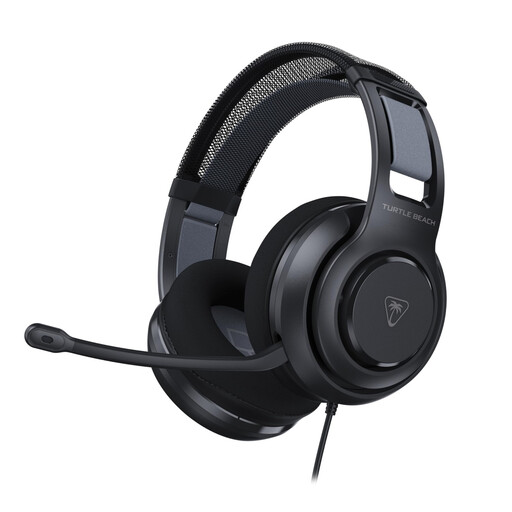
The selection below includes wired and wireless gaming headsets with a microphone. For audio description, make a test recording to check whether your chosen microphone and headset, and their connection, work with your voice and recording device.
 No image available
Could suit you if you’re looking for a wired headset with a microphone near your mouth; check the clarity with a test recording.
Hybrid wired; over-ear; flip-up microphone.
 No image available
Could suit a wired PC setup; make a test recording to check that quiet words are clear.
3.5mm connection; flip-to-mute microphone; for PC.
 No image available
Could suit you if you’re looking for a wired headset described as compatible with several gaming platforms and mobile devices; check that the connection works with your recording device.
3.5mm connection; flip-to-mute microphone; Nintendo Switch, Switch Lite, Switch OLED, PC and mobile.
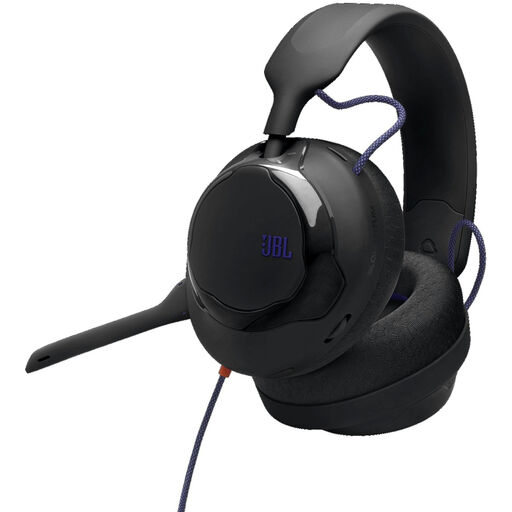 No image available
Could suit you if you’re considering a wired headset for different platforms; test it with your own voice and equipment before relying on it for a recording.
Wired multiplatform headset.
 No image available
Could suit you if you’re specifically considering a wireless headset; check that the connection works with your recording device and make a test recording.
According to the product name: Bluetooth for up to 200 hours and 2.4 GHz for up to 120 hours; detachable 10mm boom microphone.
No. Setting it to maximum can cause distortion. Make a test recording with both quiet and louder passages, check the recording meters and listen back. Adobe describes clipping as occurring when the audio level exceeds the available limit.
Not necessarily. Check whether your laptop’s connection accepts a microphone signal; RØDE specifies that the supplied TRRS cable is needed for the NTH-100M.
For a consumer purchase in the Netherlands, the seller is responsible under the legal guarantee, according to ACM ConsuWijzer, if the product doesn’t meet what you could reasonably expect. Depending on the circumstances, you may be entitled to a repair, replacement or, in some cases, a refund; a shorter manufacturer’s warranty doesn’t remove this right.
No. According to the European Commission, CE marking is required for product groups covered by applicable harmonised EU rules. Wireless radio equipment is covered by a specific EU regulatory framework; for a particular wireless model, check which conformity information applies. CE marking isn’t a quality mark for voice recordings.