
Reviewer hearing noticeable room echo
You record spoken reviews at home and want to capture your voice clearly, without assuming that a new microphone will treat the room acoustically.


Start with a microphone you can position close to your mouth, then make a test recording where you plan to speak. A headset can help capture your voice more directly, but it won’t fix the acoustics of a reverberant room. Choose a broadcast headset if you also want to monitor your recording and your equipment has the right connections. A computer headset offers a different connection option, while a separate head-worn microphone may require additional equipment for monitoring.
You record spoken reviews at home and want to capture your voice clearly, without assuming that a new microphone will treat the room acoustically.
You want to record and listen back using a computer. Check which connection and any software features will work with your equipment.
You may already have headphones or a recording input and want to consider whether a separate head-worn microphone will suit your setup.
A good fit if: you want to record your voice and monitor it through the same headset, and your equipment has the required connections.
Keep in mind: Audio-Technica specifies that the BPHS1 has an XLR microphone connection and a 6.3mm headphone connection, so you’ll need to be able to connect both.
A good fit if: you want to record directly on a compatible computer and are looking for an all-in-one headset.
Keep in mind: Connections and features vary by model. Logitech says some Blue VO!CE features on the PRO X are available only on PC via G HUB; software processing won’t treat the room acoustics.
A good fit if: you want to wear the microphone close to your mouth and already have suitable equipment for monitoring and recording.
Keep in mind: The Shure WH20 is a separate head-worn microphone, while the RØDE HS2 requires a different recording input; neither is a complete monitoring headset on its own.
| What to consider | What to check before buying | Who this matters most to |
|---|---|---|
| Clarity in a reverberant room | Check whether you can position the microphone close to your mouth, then make a test recording where you plan to use it. | If I’m speaking at home and can hear reflections, I want to know whether my voice will sound clearer without expecting the room to disappear. Around 36% of consumers prioritise reducing audible room echo. |
| Connection to recording equipment | Compare the microphone and headphone plugs with the available inputs. Also check whether you need power or an interface. | I want to use the headset with my existing recording equipment without any unexpected connection problems. Around 29% of consumers give compatibility top priority. |
| Monitoring and comfort | Check whether the product also includes headphones and whether the microphone boom is adjustable. | For a longer spoken review, I want to be able to listen back and find a microphone position that remains comfortable. Around 21% of consumers start by considering monitoring and comfort. |
| Complete recording setup | Work out which components you already have and what connections and equipment you’ll need for the complete recording chain. | I want to know in advance what equipment I’ll need to record and listen back, so I can take what I already own into account when choosing. Around 14% of consumers prioritise having a complete setup. |
Reflected speech still reaches a microphone, even when it’s close to you. Shure explains that a microphone can’t improve a room’s acoustics.
First, record a short clip where you plan to speak, then assess the microphone position and the reflections separately.
The Shure WH20 and RØDE HS2 are head-worn microphones, while the Audio-Technica BPHS1 also has earcups. Without a separate listening component, you can’t automatically listen back through the same product.
Before buying, check whether the product includes headphones and decide how you’ll listen back to your recording.
Different versions of a model may have different plugs or cable terminations. For example, the Shure WH20 is available as the WH20-XLR, WH20-QTR and WH20-TQG.
Compare the full model and variant name with the inputs on your recording equipment.
The BPHS1 is an all-in-one broadcast headset with a microphone and closed-back headphones.
The wired PRO X is an all-in-one computer and gaming headset.
The closed-back H6PRO is an analogue headset with a detachable microphone boom.
The WH20 is a separate dynamic head-worn microphone for a setup where you can monitor audio separately.
The HS2 is a separate head-worn microphone for use with a compatible recording input.
This selection includes wired and wireless headsets for recording and listening back, as well as a separate USB microphone. Check whether each model’s product type and connection option suit your recording setup.
 Image unavailable
A wireless headset for anyone who also wants to monitor their recording through the same device. The product name mentions Bluetooth and 2.4GHz connectivity, a detachable boom microphone and memory foam earpads. Check that your chosen connection works with your recording equipment.
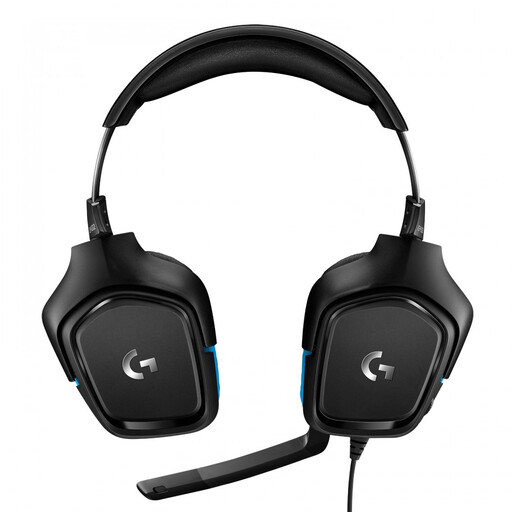 Image unavailable
A wired headset for anyone who wants to record and listen back using the same setup. The product information lists a USB DAC or 3.5mm connection; which option works depends on the inputs on your equipment.
 Image unavailable
A wired headset for anyone who wants to use one device to record and monitor audio. The product name describes a noise-cancelling microphone, but that doesn’t prove it will eliminate audible room echo. The product information lists USB-A and a USB-C adapter cable.
 Image unavailable
If you already have separate headphones and a suitable recording input, a standalone microphone may suit your setup. The product name identifies this as a USB microphone, not a headset, so check that it’s the type of product you’re looking for.
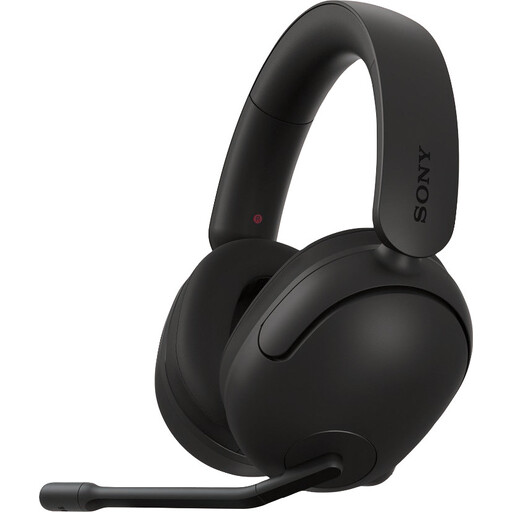 Image unavailable
A wired headset for anyone who wants to listen through headphones while recording spoken content. The product information lists a 3.5mm connection and a USB audio box for connecting to a PC; check which option works with your recording equipment.
No, don’t assume it will. Shure explains that a microphone can’t improve the acoustics of a room. Position the microphone carefully, make a short test recording and reduce reflections in the room where possible; a software filter won’t replace these steps.
Check both the microphone and headphone connections. According to Audio-Technica, the BPHS1 uses an XLR connection for the microphone and a 6.3mm plug for the headphones; your recording and monitoring equipment must be compatible.
First, record a short clip and listen for clarity and reflections. Adjust the microphone position if needed. If you’ll be using the headset for a long time, check that the fit and cable suit the way you work; Audio-Technica says the BPHS1’s cable and earpads are replaceable.
According to the Dutch government, online purchases from a business often come with a 14-day cooling-off period; terms and exceptions apply. Products must also be fit for purpose. There’s no fixed statutory warranty period in the Netherlands: what you’re entitled to expect depends partly on the product, and the retailer is your point of contact if something is faulty.
It depends on the rules for quotations and how you use the passage. Dutch government guidance says that books are protected by copyright. Auteursrecht.nl explains that a quotation must be relevant to the content and no longer than necessary, and that you must credit the author and source. Reading a lengthy passage aloud doesn’t automatically make it a permitted quotation just because you add commentary.