Who is a headset microphone suitable for?

Voice-over artist with a small desk

You want to record and review a script without a separate microphone or stand taking up desk space. A headset with a microphone boom saves you from having to put a separate stand on your desk; assess the recording quality separately. Logitech describes the H390 as having a rotatable microphone boom.

Creator of publishable narration

Your priority is a natural, clear voice for visitors, and you’re happy to take extra care with microphone placement and test recordings. Shure recommends positioning the microphone beside your mouth and pointing it towards the centre; check the results in your own recording.

Recording in a shared space

You want to find out how much background noise makes it into the recording. Noise isolation for your ears and filtering of the microphone signal are different features, so listen to the saved file in the space where you record.

What should you look for when choosing?

Wired USB headset

A good fit if: you want to record directly on a computer without a separate microphone stand on your desk.

Bear in mind: check the exact USB connection, and remember that call specifications don’t tell you whether a headset is suitable for recording a gallery label.

USB office headset with alternative connection options

A good fit if: you need a specific USB connection or a choice of wearing styles. EPOS lists USB-C with a USB-A adapter for the described IMPACT 100 version; the Jabra Evolve2 40 SE is available in USB-A and USB-C versions.

Bear in mind: check the connection and version of the model you choose; features designed for calls don’t automatically tell you how well it will record.

Broadcast headset with separate connections

A good fit if: you already have a suitable recording interface or specifically want to use separate audio connections.

Bear in mind: the Audio-Technica BPHS1 uses a 3-pin XLR connection for the microphone and a 6.3 mm connection for the headphones, rather than connecting directly via USB.

What to consider What should you check? Who is this important for?
Clear desk and easy set-up Check that you can position the microphone boom comfortably and that the cable reaches your workspace. If I want to record at a small desk without a separate stand, I prioritise a clear workspace and a simple set-up. Around 33% of consumers prioritise keeping their desk clear.
Clear narration Record a representative sentence and listen for the voice, breathing and quieter passages; adjust the microphone position if needed. When I record a script for visitors, I want the voice to be easy to follow in the final file. Around 27% of consumers give narration the highest priority.
Background noise Make a test recording in the actual location, including during pauses, and listen to the saved file. When I record in a shared space, I want to know how much ambient noise can be heard in the file. Around 20% of consumers consider managing background noise their main concern.
Connection and set-up Check the connection on the exact headset version, the available ports and the microphone input selected in your recording software. If I want to make sure in advance that the headset, computer or interface and recording software will work together, I check the whole set-up. Around 20% of consumers prioritise connection compatibility.

Common pitfalls

  • Mistaking passive isolation for a clean microphone recording

    Ear cups that reduce the sound reaching the wearer don’t automatically indicate how much background noise the microphone will pick up. Jabra describes microphone technology and passive isolation as separate features.

    Assess the saved file in the space where you’ll actually be recording, rather than relying only on what you hear through the headset while recording.

    Recording again somewhere quieter may take extra time.

  • Ordering a broadcast headset as if it were a USB headset

    The Audio-Technica BPHS1 has an XLR connection for the microphone and a 6.3 mm connection for the headphones. Neither plugs directly into a USB port.

    Before ordering, compare the connectors on the exact version with the inputs you already have.

    You may need suitable recording equipment for this type of connection.

  • Assuming there is a fixed two-year statutory warranty

    The Dutch Government states that there is no fixed statutory warranty period in the Netherlands; what you can reasonably expect from a product is also taken into account.

    Distinguish between your statutory rights and any separate manufacturer’s, seller’s or additional warranty.

Brands to consider

Logitech

The H390 is a wired USB computer headset for anyone who wants to get started without a separate audio interface.

  • For the version described, Logitech lists a rotatable microphone boom, in-line controls and USB-A.
  • The manufacturer focuses mainly on call performance; check for yourself whether the final narration recording meets your needs.

Audio-Technica

The BPHS1 is a broadcast headset for anyone using suitable separate audio connections.

  • Audio-Technica lists a cardioid dynamic microphone, closed-back ear cups, and a replaceable cable and ear pads.
  • The XLR microphone connection and 6.3 mm headphone connection mean this isn’t a USB headset that connects directly.

EPOS

The IMPACT 100 range includes office headsets; the described USB-C+A version may be worth considering if those connection options suit your set-up.

  • For this version, EPOS lists a unidirectional microphone, noise-reduction algorithms and a USB-A adapter.
  • These are product specifications and manufacturer claims for calls, not an independent assessment of narration recordings.

Jabra

The Evolve2 40 SE is an office headset available in versions with different USB connections and wearing styles.

  • Jabra lists three microphones for calls and passive isolation for the wearer.
  • Check whether each version is mono or stereo and uses USB-A or USB-C; passive isolation doesn’t prove that background noise will be removed from the recording.

Headsets at Joybuy

These headsets all have a built-in microphone, making them an option if you want to record without a separate microphone stand on your desk. Connections and controls vary by model, so check they’re compatible with your computer or interface and the microphone input in your recording software.

Razer Kraken V3 X headset, black

Razer Kraken V3 X headset, black

The integrated microphone lets you record without a separate desk stand; the product description positions the headset for PC and PS4.

The description lists a USB connection and a cardioid microphone. Check how it records in your own space.

View at Joybuy

Jabra Evolve2 75 headset

Jabra Evolve2 75 headset

The built-in microphones let you record without a separate desk microphone; check which microphone input your recording software uses.

The product description lists Bluetooth 5.2 and wired use with a USB-C cable.

View at Joybuy
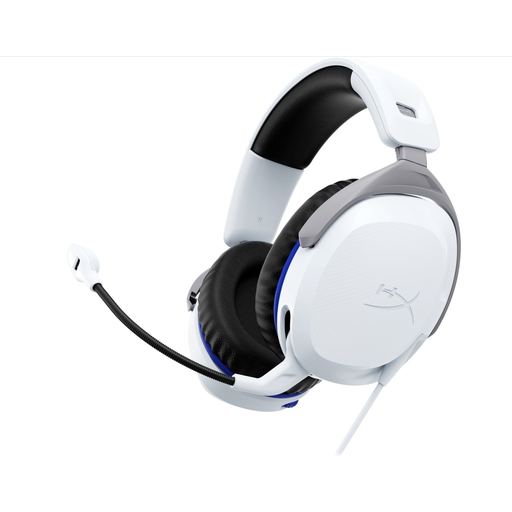
HyperX Cloud Stinger II wired gaming headset, white, PS5 and PS4

HyperX Cloud Stinger II wired gaming headset, white, PS5/PS4

The flexible microphone boom may save you from needing a separate desk stand; the product description says you can mute it by swivelling the boom upwards.

The listed cable length is 1.2 m. Check that it’s long enough for your recording space.

View at Joybuy

Edifier G2II gaming headset for PC, USB, black

Edifier G2II gaming headset, USB, black

The adjustable microphone and in-line controls may be useful if you want to reposition or operate the microphone while recording.

The product name and description specify a wired USB headset; check that the connection works with your computer and recording software.

View at Joybuy
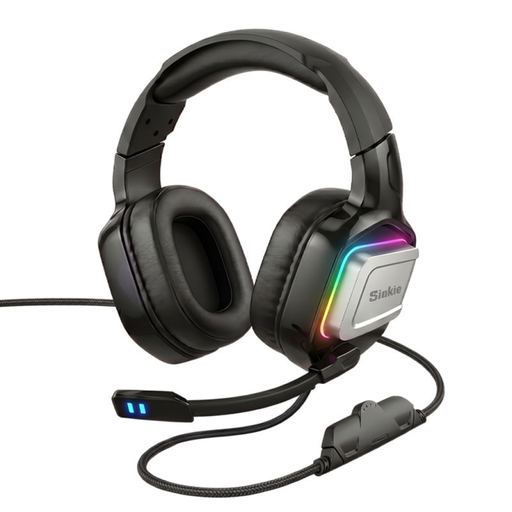
Siukie L200 wired gaming headset, USB and 3.5 mm

Siukie L200 gaming headset, USB and 3.5 mm

The integrated microphone gives you a headset-style option without a separate desk stand; check which connection your device uses before you buy.

The description lists an omnidirectional microphone, USB and 3.5 mm connections, and compatibility with a range of devices.

View at Joybuy

Frequently asked questions

Do I need to adjust anything besides the headset to record?

With a USB headset, check that both your computer and recording software are using the headset as the microphone input. The Audio-Technica BPHS1 has separate XLR and 6.3 mm connections, so you’ll need a suitable connection set-up rather than a direct USB port.

How should you position the microphone for a recording?

Position the microphone boom beside your mouth and make a short test recording to check for breathing and plosive sounds. Shure recommends keeping the microphone beside your mouth and pointing it towards the centre; listen for yourself to see whether it sounds right in your recording.

What return and warranty rights apply to a purchase in the Netherlands?

For most consumer purchases made at a distance, you have a 14-day cooling-off period, subject to statutory exceptions, according to the Dutch Government. It also states that there is no fixed term for statutory warranty in the Netherlands: the seller must supply a product that meets the required standards. Check separately what applies to a business purchase.

Can I include recognisable voices of other people in a published audio label?

A sound recording in which someone can be recognised may contain personal data. If an organisation collects and uses this data, it needs a lawful basis under the GDPR; consent is one possible basis, but not automatically the only one. Whether recording and publishing are allowed in your situation depends on the people involved and how the recording is used.
