Start with a microphone that stays at a consistent distance from your mouth, then make a test recording using your natural speaking voice. A headset keeps the distance constant, but it won’t automatically fix echo in the room. A USB headset suits a simple computer setup; choose an analogue broadcast headset if you have the right microphone and monitoring connections, or a standalone headworn microphone if freedom of movement matters more than built-in headphones.
Who is a headset microphone suitable for?
Softly spoken narrator
You want to sound clear without speaking more loudly. Keep the microphone at a consistent distance and listen to a test recording made in the room where you’ll be recording. Shure explains why microphone placement and room acoustics matter.
Creator with a simple computer setup
You want to record directly to a computer. Check that the headset has the right USB version and select the microphone as your recording input. Logitech and Jabra describe USB headsets for computer use; connections and compatibility may vary by version and device.
Creator who monitors while recording
You want to hear your voice through headphones. Check that the microphone and headphone connections are compatible with your mixer or other recording equipment. RØDE and Audio-Technica describe headsets with different connection options.
What should you look for in a headset microphone?
Wired USB headset
A good fit if: you want to record directly to a computer and value a simple connection.
Bear in mind: the USB version and the capabilities of your computer and recording software.
Analogue headset with headphones
A good fit if: you want to record and listen at the same time, and your equipment has the necessary connections.
Bear in mind: the right microphone input, headphone output and any adapter or power supply you may need.
Standalone headworn microphone
A good fit if: you want to move while speaking and wear the microphone at a consistent distance from your mouth.
Bear in mind: headphones and monitoring aren’t automatically included with this microphone setup.
| Consideration |
What should you check? |
Who is this important for? |
| Clarity |
Keep the microphone close to your mouth and record a section of your actual script at a normal speaking volume. |
I want to record my softly spoken narration clearly without speaking more loudly; for consumers who prioritise clarity, this is the main consideration for around 36%. |
| Connection |
Check the connections on your headset and recording device, the USB version you’ve chosen, and whether you need an adapter or power supply. |
I want to record on my computer or recorder without connection problems; around 29% of consumers prioritise connectivity and an easy setup when making this choice. |
| Room noise and echo |
Make a test recording in your own space and listen for echo and sounds other than your voice. Shure notes that a microphone can’t improve a room’s acoustics. |
I want to stop background noise or echo from overpowering my explanation; this is the main consideration for around 21% of consumers. |
| Comfort and monitoring |
Check how it fits over the length of your recording and whether you can hear yourself through your preferred signal route. |
I want to record longer takes and monitor my voice; around 14% of consumers prioritise this combination. |
Common mistakes when choosing
-
Assuming call noise cancellation proves recording quality
A manufacturer’s claim about calls doesn’t, on its own, tell you how a softly spoken product explanation will sound in your room. A microphone also can’t remove echo from the room.
Before making your final recording, try a test using your natural speaking voice and listen back to it.
A recording you can’t use may mean spending extra time on retakes or adjustments to your recording space.
-
Checking only the shape of the plug
A microphone may not work with a connection that doesn’t provide the necessary signal route or power. RØDE states that connecting the NTH-100M microphone to an XLR microphone input requires a suitable adapter that provides plug-in power.
Before choosing an analogue headset, check the microphone input, any power requirements and the headphone output together.
Your setup may need a suitable adapter or a different recording input.
-
Buying a headworn microphone as if it were a complete headset
The Shure SM35 is a wearable microphone, not a complete package with headphones. The TQG version is designed for a compatible wireless bodypack.
Check whether you already have headphones and monitoring covered, and whether the connector is compatible with your equipment.
You may need separate equipment for monitoring; a TQG version requires a compatible system.
Brands to consider
RØDE
The NTH-100M is a headset with headphones and a detachable microphone; the NTH-Mic is also described as an add-on for the NTH-100.
- RØDE says the microphone is designed for clear speech and to reduce plosive sounds.
- The supplied TRRS cable is needed to use the microphone. For an XLR microphone input, RØDE describes a suitable adapter with plug-in power; this isn’t an independent recording test.
Audio-Technica
The BPHS1 is a broadcast headset for setups with separate microphone and headphone connections.
- Audio-Technica specifies a cardioid dynamic microphone and closed earcups.
- The BPHS1 has an XLR microphone plug and a 6.3mm headphone plug. Check the version: according to Audio-Technica, the BPHS1-XF4 has a different cable termination.
Logitech
The H390 is a USB computer headset with a microphone boom and in-line controls.
- Logitech lists USB-A and USB-C versions, as well as a repositionable microphone boom.
- The headset is primarily described for calls; this doesn’t prove how natural a softly spoken voice will sound in a recording.
Jabra
The Evolve2 40 SE is a wired office headset for computer use, available in different versions and with different connections.
- Jabra specifies three microphones and USB-A or USB-C versions.
- According to the Jabra manual, not all USB-C devices or apps support an audio connection. Call performance doesn’t prove voice-over quality.
Shure
The SM35 is a headworn microphone for a setup where headphones or monitoring are provided separately.
- Shure specifies a cardioid polar pattern and an adjustable boom.
- The TQG version is designed for a compatible wireless bodypack; it isn’t a complete headset or a direct USB solution.
Product picks at Joybuy
These product picks include wired headsets for voice recording and computer use. Check that each model’s connection is compatible with your setup, and assess the sound with a test recording.
 No image available
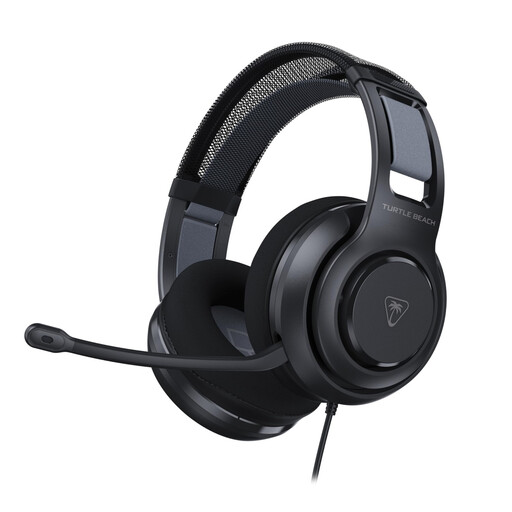
Turtle Beach Atlas 200 PC Gaming Headset, 3.5mm Jack
A wired headset to consider if you’re looking for a microphone boom and a 3.5mm connection.
The product information lists a 3.5mm connection, a USB adapter included in the box and a microphone boom that can be flipped up to mute.
View at Joybuy
 No image available
Jabra Evolve2 75 USB-A MS Teams, Black
An option to compare if you’re considering a headset for multiple devices; check that the connections suit your recording workflow.
The product information lists Bluetooth, connection to two devices and eight beamforming microphones. This product description for calls isn’t a test of recording quality.
View at Joybuy
 No image available
Jabra EVOLVE 30 II MS Stereo
A wired headset to consider if you want to use a USB connection via the included controller.
The product information lists a 3.5mm connection, a LINK MS controller for USB and a 0.95 m cable.
View at Joybuy
 No image available
Kingston USB Hi-Fi headphones with microphone
A USB option to consider if you want to position the microphone boom close to your mouth.
The product information lists a flexible microphone boom that rotates through 270 degrees, 40 mm drivers and compatibility with Windows, Mac and Chromebook.
View at Joybuy
 No image available
Trust Ayda Noise-Cancelling Wired Headset, USB Type-A, Black
A wired headset to consider if your computer has a USB Type-A connection.
The product information lists a foldable microphone and controls on the earcup. A noise-cancellation claim for calls doesn’t prove how the headset will record a softly spoken voice.
View at Joybuy
Frequently asked questions
How do I set up a headset for a softly spoken test recording?
Position the microphone close to your mouth as instructed in the model’s manual, select it as the recording input and read a section of your actual script at a normal speaking volume. Adjust the input level if the signal sounds too quiet or distorted, then listen again; a higher level won’t fix echo in the room.
Can I connect an analogue headset directly to my mixer?
That depends on your mixer’s connections and signal route. Audio-Technica lists separate XLR and 6.3mm plugs for the BPHS1. For the NTH-100M, RØDE describes a TRRS cable with a splitter and specifies a suitable adapter that provides plug-in power when using an XLR microphone input.
What can I do if my headset breaks too soon during normal use?
For a consumer purchase in the Netherlands, the seller is responsible for the statutory guarantee if the product doesn’t meet what you could reasonably expect. The Netherlands Authority for Consumers and Markets explains that there is no fixed time limit for this in the Netherlands; a manufacturer’s guarantee doesn’t replace this right.
Can I publish a product video with a voice-over?
For a commercial publication that includes another person’s personal data, you need a lawful basis under the GDPR. The Dutch Data Protection Authority lists consent as one possible basis and states that consent is needed in most cases for publication online. Consider the narrator’s circumstances and the recording separately.
How should I care for a headset between recordings?
Follow the cleaning instructions for the specific model. For the NTH-100M, RØDE describes removable ear cushions and a removable headband cushion; for other models, first check the manual to see which parts can be removed.


