
Cook who moves while recording
If you need both hands free while cooking, look for an adjustable microphone boom and a cable route that suits your setup. Shure and RØDE describe adjustable microphone booms for their respective models.


Choose a USB computer headset if you’re recording on a computer with a compatible port. A broadcast headset is a better fit if you already have separate microphone and headphone inputs. A lightweight headworn microphone leaves your ears free, but needs a suitable microphone input with plug-in power or a compatible transmitter. Position the capsule beside the corner of your mouth and make a test recording in your own kitchen. Manufacturer specifications and Shure’s positioning advice are not comparative tests of sound quality in a kitchen.
If you need both hands free while cooking, look for an adjustable microphone boom and a cable route that suits your setup. Shure and RØDE describe adjustable microphone booms for their respective models.
If extraction, ventilation or cooking sounds could be picked up in your recording, microphone direction and a test recording in your actual space are important. Shure recommends placing the microphone close to the sound source you want to capture if background noise is a problem.
If you want to connect a headset to a computer, recorder, interface or transmitter, check the exact connection and whether power is required. Logitech, Audio-Technica and RØDE describe different connection options for their models.
Start by considering where you want the microphone positioned and what sounds are present in your recording space. Then check that the connection and monitoring are compatible with your equipment.
| What to consider | What should you check? | Who should consider this? |
|---|---|---|
| Mouth position while moving | Check whether the boom is adjustable and the capsule stays beside the corner of your mouth without touching your face. Listen to a short test recording. | If I move around while cooking, I want to keep the microphone close to my mouth without needing to use my hands to reposition it. Around 33% of consumers prioritise keeping the microphone in a fixed position relative to their mouth. |
| Voice alongside kitchen noise | Make a test recording with the extractor fan or other relevant equipment switched on. Assess the result in the space where you’ll be recording. | If my kitchen is audible, I want to check that the spoken instructions remain clear with the equipment I actually use. Around 27% of consumers prioritise speech clarity alongside kitchen noise. |
| Connection to your equipment | Compare the exact model with the available port, any plug-in power requirements, and the microphone and headphone inputs you need. | If I want to use my existing computer, recorder or interface, I want to avoid a mismatch between the plug, input or power requirements. Around 20% of consumers consider connection their top priority. |
| Monitoring and wearing style | Decide whether you want integrated earcups, check the monitoring connection and assess the fit during a recording of your usual length. | If I want to monitor my voice as I record or keep my ears free, I consider how the headphones and microphone work together. Around 20% of consumers prioritise monitoring and wearing comfort. |
According to RØDE, the HS2 requires a suitable microphone input with plug-in power or a compatible transmitter. The shape of the plug alone doesn’t tell you whether the microphone will work with your recording device.
Before buying, check both the device’s input and power requirements, and compare them with the exact microphone version.
The standard Audio-Technica BPHS1 has separate connections: XLR for the microphone and 6.3 mm for the headphones. The BPHS1-XF4 has a different connector configuration.
Compare the full model variant and both signal connections with the inputs on your recorder or interface.
A description intended for calls doesn’t prove how a headset will sound alongside an extractor fan or other noise in your recording space.
Make a short test recording with the equipment you’ll use for the recipe, then listen back before settling on a microphone position.
The H390 is a USB computer headset for a straightforward computer setup, rather than a model Logitech markets as a studio microphone.
The BPHS1 combines a broadcast microphone with closed-back headphones for a setup with compatible recording and monitoring inputs.
The HS2 is a lightweight headworn microphone for hands-free speech, provided you have a suitable microphone input with power or a compatible transmitter.
The SM35 is a directional headworn microphone for use with a compatible microphone or transmitter system.
The HSP 4 is an adjustable cardioid headworn microphone for a professional setup with the correct cable and connector version.
This selection includes computer headsets for voice recording, with wired USB models and a wireless headset. Check that each model’s connection is compatible with your recording device.
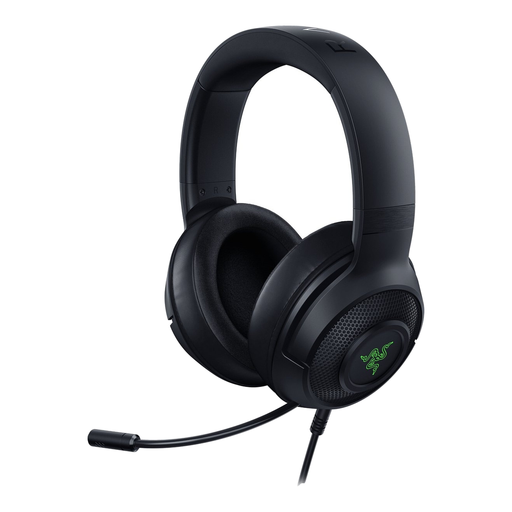 Image unavailable
The wired USB connection and cardioid microphone described make it suitable for voice recording on a compatible computer.
Cardioid microphone; weight 285 g.
 Image unavailable
The adjustable microphone boom can help you find the right position for recording your voice at a computer.
USB headset; in-line volume and mute controls; mute indicator.
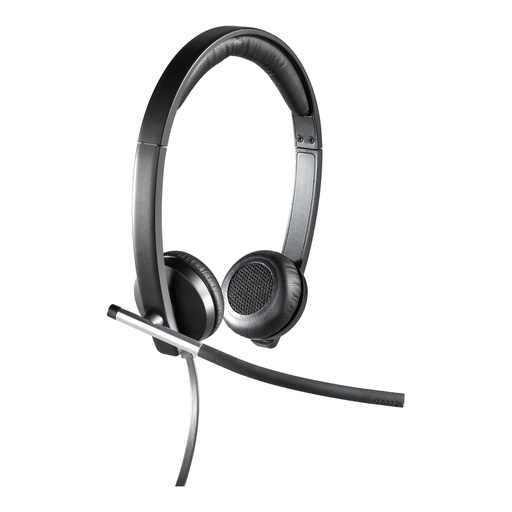 Image unavailable
The wired USB connection suits a computer setup with an available USB port.
Listed features include a microphone, in-line controls and a microphone described as noise-isolating.
 Image unavailable
The adjustable microphone lets you fine-tune its position for voice recording.
USB connection; adjustable microphone; digital stereo audio.
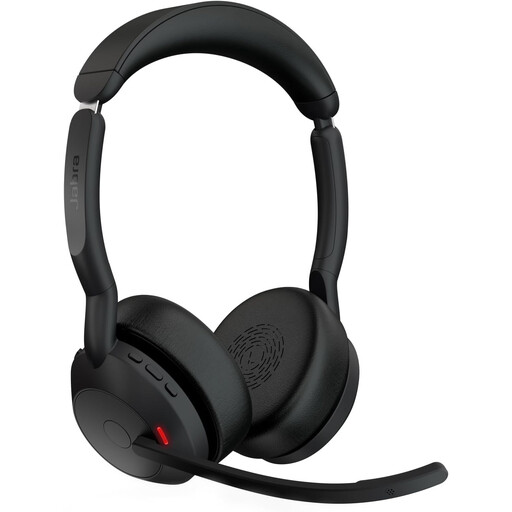 Image unavailable
The flexible microphone boom is worth considering if you want to adjust the microphone position while recording.
Wireless stereo headset; Link 380 USB-C Bluetooth adapter included; flexible microphone boom.
Position the capsule beside the corner of your mouth rather than directly in front of your breath. Shure recommends this for the SM35 to reduce plosives. Then listen for breath and cooking sounds in a recording made in your own space.
You can’t tell from the shape of the plug alone. According to RØDE, the HS2 requires a suitable 3.5 mm microphone input with plug-in power; the standard Audio-Technica BPHS1 has separate XLR and 6.3 mm connections. Compare these with the inputs on your laptop or recording device.
Use the windscreen or pop filter designed for the model, and position the microphone beside your mouth. Shure describes fitting a windscreen to the SM35; RØDE lists a pop filter as included with the HS2. Follow the instructions for your chosen model when cleaning it.
According to ACM ConsuWijzer, online consumer purchases generally come with a 14-day cooling-off period after delivery; check which exceptions apply to your order. In addition, under the statutory warranty, the seller must repair or resolve the issue free of charge if a product breaks too soon under normal use.
According to the Dutch Authority for Digital Infrastructure, a licence is usually not needed for wireless microphones, but you must use the correct frequency band. Some frequency bands do require a licence. Check the requirements for the frequency used by your chosen transmitter; this doesn’t apply to wired use only.