
Presenter without a sound system
You want everyone in the room to hear you, so you're looking for a headset with its own portable amplifier. Velleman describes its HQ-Power kits as voice amplifiers supplied with a headset.


A headset microphone on its own won't automatically amplify your voice for everyone in the room. If there’s no suitable sound system, a portable voice amplifier is a good option. If there’s a compatible microphone input, you can connect a wireless headset kit, while a USB headset is mainly designed for computer-based presentations or online meetings. Check the connections in advance and, for a wireless kit, confirm the exact frequency version and the conditions for using it in the Netherlands.
You want everyone in the room to hear you, so you're looking for a headset with its own portable amplifier. Velleman describes its HQ-Power kits as voice amplifiers supplied with a headset.
You want to move around freely and need a headset kit that can connect to the existing sound system. Sennheiser says the XSW 1-ME3-E includes a transmitter and receiver.
You're presenting from a computer or recording a summary. In that case, a suitable computer connection and the right audio settings matter more than having your own portable speaker.
First, decide who needs to hear you: people in the room, participants joining by computer, or both. Then check which connections and equipment are already available.
| What to consider | What should you look for? | Who is this important for? |
|---|---|---|
| Being heard clearly in the room | Check whether both the headset and amplifier are included. Test the volume where you'll be speaking and make sure the sound doesn't distort. | If there isn't a suitable sound system, I want people further back to be able to hear me too. Around 40% of consumers prioritise standalone amplification. |
| Connection and freedom to move | Check the sound system's input, the receiver supplied and the frequency version. Test the connection at the venue where you'll be presenting. | If I want to move around while speaking, the receiver needs to work with the school's sound system. Around 30% of consumers prioritise connection and freedom of movement. |
| Computer use | Check the computer port, the microphone input selected in your presentation or recording app, and whether the audience in the room also needs amplification. | If I'm recording or presenting online, my computer needs to be able to use the microphone signal. Around 20% of consumers prioritise computer use. |
| Wear time and reuse | Compare the battery life and charging time quoted by the manufacturer, and check how the kit is charged. | If I have several presentations, I want to know whether I can recharge the kit between sessions and whether it's easy to carry. Around 10% of consumers prioritise repeated use and portability. |
The manufacturer quotes a battery life of 6–8 hours and a weight of 265 g for the HQ-Power HQPA10001. For the HQPA10002, Velleman quotes 8–10 hours and 400 g. These are the manufacturer's figures, not measurements of how clearly you'll be heard in your room. Velleman says the HQPA10001 has an AUX input; the HQPA10002 specifications don't list an auxiliary input. This difference matters if you also want to play audio from another device.
Sennheiser says the XSW 1-ME3-E receiver has XLR and 6.3 mm outputs. Check with the school whether its sound system can connect to either of these outputs. Also check with the Dutch Authority for Digital Infrastructure (RDI) which conditions apply to the frequency and channel selected at the venue.
Logitech says the H390 is designed to connect to a computer. A computer headset won't automatically amplify your voice for people in the classroom.
Before buying, decide whether you need to reach people in the classroom, online participants or both.
The Sennheiser XSW 1-ME3-E has a stationary receiver and doesn't replace a speaker or amplifier. For wireless use, the selected frequency must also comply with the relevant Dutch conditions.
Ask the school about the sound system's inputs and check the exact frequency version before using the kit.
Velleman says the HQPA10001 has an AUX input; the HQPA10002 specifications don't list an auxiliary input.
Check whether you want to play audio from another device, such as a phone, through the same amplifier as your voice.
Velleman describes the HQPA10001 and HQPA10002 as portable voice amplifiers supplied with a headset, including for presentations.
The manufacturer describes the XSW 1-ME3-E as a wireless headset kit with a bodypack transmitter and stationary receiver.
The H390 is a computer headset for tasks such as video calls, and could be suitable for recording or online presentations.
Shure describes the PGA31 as a headset microphone for speech, designed for use with compatible Shure bodypack transmitters.
These product picks are aimed at computer use, such as joining an online meeting or giving a presentation from a computer. A computer headset on its own won't amplify your voice for people in the room.
 No image available
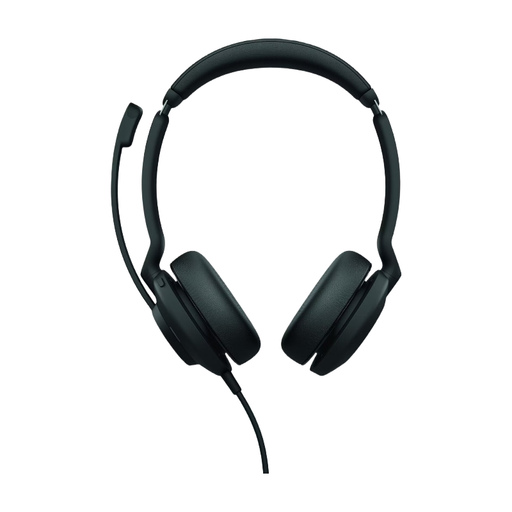
Suitable for computer-based communication, such as an online presentation.
The product description lists USB-A, two microphones and controls for volume, mute and calls. The description says it's suitable for use with a PC or Mac.
 No image available
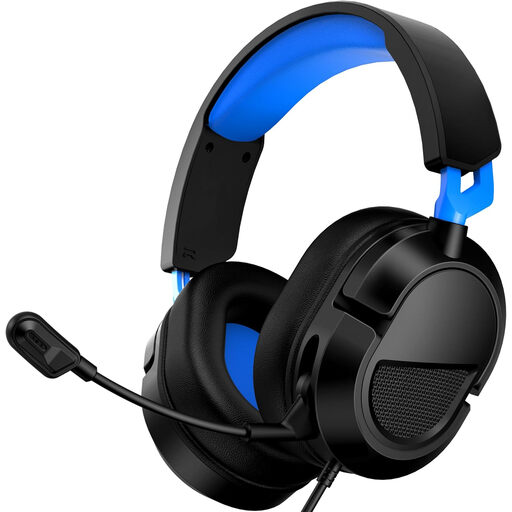
Could work for a presentation with online participants if you're using a compatible PC.
The product description lists a wired 3.5 mm connection and PC compatibility.
 No image available
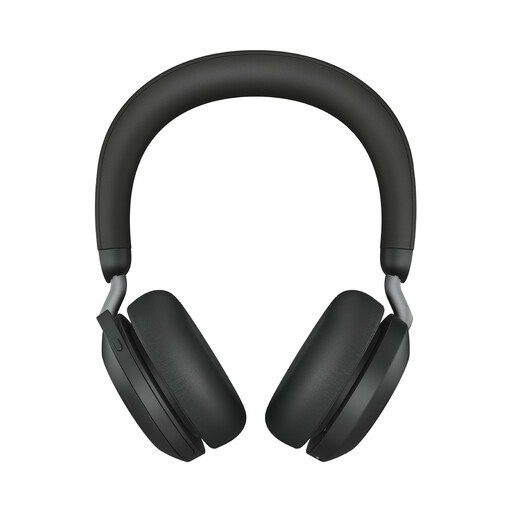
Suitable for online meetings on a computer, provided the connection works with your presentation setup.
The title specifies USB-A and MS Teams; the product description lists eight microphones for communication.
 No image available
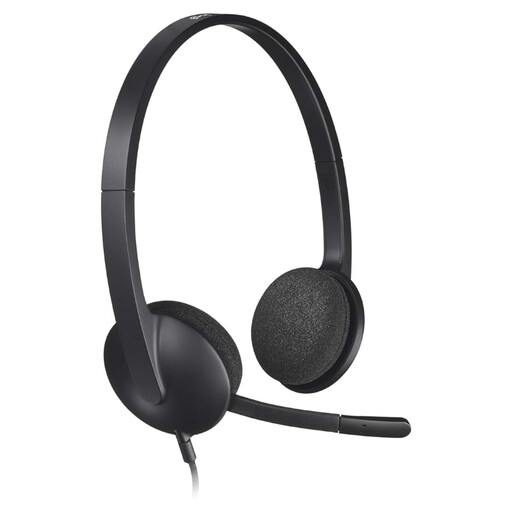
One to consider for online calls or a presentation from a computer.
The product description lists a USB connection, an adjustable microphone and plug-and-play computer connectivity.
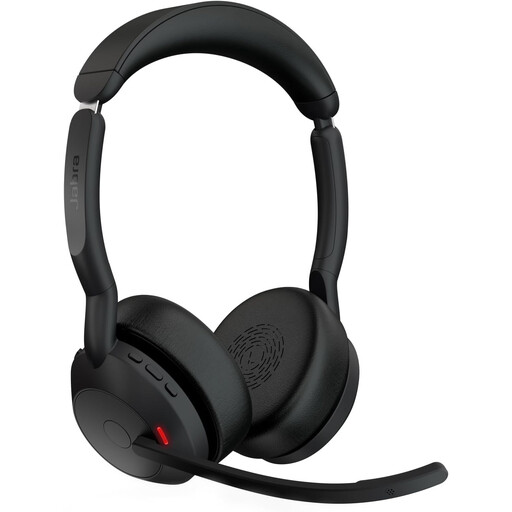 No image available
Suitable for joining an online meeting from a laptop if the connection supplied works with your device.
The product description lists a USB-C Bluetooth adapter, a microphone boom and compatibility with Zoom and Google Meet.
Only if the room already has a suitable sound system. The portable HQ-Power kits described by Velleman have a built-in amplifier; according to the manufacturer, the Sennheiser XSW 1-ME3-E has a receiver for connecting to other audio equipment.
Test the complete setup in the room before your presentation and set the volume carefully. The Secondary Education Health and Safety Catalogue lists excessive volume as a cause of distortion and notes that a microphone can also pick up sounds from clothing or jewellery, for example. This is practical advice, not a guarantee for a specific model.
That depends on the frequency selected and the conditions that apply to it. The RDI publishes frequency bands for licence-exempt use of wireless microphones, including 863–865 MHz subject to a power limit; some other bands require a licence. Check the exact version and selected channel. Licence-exempt use doesn't mean interference is impossible.
According to ACM ConsuWijzer, statutory consumer rights apply in addition to any manufacturer's warranty. If a product doesn't meet what you could reasonably expect during normal use, the retailer must offer an appropriate solution free of charge. There isn't a fixed statutory warranty period of exactly two years for every product in the Netherlands.
For online purchases by consumers, ACM ConsuWijzer says you generally have up to 14 days after delivery to change your mind. There are exceptions, including certain hygiene products once unsealed. Check the applicable terms before breaking a seal.