
Poet performing in a shared room
You want to make a clear recording while other people in the same room might be audible. Pay attention to the microphone’s direction and position, and make a test recording where you plan to record.


If other people might be audible, start by choosing a headset whose microphone you can position close to your mouth, consistently and in the right direction. Shure explains that a unidirectional microphone is less sensitive to sound coming from other directions, but it won’t block out other voices. If you have the right XLR and 6.3mm inputs, a broadcast headset could be suitable. For a simple computer setup, the exact connection is key, and you’ll still need to make a test recording to assess quiet lines and plosive sounds.
You want to make a clear recording while other people in the same room might be audible. Pay attention to the microphone’s direction and position, and make a test recording where you plan to record.
You want to listen back to quiet words, pauses and plosive sounds. Judge the recording itself; a product description is not an independent listening test.
You want to connect to equipment you already own. Check that both the microphone and headphones will work with your computer using the cables and connections supplied with the exact headset model.
Start with where you’ll be recording and how your existing equipment connects. Then make a test recording to check that the voice and plosive sounds are to your liking.
The considerations below are for consumers recording Dutch poetry in a shared space. The percentages show how priorities are divided in this buying decision.
| What to consider | What to check before buying | Which consumers does this matter to? |
|---|---|---|
| Other voices and room noise | Check the microphone’s polar pattern and whether the boom stays securely in position by your mouth. Test it where you plan to record. | If other people at home might be audible, you’ll want to know how much background noise makes it into your performance. Around 36% of consumers give limiting that noise their highest priority. |
| Vocal nuances and plosive sounds | Record quiet lines and words with ‘p’ and ‘b’ sounds, then listen back through the headphones you plan to use. | If you want to assess quiet passages and the sound of your own voice carefully, a test recording is more useful than relying on a product claim alone. Around 29% of consumers prioritise vocal quality and plosive sounds. |
| Connections and recording setup | Compare the connections for both the microphone and headphones with those on your computer, recorder or interface. Check which cables or adapters you’ll need. | If you want to avoid unexpected extra recording equipment, check in advance that your existing device can handle both signals. Around 21% of consumers start with the equipment they already have. |
| Fit and maintenance | Check that the headset is comfortable to wear during repeated use and whether the cable, ear cushions or microphone can be replaced. | Comfort and ease of maintenance matter for long or frequent recording sessions. Around 14% of consumers make this their top priority. |
A directional microphone is less sensitive to sound outside its preferred direction, but it won’t block out other voices. Nor does a claim about noise cancellation for calls prove how it will sound when recording a poetry reading.
Make a test recording with the level of background activity you actually expect, then listen back before choosing a microphone.
If the recording isn’t usable, you may need to record again at a quieter time.
The Audio-Technica BPHS1 has separate microphone and headphone plugs. The RØDE NTH-100M needs the supplied TRRS cable to use the microphone.
Before buying, check the connection for both signals and work out how the headset will connect to your computer, recorder or interface.
Depending on the headset and the inputs available, you may need a suitable cable, splitter or recording interface.
The Shure SM35 is a headworn microphone, not a pair of headphones with a microphone. You’ll also need to arrange how you’ll listen while recording.
Check the exact model and its power and connection requirements. For the SM35, Shure recommends positioning it beside the corner of your mouth, not directly in front of it.
You’ll also need headphones for a complete setup. Depending on the SM35 model, you may need a suitable power supply or transmitter as well.
The BPHS1 is a broadcast headset for equipment with separate microphone and headphone connections.
The NTH-100M combines closed-back headphones with a detachable microphone for recording and listening back.
The European DT 297 PV MK II is a closed-back broadcast headset with a cardioid condenser microphone.
The wired Cloud III is a gaming headset with several connection options for a computer setup.
The SM35 is a standalone headworn microphone for anyone who wants a microphone close to their mouth and already owns headphones.
These products are wired and wireless headsets with microphones for consumers looking for a headset to record with and listen back through. A headset designed for calls or gaming hasn’t automatically been tested or proven suitable for recording the subtle details of poetry.
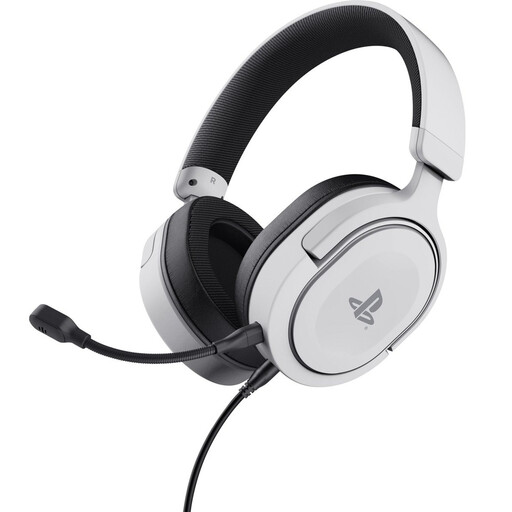 No image available
A wired headset to consider if you want one device for recording and listening back; the description mentions a detachable, flexible microphone.
It has a 3.5mm connection and controls for volume and microphone mute. The description also mentions a padded headband and soft ear cushions. Check that the connection supports microphone use on your recording device.
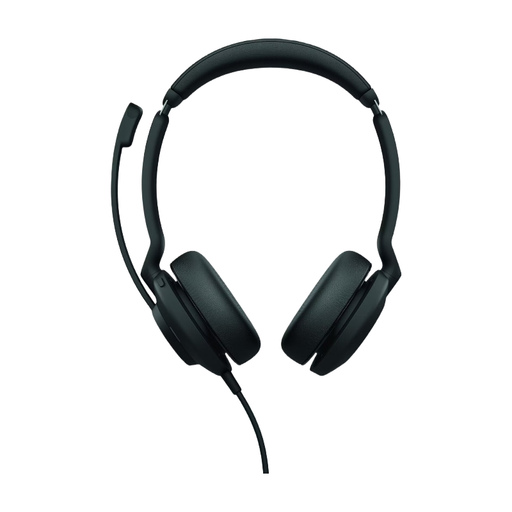 No image available
A headset to consider if you want to listen through the same set while recording; the product description mentions stereo speakers and two integrated microphones.
The connection specified is USB-A; for a USB-C device, the description mentions a compatible adapter. Before use, check that your recording software can use the headset microphone.
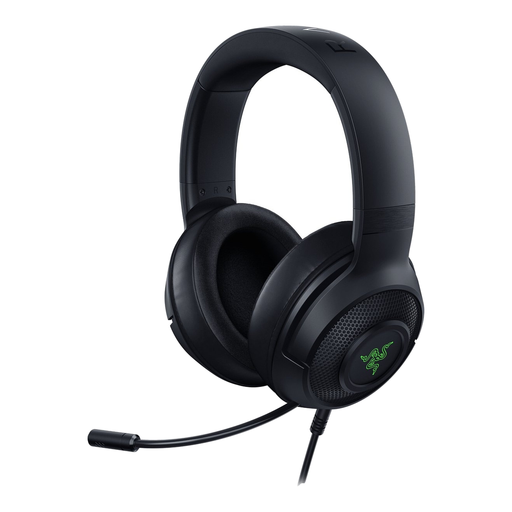 No image available
A wired headset to consider if you want to compare a microphone with a specified polar pattern against the conditions where you’ll be recording.
The product description specifies a cardioid microphone and 40mm drivers. A cardioid specification doesn’t mean other voices in a shared space will disappear; assess the sound with a test recording.
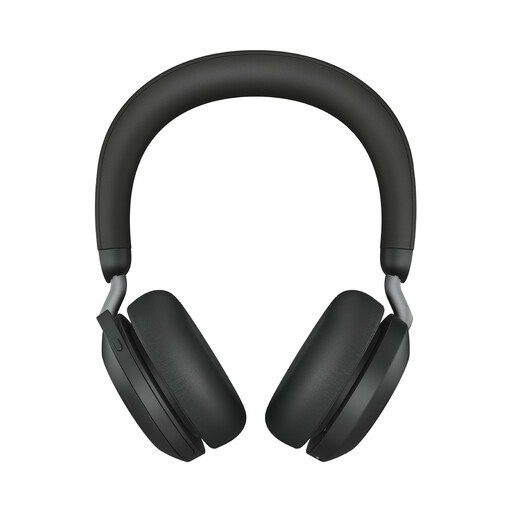 No image available
A wireless headset to consider if you want to record without a cable; check that your recording device and software work with the connection you choose.
The product description mentions Bluetooth and a microphone array with beamforming for calls. Its specified call functionality doesn’t prove how well it will record a poetry reading.
 No image available
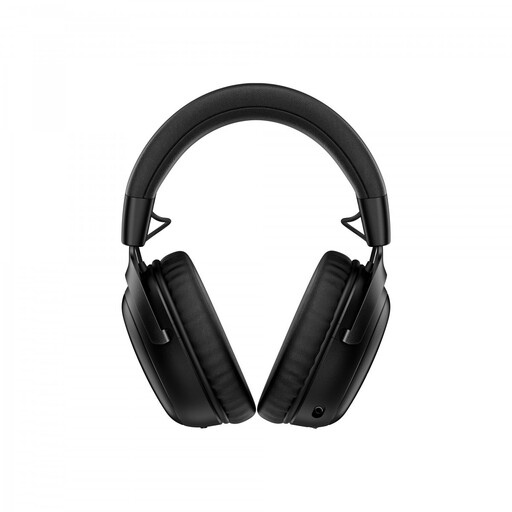
A wireless headset to consider if you want a detachable microphone and the option to listen without it.
The title specifies a detachable boom microphone. The product description mentions wireless connections via 2.4 GHz or Bluetooth. Check which connection and microphone functions work with your recording device.
Adjust the boom, make a short test recording and listen for words with plosive sounds. For the SM35, Shure recommends positioning it beside the corner of your mouth, not directly in front of it. This advice is specific to the SM35 and isn’t necessarily the exact setting for every headset.
It depends on your laptop’s inputs and the headset cable. The Audio-Technica BPHS1 has separate XLR and 6.3mm plugs; the RØDE NTH-100M uses the supplied TRRS cable and includes a splitter for compatible, separate 3.5mm ports. Check that your laptop or interface supports both signals.
Your legal rights against the seller depend on what you could reasonably expect from the product. ACM ConsuWijzer explains that statutory warranty in the Netherlands has no fixed period that applies equally to every headset; any manufacturer’s warranty is separate.
Not always: according to the Netherlands Authority for Digital Infrastructure, a licence is usually not needed if you use the right frequency band and comply with its conditions. Available frequencies may vary by location, and some bands do require a licence. Check the frequency and where you’ll be using it before choosing a specific wireless model.
Not automatically; consider the poem, the recording and the intended publication separately. Original poems may be protected by copyright. The Dutch government distinguishes between making a copy for personal use and distributing or making it public. If you publish other people’s identifiable personal data, privacy rules may apply, according to the Dutch Data Protection Authority.