
Home reader recording short takes
You record several versions at a computer and want a straightforward way to record and listen back.


For short takes on a computer, a wired USB headset with a compatible connection is a practical option. Be sure to make a test recording so you can hear how your reading sounds. If you already have suitable audio equipment, you could also consider a TRRS headset or a broadcast headset with separate connections, but check the inputs and whether you’ll need any additional equipment.
You record several versions at a computer and want a straightforward way to record and listen back.
You want to carefully check the microphone position and recorded sound when there’s background noise. A noise-cancelling claim is no substitute for a test recording.
You have or are considering recording equipment with a suitable microphone input, and may want to connect the microphone and headphones separately.
Suitable for: recording short takes on a computer without a separate audio interface.
Bear in mind: check that the headset version and USB port are compatible; the models discussed are described mainly for calls.
Suitable for: recording and listening back with one headset, if your device has a compatible TRRS microphone input.
Bear in mind: a headphone output alone isn’t enough; check the cable and microphone input.
Suitable for: a set-up with compatible microphone and headphone connections.
Bear in mind: the headset discussed has separate plugs; if you only have USB or a standard laptop connection, you may need additional equipment.
| Concern | What should you check? | Who is this important for? |
|---|---|---|
| Clarity and vocal tone | Keep the microphone in the same position and compare a quiet and a forceful line at the same playback volume. | If I want both quiet words and emphasis to sound clear, I’d rather assess a test recording than rely on specifications alone. Around 29% of consumers prioritise vocal clarity. |
| Multiple short takes | Check the recording source and microphone status before each take; use software to save versions separately. | If I want to re-record lines without losing earlier versions, I look at the recording controls and software. Around 23% of consumers give easy re-recording their top priority. |
| Background noise and microphone position | Make a test recording in the room you plan to use and keep your distance from the microphone consistent. | If I’m recording in a shared space, I want to hear what’s picked up during pauses and while I’m reading. Around 18% of consumers put ambient noise at the top of their list. |
| Connection to the recording device | Check the port and whether it supports both the microphone and playback; TRRS and XLR need compatible inputs. | If I want to use my own computer or audio equipment, I check all the connections in advance. Around 18% of consumers make device compatibility their first consideration. |
| Listening back and wearing comfort | Check that recording and playback work with your intended set-up, and that the fit is comfortable. | If I want to listen back after every take and wear the headset repeatedly, fit and monitoring matter to me. Around 12% of consumers put this combination first. |
The product descriptions discussed focus partly on calls and aren’t an independent listening test of your voice in your room.
Record a quiet and a forceful line using the same microphone and input levels, then listen back.
Comparing test recordings can take extra time; it may also be worth considering a different recording space.
These connections work with different devices. A headphone socket doesn’t automatically provide a working microphone input too.
Check the exact headset version and your device’s microphone and headphone inputs before choosing.
A TRRS or broadcast set-up may require a compatible adapter or audio interface.
A mute button switches the microphone on or off; recordings are organised and saved in the recording software.
Check that the microphone is active before each take. Audacity describes the ‘Record on new track’ option for starting a recording on a new track.
The H390 is a wired USB computer headset to compare if you want to record short takes on a computer.
The Blackwire 3220 USB-A is a wired office headset to compare for computer recording.
The Evolve2 30 SE range is a wired option for comparing call features and microphone placement.
The NTH-100M is an over-ear headset with a microphone for recording and listening back via a compatible analogue connection.
The BPHS1 is a broadcast headset for a set-up with separate microphone and headphone connections.
These product choices focus on wired headsets for short recordings and listening back; check that each model’s connection is compatible with your recording device.
 No image available
A wired headset to consider if you want to use a 3,5 mm connection; check whether your device also supports microphone input through this connection.
The product name specifies 3,5 mm, an over-ear design and 50 mm drivers.
 No image available
This wired USB headset may suit short takes on a computer; check which USB connection your device has and select the correct recording source.
The product name specifies a wired USB connection.
 No image available
A wired USB headset to compare for computer recordings; check the connection and make a test recording with your own set-up.
The product name specifies USB, wired and black.
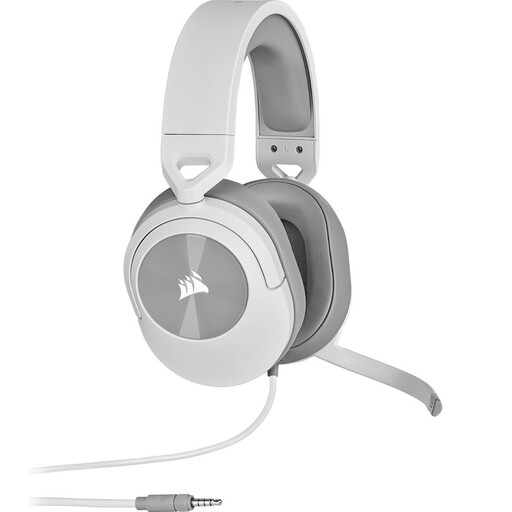 No image available
This wired headset is an option if you have a compatible 3,5 mm connection; check whether your set-up supports the microphone and headphones through the connection you choose.
The product name specifies stereo, 3,5 mm and the colour white.
 No image available
This wired USB Type-A headset may suit short takes on a computer with a compatible port; check whether your device can use the selected headset as a recording source.
The product name specifies USB Type-A and black.
First select the correct recording source and make a test recording. The Audacity 4 manual describes ‘Record on new track’ for placing the next take on a new track; listen back before you continue.
Keep an eye on the recording meter while reading your loudest line too. The Audacity manual gives a maximum peak of around −6 dB as a guide for the input level; this is software advice, not a required microphone specification.
That depends on your laptop and headset connections. According to RØDE, the NTH-100M microphone needs the included TRRS cable; the Audio-Technica BPHS1 has separate XLR and 6,3 mm plugs. Check that your device has the right inputs or whether you’ll need additional equipment.
For online consumer purchases from a business, the Dutch government says you will often have 14 days to change your mind, with some exceptions. Faulty products are also covered by statutory consumer protection; in the Netherlands, there is no fixed statutory warranty period, and the seller is your point of contact.
Recording something for your own practice and publishing a reading are different uses. Under the Dutch Copyright Act, the rights holder generally has the exclusive right to publish and reproduce the work; before publishing, check whether you need permission or whether a legal exception applies.