For a reading streamed from a computer to online listeners, a USB headset is a good fit. To amplify your voice in the room, you’ll need a microphone that connects to the sound system you have. A wireless headset system gives you freedom to move, but also requires a receiver, power and a check that the frequencies it uses are available at your location. In a shared living room, careful speaker placement and sensible amplification are still important to help prevent feedback.
Which setup is right for you?
Reader performing for an audience in the room
You want to speak clearly without feedback, so choose a headset only after checking which sound system and microphone input are available. Shure describes microphone and speaker placement as important factors in reducing feedback.
Host of an online reading
You’ll mainly be speaking through a computer to listeners at a distance. A suitable USB connection, audio monitoring and easy-to-reach mute controls are all worth considering. Logitech lists these connection and control features for the H390.
Presenter who likes to move around
You want to move around while performing without being tethered by a microphone cable. When choosing, also consider the transmitter, receiver, power supply and whether the frequency can be used at your location; the RDI provides information about wireless microphone frequencies.
What should you look for when choosing?
Wired microphone connected to a sound system
A good fit when: you want to amplify your voice for people in the room and have a suitable microphone input.
Bear in mind: a cable limits your movement, and microphone and speaker placement still matter.
Standalone microphone with a 3.5 mm connection
A good fit when: you already have a compatible input or a transmitter with plug-in power.
Bear in mind: check the connector and power requirements; the RØDE HS2 is a microphone, not a complete wireless set.
Complete wireless headset system
A good fit when: you want to move around while performing and can connect the receiver to a suitable sound system.
Bear in mind: you’ll need extra equipment and power; check the specific frequency available at your location.
USB headset for a computer
A good fit when: you’re giving your reading via a computer to online listeners.
Bear in mind: a computer headset won’t automatically amplify your voice for an audience in the room.
| What to consider |
What to look for when buying |
Who is this important for? |
| Clear speech without feedback |
Do you need to amplify your voice for people in the room, and where will the microphone and speaker be placed? |
If I’m reading in a living room, I want everyone to hear me clearly without the speaker feeding back into the microphone. Around 31% of consumers prioritise controlled sound in the room. |
| Connections and a complete set |
Check the input on your mixer, computer or transmitter, and make sure the power supply, receiver and necessary cables are included. |
If I want to use my existing equipment, the headset must connect to it without any missing parts. Around 31% of consumers prioritise compatibility and a complete set. |
| Online listening and controls |
Check your computer’s port and test microphone selection, audio monitoring and mute controls in the app you use. |
If I’m reading for listeners at a distance, I want my computer to recognise the microphone and to be able to mute it quickly. Around 23% of consumers prioritise online use. |
| Freedom to move |
Check that the set is complete and that its specific operating frequency can be used at your location in the Netherlands. |
If I want to move around while reading, I’m happy to set up extra equipment so I’m not tethered to a microphone cable. Around 15% of consumers prioritise freedom to move. |
Common buying mistakes
-
Choosing a USB headset for a standard sound system
A USB headset such as the Logitech H390 is designed to connect to a computer, while a microphone such as the Audio-Technica PRO8HEx has an XLR connection. These connectors are for different setups.
Before buying, map out the entire audio route and check the input on the equipment that sends sound to your audience.
-
Mistaking a standalone headset microphone for a complete wireless set
The RØDE HS2 is a microphone for a suitable 3.5 mm input with plug-in power. The Sennheiser XSW 2-ME3-E is a system that includes a headset, bodypack transmitter and receiver.
Check what’s included with the version you choose and what power supply, transmitter, receiver or cables your setup requires.
-
Assuming the full frequency range can be used everywhere
A frequency range listed on a product sheet doesn’t mean that every frequency in it can be used at every location. The RDI explains the conditions and location-dependent availability for wireless microphones.
Check the specific operating frequency and consult the latest RDI information for your location.
Brands to consider
Audio-Technica
Audio-Technica describes the PRO8HEx as a wired headset microphone with an XLR connection for use with a suitable sound system.
- According to its product specifications, the PRO8HEx has a hypercardioid dynamic capsule, an adjustable microphone boom and a fixed 2.2 m cable.
- It isn’t a USB headset or a complete wireless set, so check that the XLR connection and cable length suit your setup.
RØDE
RØDE positions the HS2 as a lightweight headset microphone for use with a compatible 3.5 mm input or transmitter.
- RØDE specifies an adjustable microphone boom and an omnidirectional capsule.
- According to RØDE, direct connection requires a 3.5 mm input with plug-in power. Some XLR setups may need a suitable power adapter.
Sennheiser
The Sennheiser XSW 2-ME3-E is a complete wireless headset system for use with a sound system.
- The manufacturer lists a headset, bodypack transmitter and receiver; the stated operating time is around 10 hours.
- The E version has specific tuning ranges. Check the specific frequency against the Dutch conditions of use and the RDI’s location information.
Shure
According to Shure, the WH20 range includes a wired XLR version, while the BLX14/PGA31 is a separate wireless system option.
- Shure specifies a cardioid pickup pattern for the WH20 and lists a receiver and bodypack for the BLX14/PGA31.
- The connector and frequency band vary by version, so check the details of the specific model.
Logitech
Logitech describes the H390 as a computer headset for speaking and listening, for example during an online reading.
- According to Logitech, the H390 has USB-A, a microphone boom and volume and mute controls.
- It isn’t a standalone microphone solution for a standard XLR sound system.
USB headsets at Joybuy
This Joybuy selection features USB computer headsets for readings where your voice is sent from a computer to online listeners.
 No image available
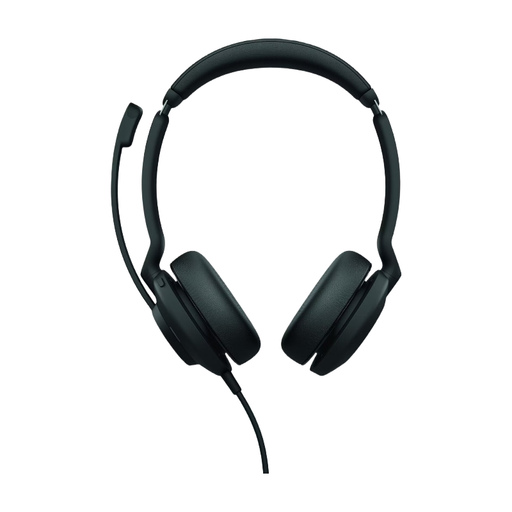
Jabra Evolve2 30 SE
A USB-A headset for readings via PC or Mac, with microphones and controls for use while speaking.
The description lists two built-in microphones, memory foam ear cushions and controls for functions including mute and calls.
View at Joybuy
 No image available
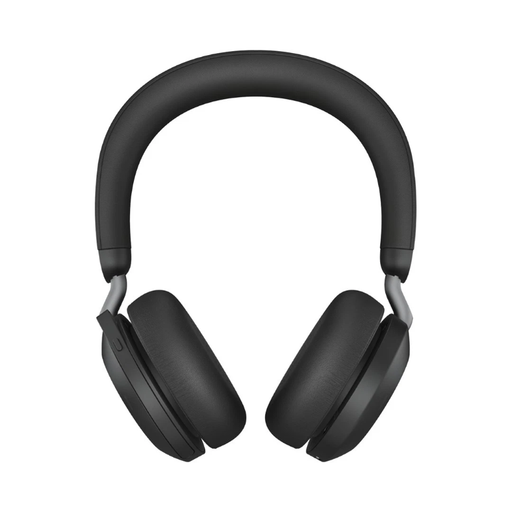
Jabra Evolve2 75
A headset for computer-based communication; check that its connection options suit your setup.
The description lists Bluetooth 5.2, a USB-C cable connection and pairing with two devices.
View at Joybuy
 No image available
Logitech PC 960 wired USB headsets
A wired USB headset for computer use, with microphone controls for online readings.
The description lists an adjustable microphone boom, a noise-cancelling microphone and volume and mute controls.
View at Joybuy
 No image available
Logitech H340 black wired USB headset
A USB headset for computer communication; check that its connections suit the computer you’ll use for your reading.
The description lists an adjustable microphone, a noise-cancelling microphone and a lightweight design.
View at Joybuy
 No image available
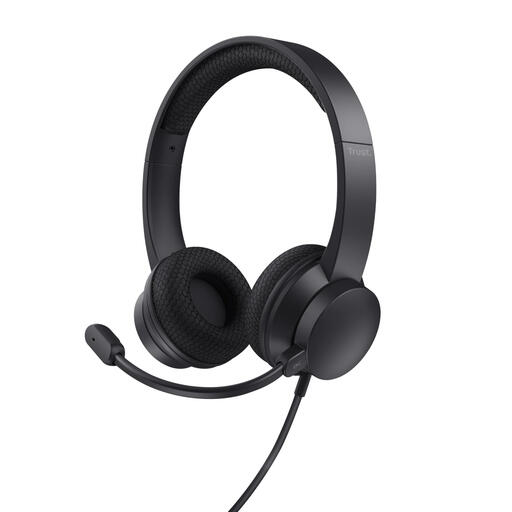
Trust Ayda USB headset with headband
A headset for online readings, with a microphone you can mute while speaking.
The description lists USB-A with a USB-C adapter cable, volume control and flip-to-mute controls.
View at Joybuy
Frequently asked questions
Do I need a USB headset or a microphone for the sound system to address an audience in the room?
It depends on how the sound reaches your audience. According to Logitech, the Logitech H390 connects to a computer via USB-A; the Audio-Technica PRO8HEx has a three-pin XLR microphone plug. Check which input is used by the equipment that sends sound to your audience.
How can I reduce feedback when using a speaker?
Keep the microphone out of the speaker’s direct sound and carefully adjust the placement and amplification. Shure describes feedback as a loop in which amplified sound from the speaker is picked up by the microphone again; a directional microphone on its own isn’t guaranteed to solve the problem.
Can I use any wireless headset frequency in the Netherlands without a licence?
No. Not every frequency can automatically be used at every location. The RDI publishes the conditions for licence-exempt microphone use and notes that available frequencies may vary by location. Check the specific frequency and, if necessary, consult the RDI’s Microphone Bands app; a product range such as 821–832 MHz doesn’t in itself give you permission to use that entire range.
Who can help if a headset I’ve bought develops a fault unexpectedly quickly?
For a consumer purchase, the seller is responsible for putting things right if the product doesn’t meet what you could reasonably expect under normal use. ACM ConsuWijzer explains that statutory guarantees don’t have a fixed term of just two years; an additional manufacturer’s warranty doesn’t replace your statutory rights.


