Who is a headset microphone suitable for?

The meeting chair recording their own summary

You record the summary yourself during or after the meeting and want your voice to come through clearly despite the noise in the rehearsal room. Audio-Technica and Shure describe headworn microphones as being designed to pick up the wearer’s voice. Check that the connection is compatible with your recording equipment.

The person recording the group conversation

You want to capture decisions and action points from several people. A headset worn by one person won’t automatically record the whole room; Shure emphasises that the right approach to meeting-room audio depends on the scenario.

The user of existing recording equipment

You already have a computer, recorder, mixer or wireless system and want to know whether the microphone will connect to it. Compare the exact input with the connection and any power or system requirements for the version you’re considering.

What should you look for when choosing?

Wired, directional headworn microphone

A good fit if: one person is recording the summary and the recorder or mixer has a compatible microphone input.

Bear in mind: the cable limits your freedom of movement, and an XLR output won’t connect directly to every computer.

USB headset for a computer

A good fit if: you speak, monitor and record on a computer.

Bear in mind: the USB-A or USB-C version must match the device and be supported by the app.

Headset with separate connections to a mixer

A good fit if: you want to record one voice while monitoring through headphones.

Bear in mind: RØDE specifies an adapter that supplies plug-in power when connecting the microphone on the RØDE NTH-100M to an XLR microphone input.

Headworn microphone with a wireless bodypack

A good fit if: the speaker needs to move around and already has, or wants to put together, a compatible wireless system.

Bear in mind: the Shure PGA31-TQG on its own isn’t a complete wireless recording setup and won’t automatically record everyone in the room.

Group microphone instead of just a headset

A good fit if: the summary needs to include comments from other people in the room too.

Bear in mind: room acoustics, microphone placement and background noise all play a part. Test whether voices are clear from the intended positions.

Key consideration What should you check? Who is this important for?
Recording your own voice clearly Check the microphone position and polar pattern. Make a test recording with the noise of the rehearsal room in the background. If I’m recording the summary myself while there’s background noise, I want my voice to come through clearly. Around 36% of consumers prioritise isolating the voice of one speaker.
Capturing all relevant voices Test the recording from the participants’ seats and decide whether you need a group microphone. When I need to hear decisions made by several people, I want to know their voices will be on the recording too. Around 29% of consumers prioritise capturing everyone’s voice in a meeting.
Connection to your recording setup Check the exact input and version: for example, XLR, TA4F/TQG with a compatible bodypack, USB-A or USB-C, or an adapter that supplies the required power. If I already have a recorder, computer or mixer, I don’t want to choose a microphone that won’t connect to my equipment. Around 21% of consumers put compatibility with their existing equipment first.
Freedom of movement Compare the available cable length with a complete wireless setup and its connections. If I want to walk around while recording, freedom of movement matters a lot. Around 14% of consumers make it their top priority.

What to watch out for when buying

  • Confusing noise isolation with recording the whole group

    Isolating the wearer’s voice doesn’t mean other participants will be recorded clearly. A headset microphone is primarily designed to pick up the person wearing it.

    Before you buy, decide whether you need just the summary or the whole conversation. Test the recording with everyone who needs to be heard.

    You may need an additional microphone or a different setup to record a group.

  • Mistaking a standalone headworn microphone for a complete wireless kit

    Shure describes the PGA31-TQG as being for compatible bodypacks; the microphone on its own isn’t a complete wireless recording setup.

    Check the connector version and make sure the microphone is compatible with your transmitter, receiver and recorder input.

    You may need to buy a compatible bodypack and receiver separately.

  • Assuming any plug will work with an adapter

    According to RØDE, the NTH-100M has a power requirement when its microphone is connected to an XLR microphone input. The Jabra Evolve2 40 SE is available with different USB connections.

    For the exact model, check both the connection and any power requirements against the input on your recorder or mixer.

    You may need a suitable adapter or a different recording interface.

Brands to consider for this choice

Audio-Technica

Audio-Technica describes the PRO8HEx as a wired headworn microphone for one speaker, with a connection for a compatible XLR setup.

  • According to Audio-Technica, the PRO8HEx has a hypercardioid polar pattern, an adjustable boom and a fixed 2.2 m cable with a 3-pin XLR connector.
  • The PRO8HEcW has a different connection for a UniPak system. Check the version and compatibility before buying.

Shure

The Shure PGA31 is a headworn microphone for speech and performance as part of a compatible wireless system.

  • Shure specifies a cardioid pattern for the PGA31 and a flexible boom for positioning.
  • The TA4F/TQG version is designed for compatible Shure bodypacks; the microphone on its own doesn’t include a transmitter or receiver, or cover a group.

RØDE

RØDE describes the NTH-100M as over-ear headphones with a detachable headset microphone, making it an option if you also want to monitor audio.

  • RØDE describes a splitter for separate headphone and microphone connections.
  • For the microphone connected via an XLR microphone input, RØDE specifies an adapter that supplies plug-in power. Check the complete connection setup.

Jabra

The Evolve2 40 SE is a computer-focused USB headset with a microphone boom, designed for speaking and listening on a computer.

  • Jabra describes three microphones and passive noise isolation for the wearer.
  • The manual distinguishes between USB-A and USB-C versions and notes that not every mobile USB-C device or app supports audio. This isn’t a test of group recording in a rehearsal room.

Sennheiser

Sennheiser describes the HSP 4 as a lightweight, adjustable headworn microphone for hands-free speech.

  • For the version reviewed, Sennheiser specifies a cardioid pattern and a replaceable cable.
  • The connector varies by version; compare the full product number with your bodypack.

Joybuy products

These product picks include headsets with microphones for wired or computer use, plus a speakerphone as an alternative when you also need to record voices from around the room. Before use, check that the connections are compatible and test which voices actually come through on the recording.
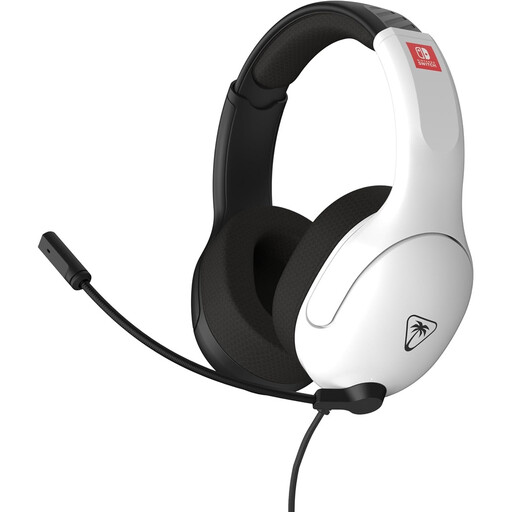
Turtle Beach Airlite Fit wired gaming headset, 3.5 mm connection, black and white

Turtle Beach Airlite Fit, wired, black and white

May suit you if you’re looking for a wired headset with a microphone. Check that the connection and microphone signal work with your recording device.

The product name specifies a 3.5 mm connection, a flip-to-mute microphone boom and compatibility with Nintendo Switch, Switch Lite and Switch OLED.

View at Joybuy
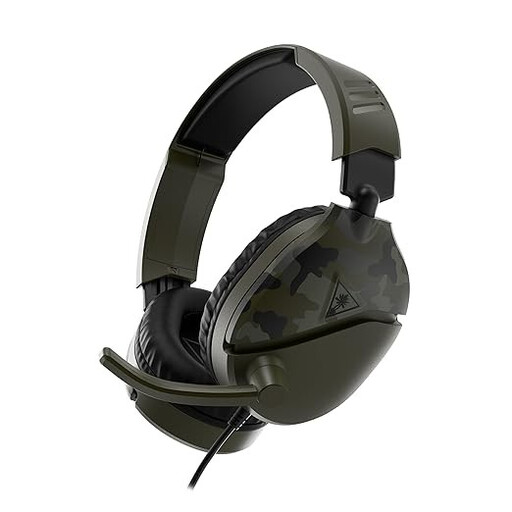
Turtle Beach Recon 70 wired gaming headset with microphone, Green Camo

Turtle Beach Recon 70, Green Camo

May suit you if you’re looking for a wired headset with a microphone. Check the connection and compatibility with the input and recording software you use.

The product description specifies a 3.5 mm connection, a flip-to-mute microphone boom and compatibility with PC and the listed gaming platforms.

View at Joybuy

Jabra Evolve2 30 SE headset with USB-A connection

Jabra Evolve2 30 SE

May suit you if you want to speak and listen via a computer. Check that your device supports the USB connection and app you’re using.

The product description specifies USB-A, two integrated microphones and compatibility with Windows, Mac and Microsoft Teams. A USB-C adapter is listed as compatible.

View at Joybuy

Jabra Evolve2 75 headset, USB-A, MS Teams, black

Jabra Evolve2 75, USB-A, MS Teams, black

May suit you if you’re looking for a wireless headset for communication. Check that it connects to your recording device.

The product description specifies Bluetooth and an array of eight microphones for communication. That alone doesn’t prove that everyone in a rehearsal room will be recorded clearly.

View at Joybuy
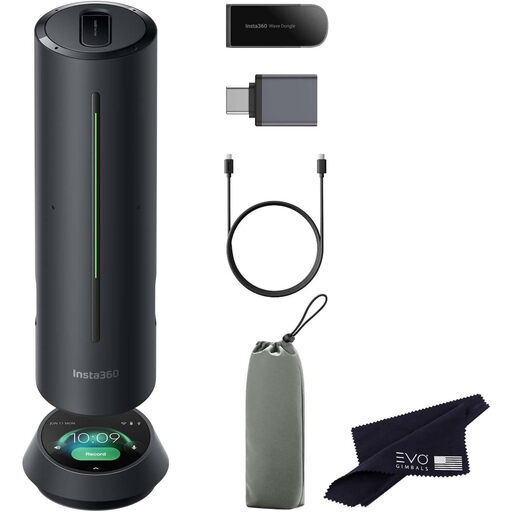
Insta360 Wave AI Conference Speakerphone with Bluetooth, black

Insta360 Wave AI Conference Speakerphone, black

An alternative to consider if you also need to record voices from around the room; this is a speakerphone, not a headset.

The product description specifies an array of eight microphones and five recording patterns. Make a test recording to check that the intended speakers are clear in your room.

View at Joybuy

Frequently asked questions

Is one headset enough to record everyone around the table?

Don’t assume so: the headworn models described are designed to pick up the wearer’s voice. Test the recording from the other participants’ seats and consider a suitable group microphone if you need to hear their voices too.

Can I connect a RØDE NTH-100M directly to an XLR microphone input?

First check the connection and power requirements. RØDE describes separate 3.5 mm connections and specifies a suitable adapter that supplies plug-in power when connecting the microphone to an XLR input.

How do I test the recording before the meeting?

Select the right input in your recording software, position the microphone boom close to your mouth and make a test recording with the room’s background noise. Ask the other speakers to talk from their intended seats too, then listen back to check that every voice you need is clear.

Can an organisation in the Netherlands record identifiable voices for meeting summaries?

It depends on the circumstances; using a headset doesn’t automatically make a recording lawful. If an organisation processes personal data, the Dutch Data Protection Authority says it needs an applicable legal basis under the GDPR and must inform the people concerned about, among other things, the purpose and legal basis. Consent is one possible legal basis, but the Dutch Data Protection Authority notes that the power imbalance in an employment relationship can make consent problematic.

How long can recordings containing personal data be kept?

According to the Dutch Data Protection Authority, the GDPR doesn’t set a single specific retention period. The organisation must set an appropriate period for the purpose and must not keep personal data for longer than necessary. Other applicable laws may set their own periods.
