
Practice interviewee who wants to listen back to their answers
You want to hear yourself during a Dutch-language practice interview recorded on a computer. So, check the connection, microphone position and a test recording.


For computer recordings of mainly your own voice, a wired USB headset with a boom microphone is a straightforward option. Logitech lists USB-A and USB-C versions of the H390, so make sure the connector matches your computer’s port. If there are two speakers, one headset won’t automatically give you a complete recording setup: decide how you’ll capture the second voice and test it beforehand. A wireless headset is a better fit when freedom of movement matters more than the convenience of a wired connection.
You want to hear yourself during a Dutch-language practice interview recorded on a computer. So, check the connection, microphone position and a test recording.
You want to listen back to both the questions and the answers. RØDE describes a two-transmitter setup with separate channels for the Wireless GO Gen 3. You’ll also need to check how your chosen recording equipment captures the second voice.
You want to practise without a cable. Check in advance that the wireless connection works with your recording device, and make a test recording.
First decide how many voices you want to record, then choose a headset and connection that suit your recording device.
| What to consider | What to look for when buying | Who is this important for? |
|---|---|---|
| Recording two voices | Decide whether each speaker needs their own microphone source and check the channel settings. | If I’m practising with a partner, I want to be able to listen back to both the questions and the answers. Around 36% of consumers prioritise two clear voices. |
| Listening back to your own voice | Check that you can position the microphone properly and listen back to a test recording. | When I’m mainly assessing my own answers, I want my voice to be clear on the recording. Around 29% of consumers prioritise capturing their own speech. |
| Connection and ease of use | Check the exact USB version and select the correct microphone input in your recording software. | If I want to get started on my computer without extra recording equipment, the plug needs to fit and the software needs to recognise the microphone. Around 21% of consumers prioritise connectivity and ease of use. |
| Freedom of movement and wearing comfort | Check the wireless connection and version; try the fit if possible. | If I want to move around during a practice session or wear the headset for longer, both the connection and how it fits matter. Around 14% of consumers prioritise mobility or wearing comfort. |
A microphone worn by one person won’t automatically capture the other speaker clearly too. RØDE describes a system with two transmitters and split mode as a separate setup.
Decide in advance whether you need one or two separate voice sources, and test both channels.
Two separate sources may require an additional microphone source and a compatible recording input.
Plugs and included accessories vary between versions. For example, Trust lists a USB-C-to-A adapter for the Ayda USB PC; this doesn’t automatically apply to other versions.
Before choosing a version, compare its exact connection and included accessories with your recording device.
You may need a suitable adapter or a different headset version if the connections don’t match.
Microphone features and sound isolation from ear cushions are two different things. Jabra describes the microphones and ear cushions as separate components; this doesn’t prove how a recording will sound in your space.
Check the microphone specifications and assess a test recording of your own.
The H390 is a wired USB headset for computer use and compact recordings of mainly your own voice.
The Ayda USB PC and Ayda USB-ENC PC are wired USB headsets with different microphone configurations.
The Evolve2 30 SE is a wired headset for calls and for wearing during longer practice sessions.
The Voyager 4300 UC series offers a wireless option for anyone who wants to move around while practising.
The PC 8 USB is a wired stereo headset for recording on a compatible computer.
These headsets offer wired or wireless options for computer recordings of mainly your own voice. Choose the connection and version that suit your recording device.
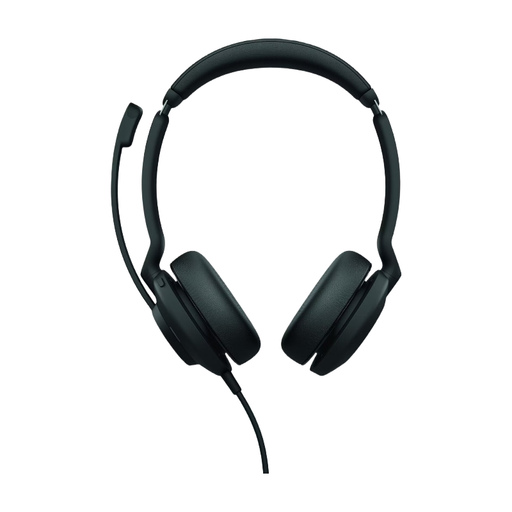 Image unavailable
A wired USB headset for computer recordings of mainly your own voice; one headset won’t automatically provide a complete setup for recording two separate voices.
The product description lists two integrated microphones, USB-A and compatibility with a USB-C adapter. It also mentions a lightweight design and memory foam ear cushions.
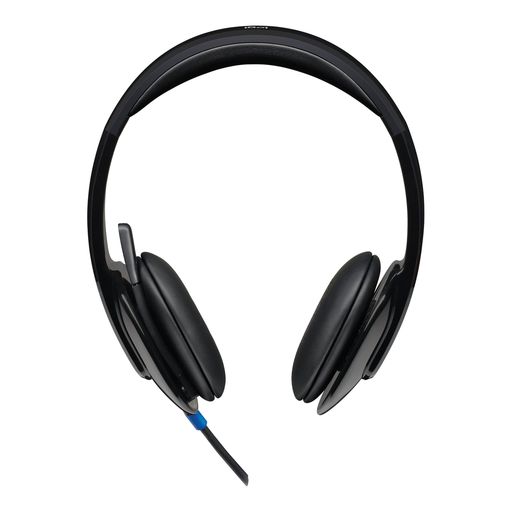 Image unavailable
A wired USB-A headset for computer recordings of mainly your own voice.
The product description lists a noise-cancelling microphone, stereo audio, and volume and mute controls on the ear cup. The headband is adjustable.
 Image unavailable
A wired USB headset for computer recordings of mainly your own voice.
The product description lists an adjustable boom microphone and volume and mute controls. It also mentions a lightweight design and soft ear cushions.
 Image unavailable
A wired USB headset with a microphone for computer recordings of mainly your own voice.
The product description lists an adjustable boom microphone, volume and mute controls, and a mute indicator. It also mentions soft ear cushions.
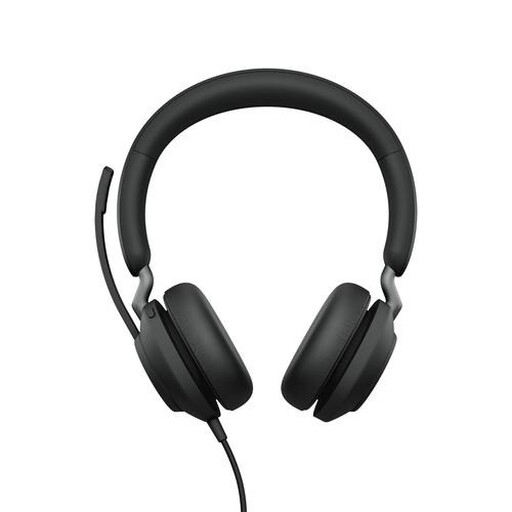 Image unavailable
A wireless headset for anyone who wants to move around while practising; check that the connection is compatible with your recording device.
The product description lists Bluetooth 5.0, a USB-A adapter, three microphones and memory foam ear cushions. Wireless use requires pairing and charging.
Don’t assume so: a microphone worn by one person and recording a second voice are two different requirements. If you need both voices separately, check a setup with two sources and the channel settings. RØDE specifically describes split mode for the Wireless GO Gen 3.
Check the connection, select the intended microphone input in your recording software and make a test recording. Ask both participants to speak at a normal distance during the test, so you can check that both voices are audible in the recording.
For a consumer purchase in the Netherlands, the seller is responsible if the headset doesn’t meet reasonable expectations when used normally. ACM ConsuWijzer explains that the seller must provide an appropriate solution; there isn’t automatically one fixed statutory warranty period for every headset.
According to the Dutch Data Protection Authority, processing that is purely personal or household-related falls outside the GDPR. If you process identifiable personal data beyond this exemption, you must establish an applicable legal basis under the GDPR before processing. Consent is one possible legal basis, but it isn’t automatically the only one; this doesn’t answer every separate question about recording or publishing a conversation.