What should you look for when buying?
USB computer headset
A good fit if: you’re recording the appeal on a computer with a compatible USB port.
Keep in mind: the headset will be visible if you film yourself. Logitech describes the H390 for calls, not as a microphone proven to deliver better recording quality.
Cardioid headworn microphone with XLR
A good fit if: you have a suitable XLR microphone input or interface and want a microphone that moves with your head.
Keep in mind: the Shure WH20-XLR has no USB connection or headphones; the WH20-TQG is designed for use with a compatible bodypack.
Small omnidirectional headworn microphone
A good fit if: you’ll be on camera and want a small microphone, with a compatible 3,5 mm microphone input that supplies plug-in power.
Keep in mind: RØDE states that the HS2 requires plug-in power, so a compatible plug alone doesn’t confirm that it will work.
Broadcast headset with headphones
A good fit if: you want to monitor the audio while recording and have separate microphone and headphone connections.
Keep in mind: the Audio-Technica BPHS1 has separate plugs; don’t confuse it with the BPHS1-XF4 intercom variant.
The percentages below help you weigh up the main considerations for this recording setup. As well as microphone position, check the connections on your recording equipment.
| What to consider |
What to look for when buying |
Who is this important for? |
| Clear speech when speaking close to the microphone |
Check whether the boom is adjustable, then make a test recording to assess your voice, background noise and any plosive sounds. |
If clear speech is my priority, I want to position the capsule close to my mouth without blowing air directly into the microphone. Around 33% of consumers give clear speech at close range top priority. |
| Connection and equipment required |
Compare USB-A, XLR or 3,5 mm with the input on your computer, recorder or interface. For the HS2, also check for plug-in power. |
If you first want to check whether the microphone will work with your recording equipment, check the full model variant and its connections before choosing. Around 27% of consumers put connectivity first. |
| Visibility on camera |
Compare the size and style; also check which connection or transmitter the microphone requires. |
If I’m filming myself, I want to know in advance how visible the headset will be and whether the smaller microphone will work with my equipment. Around 20% of consumers give an unobtrusive appearance top priority. |
| Monitoring and comfort |
Choose between a headset with earcups and a separate headworn microphone; check whether your recording device has a headphone output. |
When recording several takes, I want to check what I’m saying and choose a style that suits the way I work. Around 20% of consumers give monitoring and comfort top priority. |
Joybuy products
These Joybuy product picks focus on headset microphones for recording a spoken appeal, with particular attention to adjustable microphone positioning and connection to your recording equipment.
 No image available
Trust GXT 498W Forta Gaming Headset, White
The flexible microphone can be useful if you want to adjust its position while recording; check that the connection works with your recording equipment.
The product information lists a detachable, flexible microphone, an included pop filter and a 3,5 mm connection.
The product name also mentions an official PS5 licence, 50mm drivers and an over-ear design.
Joybuy
 No image available
Logitech PC 960 USB
This headset may suit you if you want to use a USB headset with a computer and adjust the microphone boom for recording.
The product information lists a USB connection, an adjustable microphone boom, and volume and mute controls.
Joybuy
 No image available
Logitech H340 USB Headset, Black, Wired
The USB connection and adjustable microphone make this an option to consider for recording on a computer; check your device’s connection.
The product information lists an adjustable microphone and plug-and-play use with a computer via USB.
Joybuy
 No image available
Razer BlackShark V2 X 7.1 Wired Gaming Headset
This headset is worth considering if you want to speak close to the microphone; check that its 3,5 mm connection works with your recording equipment.
The product information lists a cardioid microphone, a 3,5 mm connection and positioning around 1–2 inches from the mouth.
The product name describes it as a 7.1 wired gaming headset.
Joybuy
 No image available
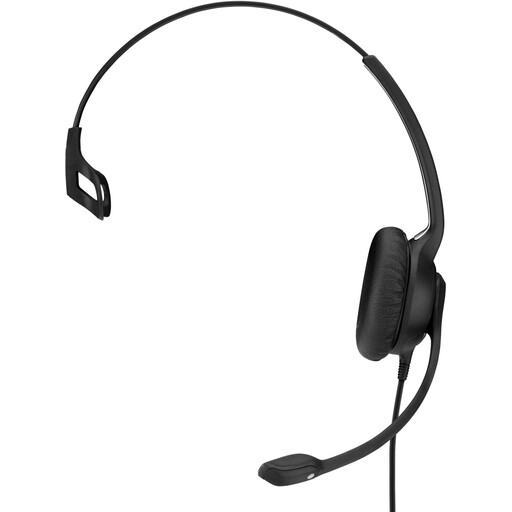
EPOS | SENNHEISER IMPACT SC 230 USB MS II
This headset may suit you if you want to record on a computer and position the microphone boom; first check that a single-sided style works for you.
The product information lists a USB connection, a flexible microphone boom, in-line controls and a lightweight, single-sided design.
Joybuy
Frequently asked questions
Where should you position the microphone when recording a spoken appeal?
Position the microphone close to, but slightly to the side of, your mouth, rather than directly in the airflow. RØDE specifically recommends this position for the HS2; for other models, adjust the boom according to the instructions and listen back to a test recording.
Can a headworn microphone with a 3,5 mm plug connect directly to any computer or camera?
No, it depends on the device’s input and power requirements. For the RØDE HS2, RØDE specifies a 3,5 mm microphone input that supplies plug-in power; check both before buying.
What should you check for maintenance or long-term use?
Before each recording, check that the boom is positioned correctly and that the cable isn’t pulling the headset down. The RØDE HS2 manual explains how to route the cable; Audio-Technica lists a replaceable cable and ear pads for the BPHS1.
What are your rights when you buy a headset online?
According to ACM ConsuWijzer, online purchases generally come with a statutory cooling-off period of up to 14 days after delivery, with some exceptions. The seller is also responsible for the legal guarantee if the product doesn’t meet what you can reasonably expect.
Can you record identifiable people and publish their contribution?
An identifiable audio recording may be personal data. The Dutch Data Protection Authority states that processing personal data requires a legal basis under the GDPR; consent is one possible basis. If you’re recording or publishing on behalf of an organisation, agree in advance how the recording will be made and used.


