Start with a microphone boom that can be positioned close to your mouth, then make a test recording with the fan running. Microphone placement and listening back to your voice matter more than any promise to eliminate all noise. Shure explains the principle of placing a microphone close to the sound source. From there, you can choose between a straightforward USB headset, a headset for monitoring your voice or software-based filtering, depending on your connection and recording software.
Who is this choice relevant to?
Recording next to a running fan
They mainly want the tour narration to remain clear, and compare microphone placement and filtering using a test recording made in the same conditions as the final recording. Shure explains the importance of microphone placement when recording.
Creator who wants to monitor their voice
They want a natural-sounding voice-over and need to assess how their voice sounds while recording or afterwards. RØDE positions the NTH-100M for uses including content creation and monitoring.
Creator recording directly to a computer
They want to connect quickly, so they check which USB or analogue input the computer and headset use. Logitech describes the H390 as a wired USB computer headset; RØDE provides connection information for the NTH-100M.
What should you look for when choosing?
Start by checking the microphone position and sound in a test recording of your own. Then make sure the connection and any filtering are compatible with your recording device.
The percentages below relate to consumers choosing a headset microphone for a voice-over for a virtual tour with a fan running.
| What to consider |
What to look for |
Who is this most important to? |
| Fan noise |
Check whether the microphone boom can be positioned close to your mouth, then listen back to a test recording with the fan running. |
If I want my spoken tour to remain clear while the fan is running, I focus on the recording itself. Around 36% of consumers prioritise speech clarity in the presence of fan noise. |
| Voice quality and monitoring |
Check that the headphones and microphone work at the same time, and compare a recording with and without filtering if necessary. |
If you want your voice-over to sound natural, it helps to listen back and check that your voice hasn't been altered in an unwanted way. Around 29% of consumers prioritise voice quality. |
| Connection |
Check which port is available, the exact headset version and whether your recording software lets you select the microphone as an input source. |
If I want to record on my existing computer without any hassle, I check that the headset microphone works with the connection I'm using. Around 21% of consumers are most concerned about ease of connection. |
| Comfort |
Check the adjustability and cushioning, and assess the fit during a longer recording session. |
When recording and listening back repeatedly, I want a headset that stays comfortable. Around 14% of consumers focus on comfort during longer recording sessions. |
Buying pitfalls
-
Confusing ANC with noise reduction in the recording
ANC affects what you hear through the headphones; it doesn't prove that fan noise will disappear from the recorded file.
Make short recordings with the fan running, then assess both speech clarity and voice quality.
If the result isn't usable, you may need to spend extra time recording it again.
-
Buying an analogue headset without checking the microphone input
A plug that fits doesn't always mean the microphone will work with your recording device. For the NTH-100M, RØDE specifies that the supplied TRRS cable is required. For separate headphone and microphone connections, RØDE describes using a splitter.
Before buying, check your device's input and which cables or adapters come with the version you're choosing.
-
Applying claims about office or gaming calls to a voice-over
A manufacturer's claim about background conversations during office calls doesn't directly tell you how fan noise will sound in a recorded tour. SteelSeries also describes software-based filtering; the result partly depends on the signal used by your recording software.
Use this kind of product information to shortlist models for a test recording, not as a guarantee of the final result.
Relevant brands
RØDE
RØDE positions the NTH-100M as a headset for uses including content creation and monitoring.
- RØDE describes a detachable microphone and positioning designed to help reduce plosive sounds.
- The supplied TRRS cable is required to use the microphone; its suitability for fan noise in your recording has not been established.
Logitech
The H390 is a wired USB computer headset with a swivel microphone boom.
- Logitech specifies a noise-cancelling microphone and in-line controls.
- Check whether the version you're buying has a USB-A or USB-C connection. Claims about call quality don't predict how a voice-over will sound.
HP Poly
The Blackwire 8225 is a wired business headset with microphone filtering described by HP.
- HP specifies microphone noise reduction and Acoustic Fence.
- The ANC also mentioned is for environmental noise heard by the wearer. It isn't proof that fan noise will disappear from the recording.
Jabra
According to Jabra, the wired Evolve2 40 SE has a flexible microphone boom and a three-microphone system for calls.
- The flexible microphone boom is a feature to consider when assessing microphone placement.
- Jabra's claim about background conversations relates to open-plan offices, not fan noise in a voice-over.
SteelSeries
The wired Arctis Nova 3 is a gaming headset with a retractable microphone and, according to SteelSeries, filtering through Sonar software.
- You can compare software-based filtering with an unfiltered recording, provided your recording software uses the intended signal.
- The product description provides no independent results for voice-overs recorded with fan noise.
Headsets at Joybuy
This Joybuy selection includes headsets with microphones for computer recording. Check the connection for each model and whether your recording software uses the intended microphone signal.
 Image unavailable
JBL Quantum 300 wired gaming headset
An option if you want to position a microphone boom close to your mouth and record using a computer.
The product information specifies a directional voice-focus boom microphone, a 3.5mm connection and a supplied USB audio adapter. JBL QuantumENGINE software is specified for PC.
Joybuy
 Image unavailable
HyperX Cloud III S Wireless Gaming Headset
A good fit if you don't want to use a wired connection while recording and are looking for a detachable microphone.
The product information specifies wireless connectivity via 2.4 GHz or Bluetooth, PC compatibility, and supplied USB-A and USB-C connections. The boom microphone is detachable; the title specifies up to 200 hours via Bluetooth and up to 120 hours via 2.4 GHz.
Joybuy
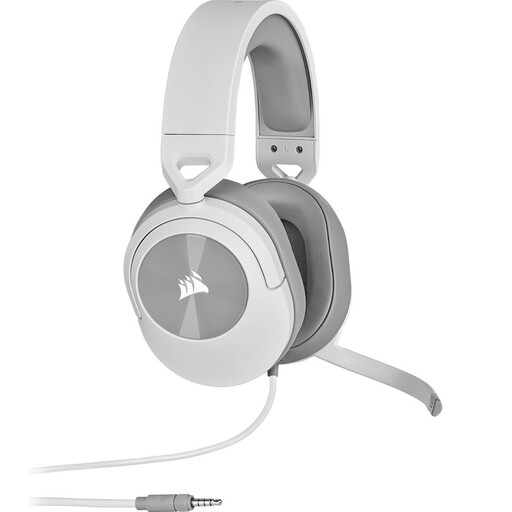 Image unavailable
Corsair HS55 Stereo Gaming Headset, white, 3.5 mm
An option if you're looking for a wired headset with a 3.5mm connection and a supplied splitter.
The specifications list an omnidirectional noise-cancelling microphone that can be flipped up to mute. The product information states compatibility with PC, Mac and mobile devices, and a weight of 273 g.
Joybuy
 Image unavailable
Trust Ayda wired headset, USB Type-A, black
A good fit if you want to use a wired USB headset and check the microphone on your recording device.
The product information specifies USB-A with a USB-C adapter cable, volume controls on the headset and a microphone that filters background noise and can be flipped up to mute. An adjustable headband and comfortable ear cushions are also specified.
Joybuy
 Image unavailable
Edifier G2II USB gaming headset for PC
An option if you're looking for a USB headset and want to be able to remove the microphone while recording.
The product information specifies a detachable noise-cancelling microphone, a USB connection and compatibility with PC and Mac. The headset has volume controls and a microphone mute control.
Joybuy
Frequently asked questions
Should I choose ANC to stop the fan from appearing in the recording?
No, not for that alone. Assess the microphone recording separately from the noise reduction you hear through the headphones. Make a short test recording with the fan running and listen back to it.
Why isn't my analogue headset's microphone working when I can hear sound?
Check whether the input supports microphone audio through the plug you're using. For the NTH-100M, RØDE specifies the supplied TRRS cable; for separate headphone and microphone connections, RØDE describes using a splitter.
What are my rights if a headset bought online doesn't meet expectations?
For a consumer purchase in the Netherlands, the seller must offer a solution under the Dutch government's rules if the product is faulty; there is no fixed statutory warranty period that applies to all products. Many online purchases from businesses come with a 14-day cooling-off period, subject to exceptions.
Can I include recognisable voices of other people in a published virtual tour?
A sound recording in which someone is recognisable may contain personal data. According to the Dutch Data Protection Authority, an organisation needs a valid GDPR legal basis to process personal data. Consent is one possible legal basis, but it isn't automatically the only one.


