Who is a headset microphone suitable for in a reverberant room?

Home voice-over artist dealing with audible echo

You’re recording a single voice in a room where reflections are noticeable, and want to find out first whether you can position the microphone close to your mouth. Don’t assume from a product name that it will eliminate the echo. Shure discusses microphone placement in rooms with poor acoustics.

Computer user looking for an easy start

You want to record directly onto a computer and are mainly concerned with choosing the right USB connection, selecting the correct microphone input and keeping things simple. Logitech describes the H390 as a USB computer headset and provides guidance on positioning the microphone boom.

Creator with separate recording equipment

You want to monitor your voice while recording and have equipment with separate microphone and headphone inputs, or are considering this type of setup. According to the manufacturer, the Audio-Technica BPHS1 has separate microphone and headphone connections.

What should you look for in a headset microphone for a reverberant room?

Wired USB headset

Suitable if: you want to record directly onto a computer and are looking for a simple connection.

Bear in mind: check whether your computer needs USB-A or USB-C, and select the headset as the microphone input in your recording software.

Headset with an analogue connection

Suitable if: you want to speak and listen through one headset and your device supports both microphone and headphone functions.

Bear in mind: according to RØDE, the RØDE NTH-100M requires the supplied TRRS cable for the microphone function.

Broadcast headset with separate connections

Suitable if: you have an audio interface or recorder with compatible separate inputs, or want to use this type of setup.

Bear in mind: the Audio-Technica BPHS1 has an XLR connection for the microphone and a 6.3mm plug for the headphones; both must be compatible with your equipment.

Standalone headworn microphone

Suitable if: freedom of movement and a microphone that moves with your head are important to you.

Bear in mind: the Shure SM35 doesn’t have built-in headphones; also check whether the TA4F or XLR version is compatible with your equipment.

What to consider What to check before buying Who is this important for?
Clarity in a reverberant room Check whether you can position the microphone boom near your mouth without placing it directly in the airflow; make a short test recording where you’ll be recording. I mainly want my voice to remain clear, even when the room has noticeable reflections. Around 36% of consumers put echo and clarity first.
Connection and ease of recording Make a note of the inputs on your computer or recorder, and check that the exact version supports both the microphone and listening functions. I want to connect and start recording straight away, without discovering later that the input isn’t compatible. Around 29% of consumers prioritise connectivity and being able to record immediately.
Monitoring your recording Check whether your device supports microphone input and headphone output at the same time; test your recording software too. I want to hear whether my words and breathing sound right while or after recording. Around 21% of consumers make monitoring their top priority.
Wearing comfort and microphone position Check the fit and adjustability; if you’re considering a standalone headworn microphone, find out what recording and monitoring equipment you’ll need. I want to record longer takes or move around without having to reposition the microphone repeatedly. Around 14% of consumers prioritise comfort and freedom of movement.

Common pitfalls when choosing a headset microphone

  • Assuming ‘noise cancellation’ means less room echo

    A noise-cancellation claim doesn’t show how a microphone picks up reflections in your room. A test recording in the same place will let you hear what difference positioning makes in your setup.

    First, try positioning the microphone close to your mouth and compare recordings made in the same place with the same settings.

    Allow time for test recordings and adjustments to your recording space.

  • Assuming a plug guarantees full compatibility

    TRRS, USB, XLR and a separate headphone plug all serve different purposes. Versions within the same product range may also have different connections.

    Check the exact model, the cables supplied and the microphone and headphone inputs on your device.

    A setup with separate inputs may also require a compatible interface, transmitter, preamp or cable.

  • Confusing a standalone headworn microphone with a complete headset

    The Shure SM35 is a headworn microphone without built-in headphones, so you can’t monitor your recording with it on its own.

    Choose this setup only if you can arrange the recording connections and a separate monitoring solution.

    Allow for separate headphones and, potentially, compatible recording equipment.

Brands to consider

RØDE

The RØDE NTH-100M combines headphones with a detachable boom microphone, making it an option if you want to speak and listen through one headset.

  • RØDE states that the supplied TRRS cable is required to use the microphone function.
  • Check that your recording device supports both microphone and headphone functions through that connection.

Audio-Technica

The BPHS1 is a broadcast headset with closed-back earcups and a cardioid dynamic boom microphone.

  • Audio-Technica specifies an adjustable microphone boom, plus a replaceable cable and ear pads.
  • The BPHS1 has XLR for the microphone and 6.3 mm for the headphones. The BPHS1-XF4 is a different version with an intercom connector.

Logitech

The H390 is a computer headset with a USB connection, in-line controls and a movable microphone boom.

  • Logitech lists separate USB-A and USB-C versions.
  • Logitech describes the microphone as noise-cancelling; that claim doesn’t prove it will eliminate room echo.

HyperX

The wired Cloud III is a gaming headset with a boom microphone that you could also consider as a computer headset.

  • HyperX lists 3.5 mm, USB-A and USB-C connections and a detachable microphone for the wired Cloud III.
  • A noise-cancellation claim doesn’t show that room echo will be reduced. Don’t confuse the wired Cloud III with wireless or Cloud III S versions.

Shure

The SM35 is a standalone headworn microphone for anyone who wants it to stay in place while moving; it isn’t a complete headset.

  • Shure recommends placing the microphone at the corner of your mouth to reduce plosive sounds.
  • Check that the TA4F or XLR version, the power supply required and your recording equipment are compatible. You’ll need a separate solution for monitoring.

Product picks at Joybuy

This selection includes headsets with microphones for voice recording and monitoring. Check that your recording device supports the connection and microphone function for each model; the product descriptions aren’t comparative tests of room echo.

Jabra Evolve2 30 SE headset

Jabra Evolve2 30 SE

A wired computer headset to consider if you use a USB-A connection for recording.

The product description lists USB-A and two built-in microphones.

Joybuy

Razer Kraken V3 X headset, black

Razer Kraken V3 X

A wired USB headset to consider for voice recording on a PC.

The product description mentions a cardioid microphone and a mute function.

Joybuy

Jabra Evolve2 75 USB-A MS Teams, black

Jabra Evolve2 75 USB-A MS Teams

A headset to consider if you want to listen through the same headset while recording.

The product description lists Bluetooth, connection to two devices and eight microphones. Check which connection is compatible with your recording device.

Joybuy

HyperX Cloud III S Wireless Gaming Headset

HyperX Cloud III S Wireless Gaming Headset

A wireless headset with a microphone to consider if you want to listen through the headset while recording.

The product description lists 2.4GHz and Bluetooth connections and a detachable microphone boom. Check that the connection you want to use works with your recording device.

Joybuy
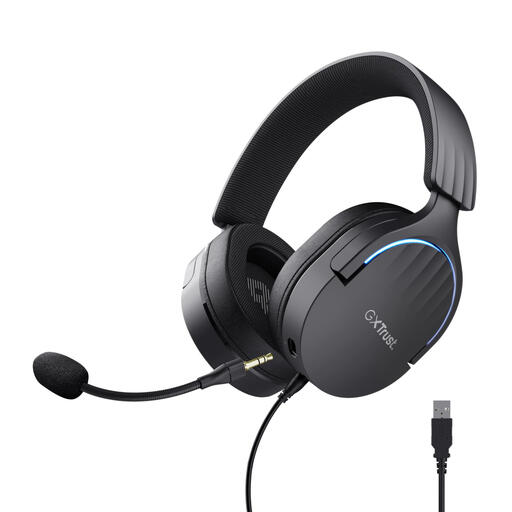
Trust GXT 490 FAYZO Over-Ear 7.1 USB Gaming Headset

Trust GXT 490 FAYZO Over-Ear 7.1 USB

A wired USB headset to consider if you want to adjust the microphone position while recording.

The product description lists a flexible, detachable microphone and volume and mute controls.

Joybuy

Frequently asked questions about headset microphones and room echo

Can a noise-cancelling headset microphone remove echo from my film synopsis recording?

Don’t assume it will. Shure discusses close microphone placement and isolation as ways to limit unwanted pickup in rooms with poor acoustics, so make a test recording and listen back to it. A manufacturer’s noise-cancellation claim isn’t a measurement of how much room echo is removed.

Where should I position the microphone boom to reduce plosive sounds?

For the SM35, Shure recommends positioning the microphone at the corner of your mouth, rather than directly in front of it, and says to use the windscreen. Make a test recording to check whether this position works for your voice and headset.

Do I need any other equipment for a BPHS1 or SM35?

It depends on your recording equipment. The Audio-Technica BPHS1 has separate XLR and 6.3mm connections. The Shure SM35 is a headworn microphone without headphones; connection and power requirements differ between the TA4F and XLR versions.

What are my rights if I buy a headset online or it develops a fault in the Netherlands?

When you buy online from a professional seller, you generally have a 14-day right to cancel, starting from delivery, subject to exceptions and return conditions that must be made clear in advance. According to ACM ConsuWijzer, your statutory guarantee depends on what you could reasonably expect from the product and whether it has been used normally. Contact the seller if there’s a problem.

Can I add film footage or music to a published synopsis?

A description you record yourself isn’t the same as using film footage or music. The Dutch government says that, as a general rule, copyrighted films and music may only be used with the creator’s permission; you may not share or publish a private copy made for your own use. Whether a legal exception applies to your publication depends on the specific circumstances.
