For practising on a desktop computer, a wired headset with a compatible connection is a practical place to start. Make a short test recording to check that your software is using the headset microphone and can save separate files. Choose wireless only if recording and playback both work well with your headset, computer and software.
Who is this buying guide for?
Vowel listener
You record the same Dutch vowels repeatedly and listen for differences between attempts. Keeping the microphone in a consistent position and making a test recording you can check are more important than a general claim about call quality.
Recording comparer
You want to save short practice recordings separately and listen to them later. Check that your recording software lets you select the input and save files in a location and format that work for you.
Practising on your own device
Your choice depends on the connection to your computer, selecting the microphone input and staying comfortable during repeated practice sessions. Test the headset on the device you actually plan to use.
What should you look for?
Wired via USB
Choose this if: you practise on one computer and the USB-A or USB-C port matches the exact headset version.
Bear in mind: the cable limits your movement. The headset itself won’t create practice recordings without recording software.
Wired via 3.5 mm
Choose this if: your device has a suitable connection for both headphones and a microphone.
Bear in mind: a 3.5 mm plug doesn’t work in the same way as USB. Check the microphone input and make a test recording.
Wireless via Bluetooth
Choose this if: freedom of movement matters and you’ve tested that the headset, computer and recording software work together for both recording and playback.
Bear in mind: on Windows, some features for using the microphone and playing audio at the same time depend on factors including LE Audio support on both devices and compatible software.
| What to consider |
What to look for |
Who is it important for? |
| Listening back to vowels |
Check the microphone position, selected input device and recording level by making two short attempts with the same settings. |
If you mainly want to assess small differences between your own vowels, you’ll want to make the recordings as consistent as possible. Around 36% of consumers prioritise listening back to vowels. |
| Local files |
Check that your software can export separate recordings, lets you choose a local folder and can play back the saved file. |
If you want to save practice attempts separately and find them later, your software’s storage features matter. Around 29% of consumers put saving practice files locally first. |
| Connection and microphone input |
Check that the USB-A, USB-C or suitable 3.5 mm connection on the exact version matches your device, then select and test the microphone. |
If you want to avoid a plug or input that doesn’t work with your computer, check the combination in advance. Around 21% of consumers prioritise device compatibility. |
| Comfort and practice space |
Consider mono or stereo, fit, adjustability and room for the cable. Make a test recording where you plan to practise. |
For repeated practice, fit and sounds in the room may influence your choice. Around 14% of consumers prioritise wearing comfort or their practice space. |
Common mistakes
-
Choosing a USB-A version for a computer with USB-C only
Connections and included adapters can vary between versions. If the plug doesn’t fit, you won’t be able to connect the headset as intended.
Before buying, check the full product number, what’s in the box and the connections on your computer.
-
Assuming noise cancellation means vowel recordings will be accurate
A manufacturer’s claim about calls doesn’t prove that a headset captures differences between Dutch vowels more accurately.
Make short test recordings in your own space and compare them using the same microphone position and settings.
-
Expecting the headset itself to save practice recordings
Your recording software handles input selection and saving or exporting files. The University of Amsterdam explains how to record and save in its Praat guide; Audacity lets you choose the folder and file name, among other export options.
Before a longer practice session, test the whole process: record, export, find the file and play it back.
Allow extra time to set up your recording settings and file format.
Brands to consider
Logitech
The H390 is a wired USB headset designed for uses including calls. Connections vary by version, so check whether you need USB-A or USB-C.
- Logitech lists in-line controls and a rotating microphone boom for the H390.
- These product features are not an independent assessment of recordings of Dutch vowels.
Trust
The Ayda range includes the USB 25088 and the separate USB-ENC 25089. This distinction matters if you’re considering a version with a noise-cancelling microphone.
- Trust lists a fold-up mute microphone, a 1.8-metre cable and a USB-C-to-A adapter for the USB 25088.
- The noise-cancellation claim applies to the USB-ENC 25089 and doesn’t automatically apply to the USB 25088.
Jabra
The Evolve2 30 SE is a wired headset for calls, available in mono, stereo and USB versions. Check the full product number.
- The technical data sheet lists two microphones and several versions.
- Call specifications don’t prove that a particular version is better for Dutch vowel practice. The data sheet also describes a change from USB-A and USB-C SKUs to USB-C/A SKUs in 2025.
EPOS
The wired IMPACT 100 series includes the single-sided SC 30 USB ML and the double-sided SC 60 USB ML, both for PC use.
- EPOS lists a flexible microphone boom and in-line controls.
- The specified microphone and speaker frequencies are not a comparative measurement of vowel recordings.
HP Poly
According to HP, the Blackwire 3225 version 8X229AA combines USB-C with a USB-A adapter and a 3.5 mm connection.
- The connection options may be useful if you switch between devices.
- Check that the connection on this specific version works with the device you plan to record on.
Headsets at Joybuy
This selection focuses on wired headsets for practising and listening back on your own device. Before use, check that the connection and microphone input are compatible with your computer.
 Image unavailable
Logitech PC 960 USB headset
A wired USB version to consider if you practise on a computer with a compatible USB port. Check in your recording software that the microphone is selected as the input.
View at Joybuy
 Image unavailable
Logitech H340 USB headset, black
This wired USB headset is an option for practising on a computer with a compatible connection. Make a short test recording and listen back before comparing vowels.
View at Joybuy
 Image unavailable
Trust Ayda USB headset, USB Type-A, black
This USB Type-A version is designed for a device with a compatible port. Check the microphone input and test the recording on your own computer.
View at Joybuy
 Image unavailable
Logitech H150, white, 981-000350
Consider this version if you’re looking for a headset with a microphone. Check in advance that the connection works with your device’s headphone and microphone inputs.
If your computer has separate ports, you may need a splitter. According to the product information, one is not included.
View at Joybuy
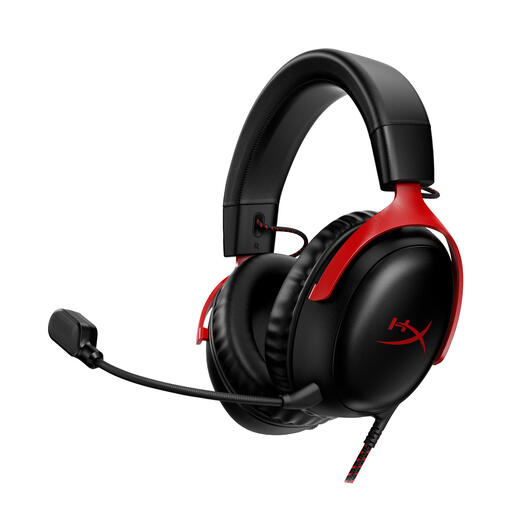 Image unavailable
HyperX Cloud III gaming headset, PC, PS5 and Xbox Series X|S, black/red
This headset is an option to compare if you’re looking for a model for PC. Before buying, check that the connection and microphone input are suitable for your recording device.
View at Joybuy
Frequently asked questions
Do I need special recording features in my headset to save practice files locally?
No, your recording software can save the recording. Select the right microphone in the software and check that you can save and find your files. The University of Amsterdam explains how to save in Praat; Audacity lets you choose the folder, file name and format, among other export options.
How can I check that my headset microphone is actually recording?
Select the headset as the input device in your operating system and recording software, make a short test recording and listen back. Audacity recommends checking the recording meter and level first; Microsoft Support explains how to test a microphone in Windows.
Is a noise-cancelling headset automatically better for vowel practice?
No, a claim about noise cancellation during calls doesn’t prove that vowels will be recorded more accurately. Before deciding whether the results are suitable for your practice, compare short recordings made with the same microphone position and settings.
Can you save short recordings locally in Praat or Audacity?
Yes, both programmes let you save or export recordings. The Praat guide lists WAV as one of the available file formats; Audacity lets you choose the folder, file name and format when exporting. After saving, check that you can find and play back the file.


