Start with a headset that has an adjustable microphone boom and a connection that works with your recording device. Then make a test recording in your usual practice spot. A wired USB headset can be a practical choice if your computer has the right port, while fit and background noise deserve extra attention if you practise for long periods or in a shared space. Manufacturers’ claims about calls don’t prove that a headset captures Dutch pronunciation accurately.
Who is this buying guide for?
Independent pronunciation practice
You regularly record short sentences and want to position the microphone boom in the same place each time so you can compare your recordings. Logitech describes the H390 as having a positionable microphone boom; Shure recommends placing the microphone by the corner of your mouth.
Practising in a shared space
You want to be able to hear your voice clearly when there’s background noise. A claim about noise reduction on calls doesn’t, on its own, tell you how much noise from your practice space will end up in a recording.
Practising for long sessions
You listen and speak for longer stretches at a time. That makes fit and easy-to-reach controls important, as well as microphone placement.
What should you look for when buying?
First, check that the connection works with your recording device. Then compare the microphone position, how it records in your own space and how comfortable it is to wear during a session.
| What to consider |
What should you check? |
Who is this important for? |
| Consistent microphone position |
Check whether the boom is adjustable. Record the same sentence a few times and listen to see whether your voice and consonants sound consistent. |
If I want to compare recordings, I need to be able to position the microphone in the same place each time. Around 33% of consumers say being able to compare recordings is their main consideration. |
| Noise in your space |
Make a test recording in your usual practice spot and listen back; a noise-reduction feature doesn’t prove recording quality. |
If I practise somewhere with other sounds around me, I want to be able to tell whether I can hear my voice clearly. Around 27% of consumers give background noise top priority. |
| Connection |
Check the plug and exact model against the port on your device. Once connected, check that your recording app is using the headset microphone. |
If I want to keep using my existing computer or recording device, the headset needs to connect to it. Around 20% of consumers put device compatibility first. |
| Comfort and controls |
Check the fit and whether the volume and mute controls are easy to reach while you’re practising. |
For longer practice sessions, I want to listen and speak comfortably without having to keep searching for the controls. Around 20% of consumers make comfort and ease of use their main buying priority. |
Shure recommends placing the microphone by the corner of your mouth rather than directly in front of it if you can hear plosive sounds. Test the position with your own voice; a different model or recording environment may respond differently.
Buying pitfalls
-
Assuming noise reduction proves recording accuracy
Manufacturers often describe noise-reduction features in relation to calls. That’s not the same as testing Dutch sounds in your practice space.
Record a few sentences with different consonants in your own space and listen back before relying on a noise-reduction feature.
-
Assuming every version in a series has the same connection
Connections can vary between versions. For example, HP lists a 3.5 mm option for the Poly Blackwire 3315 and 3325; this doesn’t automatically apply to every model in the Blackwire 3300 series.
Check the full model number and plug against your recording device. If you’re using an analogue connection, also check that it supports microphone input.
A version that doesn’t fit your needs may mean you need a different headset or a suitable adapter.
-
Assuming the manufacturer’s warranty limits your statutory rights
The Dutch Government distinguishes between a manufacturer’s warranty and the seller’s responsibility if a product bought by a consumer in the Netherlands doesn’t conform to the contract. There is no fixed statutory warranty period in the Netherlands.
Keep your proof of purchase and contact the seller if there’s a fault. Consider any extra warranty in terms of what it actually offers.
Brands to consider
Logitech
The Logitech H390 is a wired computer headset with a positionable microphone boom and in-line controls. The manufacturer offers USB-A and USB-C versions.
- According to Logitech, the H390 has an adjustable headband and a rotating microphone boom.
- These features don’t measure how accurately it records Dutch speech; also check the connection on the version you choose.
EPOS
The PC 8 USB is designed for listening and speaking on a computer, with in-line volume and mute controls.
- For the PC 8 USB, EPOS describes a microphone that reduces background noise during calls.
- Dutch product pages list the article numbers 1000432 and 504197. Don’t assume they refer to the same version without checking; a claim about calls isn’t a measure of pronunciation accuracy.
HP Poly
The Blackwire 3300 series includes wired office headsets in different wearing styles.
- HP lists a flexible microphone boom and USB connections for the series.
- According to HP, the Blackwire 3315 and 3325 have a 3.5 mm option. Check the connection for each model.
Jabra
The Evolve2 30 SE is an office headset worth including in your comparison if fit and background noise are important to you.
- Jabra describes the model as having two microphones and sound-isolating ear cushions.
- The manufacturer’s claims relate to calls and collaboration, not measured accuracy for Dutch speaking practice.
Headsets for regular speaking practice
These Joybuy product picks are aimed at practising with a headset microphone: models with an adjustable boom, a wired USB connection or a 3.5 mm connection.
 No image available
Logitech PC 960 USB
The adjustable microphone boom is handy for repeated practice from the same spot.
Wired USB 2.0 headset with in-line volume and mute controls. The product description lists an adjustable headband, extra ear cushions and a weight of 58 g.
View at Joybuy
 No image available
Logitech H340 USB headset
The adjustable microphone boom can be repositioned for recordings made from the same spot.
Wired USB stereo headset with in-line volume and mute controls. The product description lists soft ear cushions.
View at Joybuy
 No image available
Jabra Evolve2 55 Wireless Stereo Headset
The flexible microphone boom can be adjusted for repeat recordings; assess the result with a test recording.
The product description lists a Link 380 USB-C Bluetooth adapter, a USB-A cable, on-headset controls, a padded headband and rotating ear cups.
View at Joybuy
 No image available
Logitech H150, white, 981-000350
The rotating, adjustable microphone can be repositioned for practice from the same spot.
Wired stereo headset with a 3.5 mm connection and in-line controls. Devices with separate headphone and microphone sockets may need a splitter, which isn’t included.
View at Joybuy
 No image available
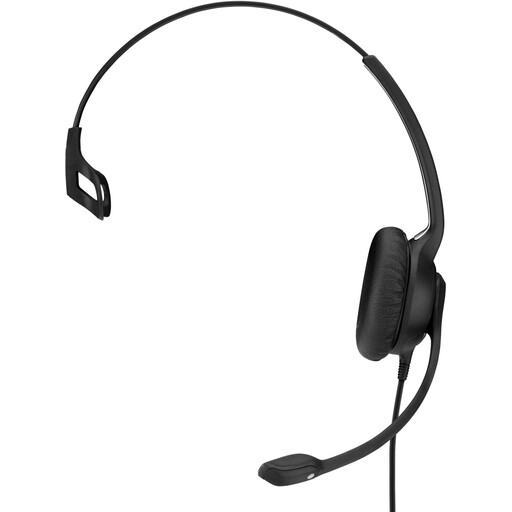
EPOS | Sennheiser Impact SC 230 USB MS II
The flexible microphone boom can be repositioned for repeated practice.
Wired USB 2.0 stereo headset with in-line controls. The product description lists an adjustable headband and extra ear cushions.
View at Joybuy
Frequently asked questions
Where should you position the microphone during speaking practice?
Start with the microphone by the corner of your mouth and test the recording. Shure recommends not automatically placing it directly in front of your mouth if you hear plosive sounds; adjust the position and listen again.
Why isn’t your Windows computer recording anything when the headset is connected?
Check that the correct headset microphone is selected as the input, that mute is switched off and that your recording app has access to the microphone. Microsoft explains that Windows has separate settings for this access.
What can you do if your headset doesn’t work properly after purchase?
For a consumer purchase in the Netherlands, contact the seller if a product doesn’t conform to the contract. The Dutch Government states that there is no fixed statutory warranty period in the Netherlands. Many online purchases come with a 14-day cooling-off period; check whether it applies to your purchase.
Can you record and share your speaking practice?
According to the Dutch Data Protection Authority, processing carried out solely for personal or household use falls outside the GDPR. This doesn’t automatically mean you can always publish recordings in which other people are identifiable; consider sharing separately.


