
Creators of pronunciation examples
You record short Dutch words or phrases and want to keep the microphone in roughly the same position for each recording. Listen back to a test recording to assess how the pronunciation sounds.


If you're recording directly on a computer, start with a wired USB headset with an adjustable boom mic and check that the exact model is compatible with your connection. If you have suitable recording equipment, you could also consider a broadcast headset with separate audio connectors. In either case, make a short test recording with the microphone close to, but not directly in front of, your mouth. Manufacturers' claims about calls or background noise don't tell you by themselves how the details of Dutch pronunciation will sound in your space.
You record short Dutch words or phrases and want to keep the microphone in roughly the same position for each recording. Listen back to a test recording to assess how the pronunciation sounds.
You want to record directly on your computer without connecting a separate microphone and headphones. Check which USB connection the headset has, then select the correct microphone input on your computer.
You record in a space where there may be background noise. Pay attention to the microphone's position and direction, and judge the result from a test recording rather than relying solely on a noise-cancellation claim.
First, check that the headset connects to your recording device. Then consider how to position the microphone consistently, and finally listen to how the recording sounds in your space.
| Consideration | What to look for when buying | Who should prioritise this |
|---|---|---|
| Consistent microphone position | Check whether the boom can be positioned close to your mouth and stay in place; compare short recordings of the same words. | If I'm recording several short words, I want to be able to position the microphone in roughly the same place each time and hear differences in pronunciation or plosive sounds. Around 33% of consumers put recording consistency first. |
| Connection | Compare the exact USB version with your computer's port. For the standard Audio-Technica BPHS1, check that it has a separate XLR microphone plug and 6,3 mm headphone plug. | If I want to record on my computer without extra equipment, the connection needs to work with what I already have. Around 27% of consumers say connection convenience is their main buying concern. |
| Background noise | Check the microphone's stated polar pattern and make a test recording with your usual background noise. | In a shared space, I want to hear how much of my surroundings comes through in short word recordings, rather than relying only on a claim about call quality. Around 20% of consumers give background noise top priority. |
| Comfort and controls | Compare on-ear and over-ear styles based on how long you expect to record; also check how to mute and unmute the sound. | If I'm recording lots of words in a row, I want the headset to stay comfortable and to know when the microphone is muted. Around 20% of consumers put comfort and controls first. |
Logitech and EPOS describe microphone features for calls; these descriptions don't prove how word recordings will sound in your space.
Make a short test recording with your usual background noise and listen to both your voice and the pauses.
Headsets may come in different USB versions. Audio-Technica also states that the standard Audio-Technica BPHS1 and the BPHS1-XF4 have different microphone connectors.
Compare the full model or variant number and the listed plugs with the inputs on your recording device.
In its positioning advice, Shure warns that placing the microphone directly in front of your mouth can cause plosive sounds.
Start by positioning it beside the corner of your mouth and compare test recordings of the same words. This positioning advice comes from Shure's SM35 manual; check the result with your own headset and voice.
The Shure WH20 is a wearable microphone without headphones, whereas the Audio-Technica BPHS1 combines a microphone and headphones with separate connections.
Check whether you also need to listen back, and which components and compatible inputs you already have.
The H390 is a wired computer headset with a rotating microphone boom and in-line controls. Check which USB version you need.
The PC 8 USB is an on-ear USB headset with in-line controls, designed for use with a computer.
The BPHS1 is a broadcast headset with closed-back earcups and a flexible microphone boom. The standard version has separate microphone and headphone connections.
The Evolve2 40 SE is an office headset with a microphone boom, available in several USB, mono and stereo versions.
The WH20 is a separate wearable dynamic headset microphone, not a complete headset. Shure describes several connector versions.
These wired headsets with microphones are options to compare for short speech recordings. They use USB or 3.5 mm connections, so check which one is compatible with your recording device.
 No image available
An option for computer recordings where you want to reposition the microphone boom between short recordings.
USB connection; in-line controls and a mute indicator. Requires an available USB port.
 No image available
A wired USB option if you're looking for an adjustable microphone for computer recordings.
USB connection and adjustable microphone. Requires a USB port; Logitech describes the microphone feature for calls, not as a comparison of recording performance.
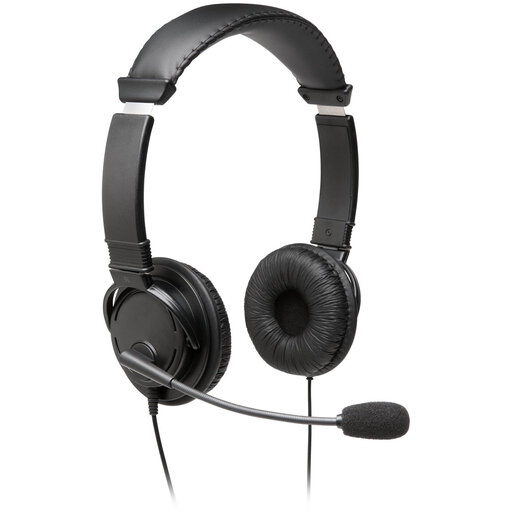 No image available
An option if you want to reposition a rotating microphone boom for a series of recordings.
USB connection; microphone boom with 270-degree rotation and adjustable headband. The product description lists compatibility with Windows, Mac and Chromebooks. Requires a USB port.
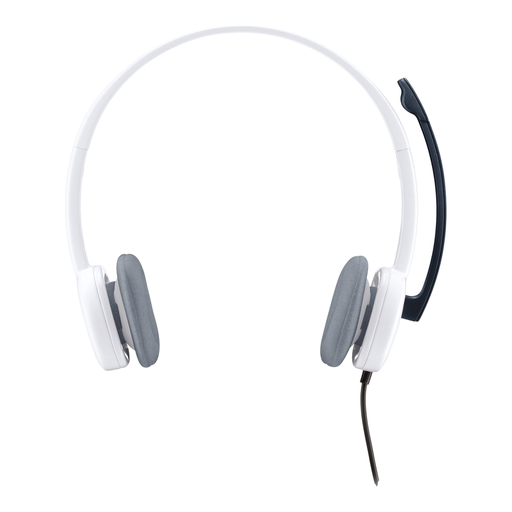 No image available
An option if your recording device has a compatible 3.5mm connection and you want to be able to adjust the microphone boom.
3.5mm connection; adjustable, rotating microphone and in-line controls. If your device has separate audio and microphone ports, you may need a splitter; one isn't included.
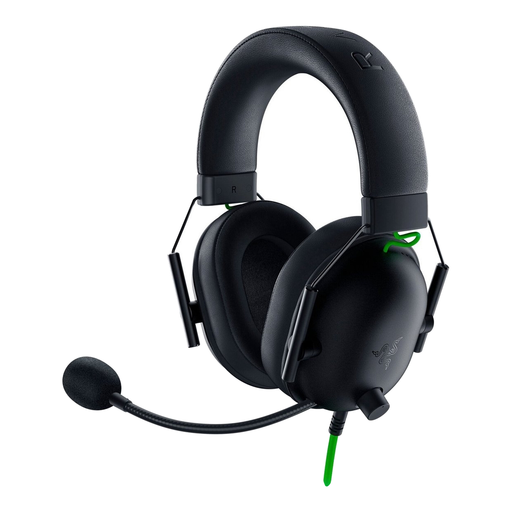 No image available
An option to compare if you're looking for a wired headset with a cardioid microphone and a 3.5mm connection.
The stated microphone distance is approximately 1–2 inches; the headset weighs 240 grams. Software is required for the stated 7.1 surround sound feature. Check that your device has a compatible 3.5mm connection.
Start beside the corner of your mouth, not directly in front of it, and listen back to a test recording for plosive sounds and changes in volume. This positioning advice comes from Shure's SM35 manual; check the position with your own headset and voice.
Check that the connection on your version is compatible, that mute is off, and that your operating system and recording software have selected the headset as the microphone input. Logitech lists these checks in the H390 manual.
No, not without compatible inputs. Audio-Technica lists a 3-pin XLR plug for the microphone and a separate 6,3 mm plug for the headphones on the standard BPHS1. Compare these connections with your recording device before choosing an interface or adapter.
According to the Dutch government, online purchases from a business generally come with a 14-day cooling-off period; conditions and exceptions may apply. The product must also meet legal requirements. The Dutch government states that there is no fixed statutory warranty period in the Netherlands; if a product is faulty, you can contact the seller.
That depends on whether the person can be identified and how the recording is used. The Dutch Data Protection Authority describes information about an identifiable person as personal data and lists purely personal or household use as an exception to the GDPR. If the GDPR does apply, you must establish an appropriate legal basis before processing the data; consent is one possible basis, but it isn't automatically the only one. This does not give you general permission to publish any voice recording.