
Practising in a noisy room
You read aloud while other people nearby are talking, and want to be able to pick out your own voice when you listen back.


Start with a headset that lets you position the microphone boom close to your mouth, then make a test recording while the room is being used as usual. Choose a connection and fit that suit your equipment and practice sessions, too: noise cancellation that manufacturers describe for calls does not, on its own, prove that every detail of your pronunciation will be captured in your recording.
You read aloud while other people nearby are talking, and want to be able to pick out your own voice when you listen back.
You record sentences again to compare sounds, pace and clarity. A test recording helps you decide whether the result is useful for that practice session.
You want to record on your computer or another suitable device. Check that the connection and microphone input are compatible with your equipment.
First, check that a test recording lets you hear your voice clearly. Then see whether the connection and comfort suit the way you plan to use the headset.
| Buying concern | What to look for | Who is this important for? |
|---|---|---|
| Other voices in the room | Check whether you can adjust the microphone boom, and record while the room is being used as usual. | If other people are talking nearby, I want to be able to hear my own voice clearly on playback; for around 33% of consumers, being able to distinguish their own voice comes first. |
| Listening back to pronunciation | Make a short recording with both quiet and more emphatic passages, and check the recording level. | When I want to compare sounds and sentences, the recording needs to be useful for that; for around 27% of consumers, listening back to pronunciation is their main buying concern. |
| Connection | Check the exact version and whether your device supports the headset microphone through that connection. | If I want to record on different devices, I want to make sure the right microphone input works; for around 20% of consumers, the connection to the recording device comes first. |
| Comfort | Compare the fit and the mono or stereo version of the exact model; if possible, try the headset during a practice session. | When practising repeatedly, I want to be able to wear the headset comfortably; for around 20% of consumers, comfort is their main buying concern. |
Passive noise isolation from the ear cups works differently from microphone processing. One feature therefore does not automatically tell you how many other voices will end up in your recording.
Check the microphone specifications separately and listen back to a test recording while other people are using the room.
Manufacturers often describe microphone noise cancellation in the context of calls. This is not an independent assessment of how Dutch sounds will come across in your recording.
Read the same sentence aloud at a normal volume, check for distortion, then listen back to the sounds and pauses.
Different versions in a headset series can vary in their connection and in whether they are mono or stereo.
Compare the full model name with your device's port and the style of headset you want.
Logitech describes the wired Zone Wired as being designed for busy open-plan workspaces, and the H390 as a USB computer headset. These are different models to compare separately.
The Jabra Evolve2 40 SE is a wired office headset available in separate mono, stereo, USB-A and USB-C versions.
The Blackwire 5200 series is worth considering if you're comparing wired headsets with connection options for computers and, where the connection is suitable, mobile use.
The IMPACT 100 series is a wired option to compare if you're looking for a lightweight headset with an adjustable microphone boom.
These Joybuy products include wired headsets with 3.5 mm or USB connections, as well as wireless models. For each version, check whether your device can use the headset microphone as an input.
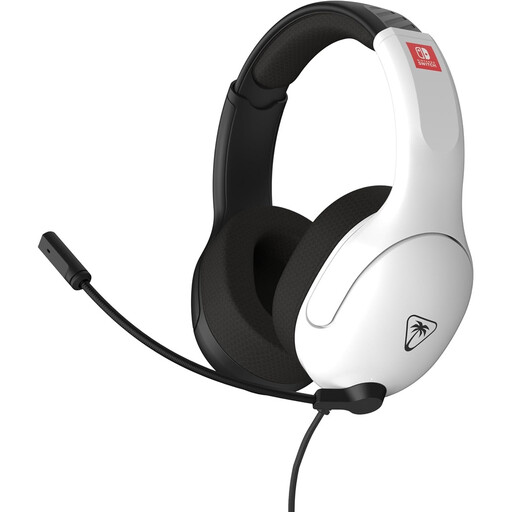 No image available
The adjustable microphone boom can be positioned close to your mouth. Try a recording in your own space to see how much background noise remains audible.
The description lists a wired 3.5 mm connection and a microphone boom that flips up to mute. Check that your device supports microphone input through 3.5 mm.
 No image available
This version could suit you if you're looking for a wired headset with USB-A. Make a test recording to see how your voice sounds in a shared space.
The product description lists USB-A, two integrated microphones and in-line controls. The microphone information provided is not an independent assessment of recordings of Dutch reading.
 No image available
This wireless version could suit you if you don't want a wired headset. Before use, check that the correct microphone is selected as the recording input.
The product description lists Bluetooth, connection to two devices and eight microphones for calls. This information about calls is not an independent assessment of pronunciation recordings.
 No image available
The detachable microphone boom lets you position the microphone for a test recording. Also check that the connection options are compatible with your recording equipment.
The product description lists USB-A and USB-C connections and a detachable microphone with a mute indicator. PC and phone are also listed as compatible devices.
 No image available
The mono version could suit you if you want a headset with one ear cup. Make a test recording to see whether the microphone works for your practice session.
The product description lists Bluetooth 5.0 and a USB-A Bluetooth adapter. The description of microphone noise cancellation relates to calls, not to an independent assessment of reading recordings.
No. Noise isolation for your ears does not prove that the microphone will pick up less sound from other people. Assess the microphone and its position separately, and listen back to a test recording in the shared space.
Select the headset microphone explicitly in your recording software, check the level meter during a loud passage and make a short test recording. Audacity warns that clipping cannot be fixed afterwards. Shure recommends positioning the microphone beside your mouth and pointing it towards your mouth to help avoid breath and plosive sounds.
According to the Dutch government's information, a product must be of satisfactory quality and you can contact the seller if it develops a fault. The Dutch government states that there is no set statutory warranty period for every product in the Netherlands; a manufacturer's warranty is in addition to your statutory rights.
The Dutch Data Protection Authority classifies sound recordings in which someone is recognisable as personal data. Whether the GDPR applies to your recording and the way you share it depends on the circumstances; the Authority's guidance on domestic use referred to here relates to camera recordings. Avoid recording recognisable voices of other people without thinking, and consider the privacy implications before sharing the recording.