What should you look for when choosing?
Start with a connector that fits your computer and a microphone position you can repeat between recordings. Then check the fit, controls and playback in your own setup.
| What to consider |
What to look for |
Who should pay particular attention? |
| Consistent voice recordings |
Check that the microphone boom can be positioned. Make a short recording at your normal speaking volume in your usual practice room, then listen back to it. |
If I want to compare my pronunciation between attempts, I want to keep my microphone and recording level as consistent as possible. Around 33% of consumers prioritise comparable voice recordings. |
| Comfort during long sessions |
Compare the design, adjustability and ear cushions of the exact version. Assess the fit during a session of your usual length. |
If I read several texts in a row, I want a headset that stays comfortable throughout my practice session. Around 27% of consumers give long-lasting comfort the highest priority. |
| Connector and microphone input |
Check the connector on the exact version and select the headset as the recording and playback device in your software. Test both functions. |
If my computer has different ports or inputs, I want to know first which combination will actually let the microphone record. Around 20% of consumers prioritise a suitable connector. |
| Playback and controls |
Check where the volume and mute controls are, and whether the software is using the right recording and playback devices. Test playback afterwards, separately from live monitoring. |
If I want to check what I’ve recorded quickly after each take, I want to be able to listen back without any fuss. Around 20% of consumers give this between-recording check the highest priority. |
Which brands are worth considering?
These brands are examples of specific product ranges and versions. Their inclusion here doesn’t mean every range has the same features or is available everywhere.
Logitech
The wired H390 is worth considering if you want a positionable microphone boom and in-line controls for a fixed workstation.
- Logitech describes the H390 as having a positionable boom, with USB-A and USB-C options depending on the version.
- Check the connector on the exact version. Described call features aren’t an independent test of Dutch pronunciation recordings.
Trust
The Ayda range includes different connections and microphone versions; the Ayda USB-ENC is an on-ear option with a mute function.
- Trust says the Ayda USB-ENC has an adjustable headband and can be muted by flipping the microphone up.
- An Ayda with a 3.5mm connection and the Ayda USB-ENC are different versions. A claim about noise cancellation during calls doesn’t prove how a recording will sound in your room.
EPOS
The wired IMPACT 100 range is worth considering if the stated weight and USB-C connection, with a USB-A adapter included, are important to you.
- EPOS gives a weight of 76 grams for the stereo versions and describes a directional microphone with noise processing.
- The stated weight doesn’t automatically apply to every version, and it doesn’t show how the fit or pronunciation checks will work for you.
Jabra
The Evolve2 30 SE is available in mono and stereo versions, so you can choose the design and USB version separately.
- The user guide lists two microphones and USB-A or USB-C versions, depending on the model.
- Jabra’s description of call quality is a manufacturer claim. Check the full version before comparing connectors or designs.
SteelSeries
The Arctis Nova 1 is a wired 3.5mm alternative if your device has a compatible headset socket.
- SteelSeries lists a retractable microphone and a 3.5mm connection for this model.
- Check that the plug layout and input are compatible with your device. Described voice communication features aren’t a test of reading practice.
Headsets at Joybuy
These wired headsets from Joybuy are suitable for recording or listening back. Check the specified version of each model and whether its microphone works with your recording setup.
 No image available
Razer Kraken V3 X gaming headset, black
Consider this model if you’re looking for a headset to record and listen back to speech. Test it with a recording of your own speaking voice.
Joybuy
 No image available
Logitech PC 960 USB headset, wired
Compare this model if you want to make repeated recordings with a consistent microphone position. Also check that the USB version is compatible with your computer.
Joybuy
 No image available
Logitech Headset H650e Stereo, wired
Consider this headset if volume controls are important during practice sessions. Test how your recording sounds when you listen back through it.
Joybuy
 No image available
Logitech H340 USB headset, black, wired
Consider this version if you’re looking for a wired headset for recording and listening back. Test the microphone and connection with a sample recording.
Joybuy
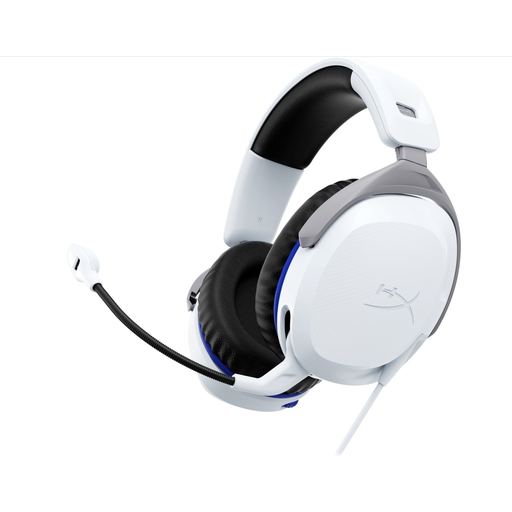 No image available
HyperX Cloud Stinger II gaming headset, wired, white, PS5/PS4
Compare this wired headset if you’re considering an analogue connection. Check in advance that the connection and microphone work with your device.
Joybuy
Frequently asked questions
How can I check that my reading recording is using the headset microphone?
Select the headset as the recording and playback device in your recording software, make a short test recording and listen back to it. Also check that the microphone isn’t muted and that the input level isn’t causing distortion.
Do I need to be able to hear myself live while reading aloud?
No, not if you listen back after each attempt. If you do want to monitor yourself live, treat that separately from normal playback: Audacity warns that audible software input monitoring can have a delay.
What can I do about plosive sounds or distortion?
First, check the microphone position and input level. Shure recommends positioning the head-worn SM35 microphone near the corner of the mouth rather than directly in front of it as a starting point for reducing plosive sounds; this isn’t a universal product specification. For clipping, Audacity recommends lowering the level or speaking further away from the microphone.
What are my rights if an online headset purchase doesn’t suit me or turns out to be faulty?
For an ordinary online consumer purchase in the Netherlands, ACM ConsuWijzer says you generally have up to 14 days after delivery to change your mind, subject to legal exceptions. This is different from reporting a fault: statutory guarantees are separate from any two-year manufacturer’s warranty. Contact the retailer if there’s a fault.
Can I share recordings of my reading practice?
According to the Dutch Data Protection Authority, a recording of only your own voice, used solely for personal purposes, falls under the exception for personal or household use. If you record identifiable people or share personal data about them, other privacy considerations apply. For private sharing, the Dutch Data Protection Authority refers to a limited group, such as family or friends.


