
Practising near a fan
You want to record your voice with constant background noise. Microphone positioning and listening back to the recording are important.


Choose a headset with a microphone you can position close to your mouth, then make a test recording with the fan on. Shure recommends keeping your voice close to the microphone and pointing it away from unwanted noise. Then check whether the recording captures the pronunciation details you want to practise.
You want to record your voice with constant background noise. Microphone positioning and listening back to the recording are important.
You record words or sentences to listen for subtle differences, and want to check that noise processing still leaves the recording clear enough to assess.
You switch between a computer and another device, and want to check in advance which connections and audio features actually work.
Start by checking the microphone position and the sound of a test recording. Then check the connection, recording app and wearing comfort.
| What to consider | What to look for | Who is this important for? |
|---|---|---|
| Fan noise | Check whether the microphone boom is adjustable, then listen to a recording with the fan on. Shure recommends positioning the microphone close to your voice and pointing it away from the source of distracting noise. | If I practise near a fan, I want to be able to assess my voice clearly, rather than relying on a feature name alone. Around 40% of consumers give reducing fan noise their highest priority. |
| Pronunciation details | Record the same words using the available settings, then listen back to check whether the sounds you’re practising are still clear. | If I want to hear subtle differences in my pronunciation, having a usable recording matters more than how the headset sounds while I’m speaking. Around 30% of consumers prioritise assessing pronunciation details. |
| Connection and app | Compare the headset’s connection with your device’s ports and check that your recording app can use the microphone. Not every USB-C device or app supports audio through every headset. | If I switch between devices, I want to be sure the headset works as a microphone in my recording app. Around 20% of consumers give compatibility their highest priority. |
| Wearing comfort | Decide whether you want mono or stereo, whether you want to keep one ear free, and whether the fit suits the length of your practice sessions. | If I’m repeating and listening back for a long time, I want a wearing style that feels comfortable; this alone says nothing about the quality of the recording. Around 10% of consumers prioritise wearing comfort. |
For the Blackwire 8225, HP describes ANC for what the wearer hears, as well as Acoustic Fence for the microphone. These are different features; what you hear through the earcups doesn’t tell you how the recording sounds.
Check which feature works on the microphone and listen back to a test recording.
Jabra says that not all USB-C devices or apps support an audio connection with the Evolve2 40 SE.
Check the exact model, port and recording app. After connecting, make sure the correct input device is active.
If the connection doesn’t work as needed, you may need an adapter or a different headset.
A manufacturer’s feature description doesn’t prove how a headset will record your Dutch pronunciation practice with fan noise.
Compare short recordings of the same words with the fan on, and listen to check whether the sounds you’re practising are still recognisable.
The wired H390 is an example of a straightforward USB computer headset for practising on a compatible computer.
The Blackwire 8225 is an example of a wired headset with separate features for microphone noise and listening isolation; the Blackwire 3225 is an example with multiple connection options.
The wired Evolve2 40 SE is available in mono and stereo versions, and may be worth considering if fit and listening back matter to you.
Joybuy product options relevant to this topic, including wired and wireless headsets with different microphone types and connections.
 No image available
A wired headset with a flip-up microphone to consider if you want to be able to move the microphone out of the way. Make a test recording to assess how it sounds in your room.
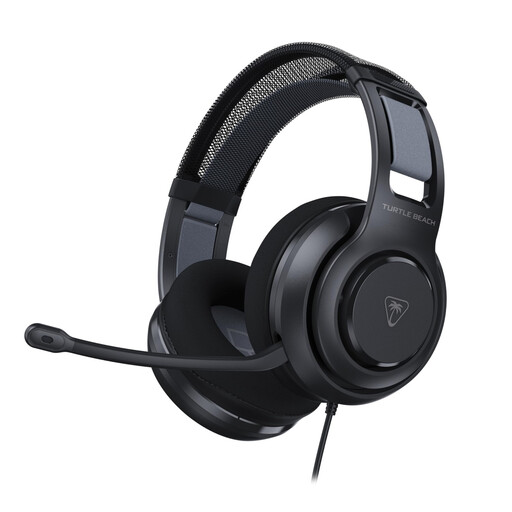 No image available
Worth considering if you’re looking for a wired headset with a flip-up microphone. Check that the connection suits your device and that your recording app can use the microphone.
The product name specifies a 3.5 mm connection.
 No image available
A wired headset to consider if you’re looking for a flip-up microphone and 3.5 mm connection. Check that your recording device supports the microphone through this connection.
The product name specifies a 3.5 mm connection and a microphone that flips up to mute.
 No image available
Before choosing this model, check the microphone and connection specifications for this version, then make a test recording with the fan on.
 No image available
A wireless option to consider if you’re looking for a headset with a detachable microphone. Check that the connection works with your device and recording app.
The product name specifies a detachable 10 mm boom microphone and memory foam ear cushions.
Not necessarily. For the Blackwire 8225, HP describes ANC as helping the wearer hear less background noise, as well as Acoustic Fence for the microphone. So assess the recording itself, not just what you hear while speaking.
Select the headset as the input device in Windows sound settings and check that your recording app has access to the microphone. Make a test recording and play it back; also check that the microphone isn’t muted.
Move the microphone out of the direct airflow and make another test recording. Shure explains that moving air can itself cause distracting microphone noise; this is different from fan noise in the background.
For many online purchases from a business, consumers have a 14-day cooling-off period, although there are exceptions. The Dutch government describes the legal guarantee as your right to a product that is fit for purpose. It has no fixed statutory duration, and you should contact the seller if a product is faulty.
No. The European Commission describes CE as a mark indicating compliance with applicable EU product rules, not an assessment of recording quality. CE marking is only compulsory when the applicable harmonised rules require it.