
Speakers who record themselves
You want to record both language versions with minimal equipment and listen back. The connection to your computer is an important consideration.


If you’re recording yourself on a computer and want to listen back straight away, a wired USB computer headset with the right connection is an obvious choice. If you want to practise while moving around using the venue’s PA system, you’ll need a suitable headworn microphone, a compatible transmitter and receiver, and an appropriate audio input. Shure describes the PGA31 as a microphone with a TA4F connector for compatible bodypacks, not as a USB headset that connects directly to a computer.
You want to record both language versions with minimal equipment and listen back. The connection to your computer is an important consideration.
You want freedom to move around and may want to practise using the venue’s PA system. Consider the entire signal chain and, if you’re using wireless equipment, the frequency.
You want to record your speech and listen to it through a headset, so you’ll need to check that both functions work with your recording device.
Choose this when: you’re recording on a computer, want to listen back straight away and will be staying close to the device.
The trade-off: the cable limits your freedom to move, and the USB connection won’t necessarily fit the input on a venue PA system.
Choose this when: your recording device has a suitable headset socket, or the microphone and headphone connections work with the supplied splitter.
The trade-off: check the connections on the exact model and device. A splitter is designed for separate microphone and headphone ports.
Choose this when: you want to speak while moving around and practise using a suitable PA system.
The trade-off: the microphone needs a compatible bodypack and receiver. You’ll also need to check the frequency requirements for the version you choose.
| What to consider | What should you check? | Which consumers is this relevant to? |
|---|---|---|
| Clear recording and playback | Select the headset microphone as the input and the headphones as the output in your recording software, then make a short test recording. | People who want to record both language versions and hear their own pronunciation often make this a priority. Around 40% of consumers in this practice scenario prioritise clear recording and playback. |
| The right connection and a compact setup | Make a note of your recording device’s ports and check the exact headset version and whether a splitter is needed. | People who want to practise using an existing recording device with minimal equipment mainly want the microphone and headphones to work with it. Around 30% of consumers prioritise the right connection and a compact setup. |
| Freedom to move and venue PA sound | Check that the microphone, bodypack, receiver and PA input are compatible. If you’re using wireless equipment, check the frequency requirements too. | People who want to practise speaking while moving around and use the venue’s PA system mainly focus on the complete signal chain. Around 20% of consumers prioritise freedom to move and practising with venue PA sound. |
| Comfort during repeated practice | Look at the fit and adjustability, and if possible, try the headset during a typical practice session. | People who want to run through their speech several times need a headset that suits them. Around 10% of consumers make comfort during repeated practice their top priority. |
A USB headset and a headworn microphone with a bodypack and receiver use different connection routes. A USB headset won’t automatically connect to a venue PA system’s microphone input.
Before buying, decide whether you’ll be recording on a computer or practising through a PA system. If necessary, map out the connection from microphone to speaker.
For models such as the Logitech H390 and Jabra Evolve2 30, the USB version you choose can determine whether it connects to your device.
Check the exact version and connector in the product information, not just the model name.
Wireless microphone requirements vary between frequency bands. The Netherlands Authority for Digital Infrastructure (RDI) lists licence-exempt bands with conditions and notes that some other bands require a licence.
Before using a set, check its specific frequency against the latest information from the RDI.
The Logitech H390 is a wired USB computer headset for recording and listening back on a computer.
The Evolve2 30 is a wired computer headset for anyone who wants a microphone close to their mouth.
The Blackwire 3220 USB-A is a wired, on-ear computer headset for speech.
The NTH-100M is an analogue over-ear headset for recording and listening when the connections are compatible.
The PGA31 headworn microphone and BLX14/PGA31 system are options for practising through a suitable PA system.
These are wired headsets for practising and listening back on a computer. Check that each model’s connection is compatible with your recording device.
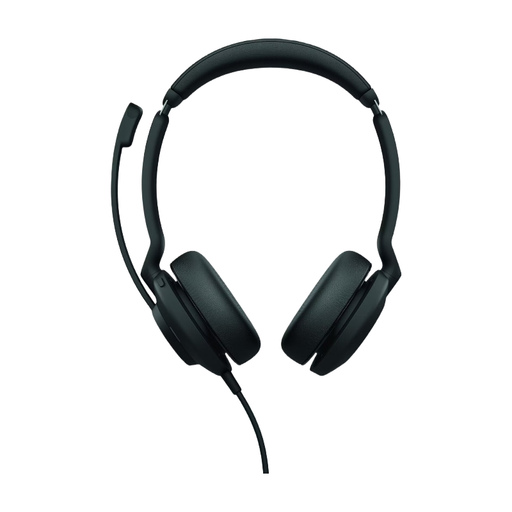 No image available
Wired USB computer headset for practising and listening back on a computer. Check that the connection is compatible with your device.
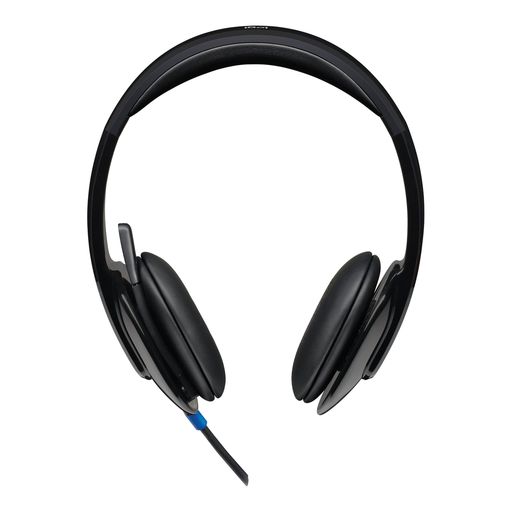 No image available
Wired USB headset for computer use. Check that the connection is compatible with your recording device.
 No image available
Wired USB headset for practising on a computer. Check that this connection works with your recording device.
 No image available
Wired USB computer headset for a compact recording setup. Check that the connection is compatible with your computer.
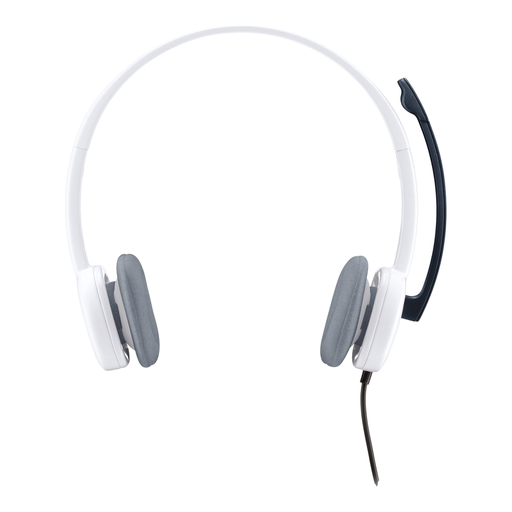 No image available
An option for an analogue practice setup. Check that this version has the microphone function and connections your recording needs.
No, it depends on the connection route. A USB computer headset is designed for a compatible USB connection; Shure lists a TA4F connector on the PGA31 for compatible bodypacks. Check which microphone and audio inputs your system has.
Select the microphone you want to use as the input and your headphones as the output in your recording software, then make a short test recording. Also check the microphone position and make sure mute is switched off.
It depends on the frequency and the applicable conditions of use. The Netherlands Authority for Digital Infrastructure publishes licence-exempt bands with conditions and notes that some other bands require a licence. Check the frequency of the exact version before use.
The Dutch government states that there is no fixed statutory warranty period in the Netherlands: products must still be fit for purpose, and the seller is your point of contact if something is faulty. For distance purchases from a business, a 14-day cooling-off period applies in many cases, with some exceptions. Check the seller’s information.