
Student practising independently
You want to record your own voice and listen back, with a microphone you can keep close to your mouth while speaking.


If you mainly practise on a computer and want to listen back to your voice, choose a headset with an adjustable microphone boom and a connection that suits your device. Try positioning the boom close to your mouth, then make a short recording to check the sound. If you’ll be speaking through a venue’s sound system, you may need a different microphone and additional equipment.
You want to record your own voice and listen back, with a microphone you can keep close to your mouth while speaking.
You’re practising with other sounds around you and want to weigh up the microphone position, mute function and any microphone noise cancellation. A test recording can help you assess how it sounds in your room.
You may want to speak through the venue’s sound system during your presentation. In that case, the microphone needs to be compatible with the available transmitter or preamp.
Choose this option if: you practise independently on a computer and want an adjustable microphone boom.
Bear in mind: USB-A and USB-C aren’t automatically interchangeable. Also check how the headset sounds in your room.
Choose this option if: your device has a compatible headset socket and you want to use it.
Bear in mind: a matching connection alone doesn’t confirm that the microphone and headphones will work with every device.
Choose this option if: you want to present using a compatible sound system.
Bear in mind: the Shure SM35-TQG needs a compatible bodypack system or, for wired use, the preamp specified by Shure. It isn’t a complete USB headset.
When practising with a microphone close to your mouth, key considerations include positioning, device connectivity, background noise and wearing comfort.
| What to consider | What to look for when buying | Who is this important for? |
|---|---|---|
| Microphone position | Check whether the boom is adjustable and listen back to a test recording. Shure recommends positioning the SM35 at the corner of your mouth, rather than directly in front of it. | If I want to listen back to my pronunciation, I want to be able to position the boom close by without placing it directly in front of my mouth. Around 36% of consumers mainly want to record their voice at close range. |
| Connection | Check the exact headset variant against your device’s port and audio support. Jabra warns that not all mobile USB-C devices or apps support audio with the Evolve2 40 SE. | If I practise on a laptop or tablet, I want to know in advance whether the headset will work with my device. Around 29% of consumers want to check device compatibility first. |
| Background noise | Compare recordings made in the same place. Trust describes microphone noise cancellation for the specific Ayda USB-ENC; Jabra also describes passive isolation from the ear cushions. These are different features. | When I practise in a noisy room, I want to be able to assess my voice clearly when listening back. Around 21% of consumers prioritise background noise. |
| Wearing comfort and complete set-up | Check the fit and wearing style. For use in a venue, factor in the equipment you’ll need: Shure specifies a preamp for wired use of the SM35-TQG. | When practising repeatedly, I want a comfortable headset; for a presentation in a venue, I also want to know what equipment I’ll need. Around 14% of consumers prioritise wearing comfort and the size of the set-up. |
Trust describes different connections and microphone features across the Ayda models. So the Ayda product name alone may not be enough to tell you whether it’s the version you want.
Before buying, check the full model number, connection and stated microphone feature.
The Shure SM35-TQG is designed for use with a compatible bodypack system. For wired use, Shure specifies a preamp.
First check the full connection to the venue’s sound system, and consider how you’ll listen back while practising.
You may also need a separate listening solution to hear recordings back.
Shure’s user guide warns that the position of the SM35 can affect plosive sounds.
For the SM35, follow the guidance to position the microphone at the corner of your mouth, then assess the result with a test recording. For other models, follow the relevant user guide.
The H390 range is worth considering if you want to practise on a computer with a wired USB headset.
The Ayda range includes computer headsets with different connections and microphone features.
The Evolve2 40 SE is a wired computer headset to consider if listening isolation and call controls matter to you.
The Blackwire 3300 series includes wired computer headsets in mono and stereo styles.
The SM35 is a headset microphone to consider for presentations using compatible stage or venue equipment. It isn’t a computer headset with headphones.
The selection below includes headsets with microphones for speaking and listening. Check each model’s connection and compatible platform to make sure they suit the way you practise.
 No image available
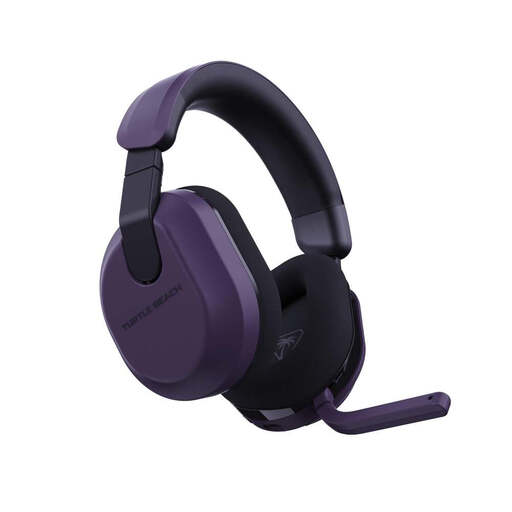
Could suit you if you want to speak and listen through a headset while practising. The product title lists a wireless connection, a flip-to-mute microphone and support for Xbox, PS, PC, Steam Deck and mobile. Check that your device and preferred connection are supported.
 No image available
Could be worth considering if you’re looking for a headset to use with a PC or PS4 while practising. The product description lists a cardioid microphone and 7.1 audio for Windows. Check that the audio feature mentioned is compatible with your device.
 No image available
Could suit you if you’re considering a headset with microphones for speaking and listening. The product description lists 8-microphone ANC, Bluetooth 5.2 and a USB-C cable. Check which connection you want to use and whether it’s compatible with your device.
 No image available
Could suit you if you practise independently on a computer and want to adjust or mute the microphone while speaking. The product description lists USB, an adjustable microphone boom, volume controls and a mute indicator.
 No image available
Could be worth considering if you’re looking for a USB headset with an adjustable microphone for practice. The product description lists stereo audio and a microphone that it says reduces background noise. Check that the USB connection is compatible with your device.
Position the boom close to your mouth and listen back to the recording. For the SM35, Shure specifically recommends placing it at the corner of your mouth, rather than directly in front, to reduce plosive sounds. Don’t automatically apply this guidance to other models.
No, you can’t assume that it will. Jabra states that not all mobile USB-C devices or apps support the audio connection for the Evolve2 40 SE. Check your device’s compatibility and the exact headset version.
No. Jabra describes passive isolation from the ear cushions separately from its microphone technology. Trust describes microphone noise cancellation for a specific Ayda USB-ENC version. Assess these features separately.
You’re entitled to a product that works as it should, and you can contact the seller if it’s faulty. According to the Dutch government, the Netherlands has no fixed statutory guarantee period. In many cases, purchases made online from a business also come with a 14-day cancellation period, although there are exceptions.
A sound recording in which someone can be identified may count as personal data. The Dutch Data Protection Authority describes a GDPR exemption for purely personal or household use; that exemption doesn’t automatically apply if you share the recording more widely. Before recording or sharing, check your school’s rules and the applicable legal basis for processing personal data.