
Voice actor with a wide dynamic range
If you switch between whispers and powerful shouts, make a test recording and listen for distortion during the loudest passages. Audacity Support explains how recording at too high a level can cause clipping.


Choose a headset microphone that’s compatible with the microphone and headphone connections on your recording equipment. An XLR headset, a headset with a combined 3,5mm connection and a USB model each require a suitable connection. Before you choose, record both your quietest and loudest line and check the levels: Audacity Support recommends around −6 dB as a target for the maximum peak on the recording meter.
If you switch between whispers and powerful shouts, make a test recording and listen for distortion during the loudest passages. Audacity Support explains how recording at too high a level can cause clipping.
If you want to monitor your voice while recording it clearly, check how you can position the microphone and test it in the room where you’ll be recording. A closed-back design or directional microphone alone won’t guarantee a noise-free recording.
Choose a headset to suit the microphone input, headphone output and monitoring options you already have. XLR, TRRS and USB are different connection types, so check which cables and any power supply your setup requires.
First, record your loudest and quietest line with the microphone in a fixed position. Then check that the headset connects to your recording equipment and remains comfortable during a longer session.
| What to consider | What should you look for? | Who cares about this? |
|---|---|---|
| Loud and quiet lines | Record both with the microphone in the same position. Check the meter and listen back for distortion. Audacity Support recommends around −6 dB as a target for the maximum peak. | When I whisper and then shout, I want to avoid distortion on the loud line without losing sight of the quieter passage. Around 33% of consumers prioritise dynamic range. |
| Room noise and plosive sounds | Test in your own room and try positioning the microphone away from the direct airflow. Listen to a moment of silence too. | When my room is audible, I want to know how my voice and plosive sounds come across in that space. Around 27% of consumers prioritise managing room noise and plosive sounds. |
| Connection and monitoring | Check the microphone input, headphone output and any required cable, adapter or power supply. Also check whether direct hardware monitoring is available. | If I already use a PC or interface, I want to know in advance whether I can connect the microphone and headphones, and how I’ll hear myself. Around 20% of consumers make connection and monitoring their top priority. |
| Comfort and maintenance | Check the fit and adjustability, and whether parts such as the ear cushions or cable can be replaced for the exact model. | For longer takes, I want a comfortable headset and to know which parts I can replace. Around 20% of consumers give comfort and maintenance top priority. |
A product description promising clear voice chat doesn’t show how naturally the microphone captures character voices. Even a directional microphone can pick up sounds from the room.
Make test recordings of silence, quiet speech and loud consonants in the room where you’ll be recording.
The Audio-Technica BPHS1 has separate XLR and 6,3mm plugs. For the RØDE NTH-100M connected to an XLR microphone input, RØDE describes a suitable adapter that supplies plug-in power.
Before buying, map out the complete connection route from the microphone and headphones to your recording device, including the connections you’ll need.
Depending on your existing equipment, you may need a suitable adapter or audio interface.
Recording at too high a level can cause a loud line to clip, even if a quiet line sounds fine. You may need to re-record distorted takes.
Test your loudest shout and, if needed, lower the input level before recording the rest of your lines.
The BPHS1 is worth considering if you use separate microphone and headphone connections.
The NTH-100M combines headphones with a detachable NTH-Mic and is designed for use with a suitable 3,5mm recording setup.
The wired MMX 300 PRO is a gaming-focused headset worth comparing if you also want to game or communicate.
According to HyperX, the Cloud III Wired is a gaming-focused option with 3,5 mm, USB-C and USB-A connections.
This selection from Joybuy includes wired and wireless headsets with microphones. For each model, check that the connection and monitoring options suit your recording equipment, and test the microphone with your own script.
 Image unavailable
A wired option to compare if you use a 3,5mm connection and want an adjustable microphone.
1.2 m 3,5mm cable; detachable, flexible microphone; volume control and microphone mute.
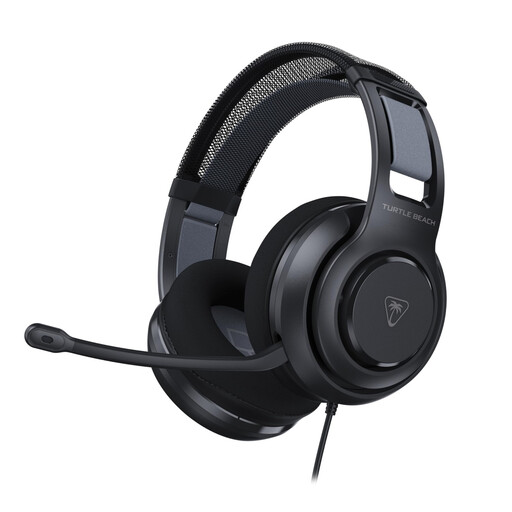 Image unavailable
Compare this wired PC model if you want a flip-up microphone that mutes when raised.
3,5mm connection and USB adapter included; memory foam ear cushions and self-adjusting headband.
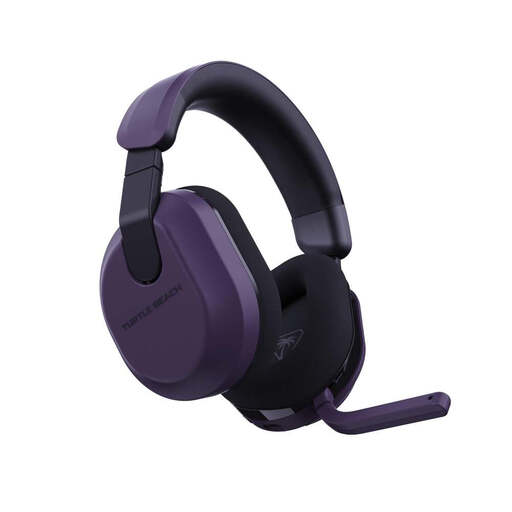 Image unavailable
A wireless gaming headset to compare if you also want to game on other listed devices. Check that its connection and monitoring options suit your recording setup.
Wireless connection via 2,4 GHz or Bluetooth 5.2; flip-up microphone to mute.
 Image unavailable
This model is described as being for office and call-centre communication. Make a test recording to see whether the microphone’s sound suits your character.
USB-A version and Bluetooth; the description lists an array of eight microphones.
 Image unavailable
A wired USB headset to compare if you need a USB connection and an adjustable microphone.
USB connection; adjustable microphone and headband.
Set the input level using your loudest line and keep the microphone in the same position during your test recordings. Audacity Support recommends around −6 dB as a target for the maximum peak on the recording meter. Listen back to your quiet lines too.
According to Audacity Support, software monitoring can cause a delay. If you want to hear yourself without this software delay, check whether your audio device supports direct hardware monitoring.
Not with the standard cable described by Audio-Technica: the microphone has a 3-pin XLR plug and the headphones have a 6,3mm plug. Your recording equipment needs to provide the required connections.
ACM ConsuWijzer explains that online purchases generally come with a statutory cooling-off period of up to 14 days after delivery, although exceptions may apply and should be checked for your specific purchase. If the product is faulty, the seller is responsible for the statutory guarantee; any manufacturer’s guarantee does not replace that responsibility.
Don’t assume that this is always allowed. The Dutch Data Protection Authority explains the conditions for processing and publishing personal data, including a limited exception for use solely for personal or household purposes. If other people are recognisable in the recording or you publish it, consider the purpose and the privacy rules that apply.