
Podcast creators comparing takes
You record the same intro in two languages several times and want to keep the microphone position and recording settings as consistent as possible between takes.


If you practise at a computer and want to re-record and listen back quickly, start with a wired headset that has the right connection and a microphone boom you can position consistently. For longer sessions, prioritise a comfortable fit; a broadcast headset with separate connections is best suited to a setup that already has compatible recording equipment. Call specifications don’t predict how a podcast recording will sound, so compare test recordings in both languages in your own space.
You record the same intro in two languages several times and want to keep the microphone position and recording settings as consistent as possible between takes.
You spend longer speaking and listening back. Fit, wearing style and easy-to-reach controls matter just as much as the microphone.
You’re comparing a computer headset with a broadcast headset and want to check whether the connections are compatible with your computer or recording equipment.
Best for: practising at a computer with a compatible USB port, without a separate microphone interface.
Bear in mind: the cable limits your movement; check whether the model uses USB-A or USB-C.
Best for: an existing recording setup with connections for both a microphone and headphones.
Bear in mind: according to Audio-Technica, the standard Audio-Technica BPHS1 has a 3-pin XLR connection for the microphone and a 6.3 mm plug for the headphones; check the exact model and cable.
Best for: hearing sounds around you while you practise.
Bear in mind: one ear remains uncovered, and the Shure BRH31M comes with different cable options, so you’ll need to check the connection.
| What to consider | What to look for | Who is this important for? |
|---|---|---|
| Consistent recordings | Check that the microphone boom is adjustable and can be positioned consistently in the same place. Record both languages with the same mouth position and settings. | Want to compare differences between takes without a repositioned microphone boom affecting the results? Around 33% of consumers prioritise comparable voice recordings. |
| Comfort | Compare on-ear, over-ear and single-sided models. Look for adjustability and, if possible, try the headset during a longer practice session. | When you’re repeating takes, you’ll want a style that stays comfortable. Around 27% of consumers give comfort during longer sessions top priority. |
| Sounds around you | Make a test recording where you’ll be practising, with your usual background noise. | If you mainly want to know how much ambient noise will end up in your recording, listen to both your voice and the background. Around 20% of consumers prioritise this consideration. |
| Live monitoring | Distinguish between listening back to recordings afterwards and hearing your voice while you speak. For live monitoring, check the signal path. | If you want to hear yourself while recording, headphone playback alone doesn’t confirm that direct monitoring is available. Around 13% of consumers give this top priority. |
| Connection | Compare the connections on your computer or interface with the headset’s full model number and cable. | If you use existing recording equipment, check in advance that the headset will connect to it. Around 7% of consumers put compatibility ahead of the other considerations. |
A claim about clearer calls doesn’t necessarily tell you how your voice and background noise will come through in a recording in your space.
Make a test recording with your usual background noise and listen back before choosing a headset based on a claim like this.
The standard Audio-Technica BPHS1 has separate connections for the microphone and headphones. These won’t necessarily fit your computer’s ports.
Before ordering, compare the model, cable ends and required inputs with your recording setup.
If you don’t have compatible inputs, you may need additional recording equipment.
Playing back a recording through the earcups afterwards is different from hearing your voice while you speak. Audacity warns that software-based live monitoring can cause audible delay.
Decide whether you need live monitoring and check the signal path for your headset and recording equipment.
The H390 is a wired computer headset for a simple USB setup. Compare the USB-A and USB-C versions separately.
The Evolve 20 range includes models to compare by mono or stereo sound and USB-A or USB-C connection.
The BPHS1 is a broadcast headset for setups with separate microphone and headphone connections.
The wired on-ear Blackwire 3320, model 8X220AA, is listed with USB-C and a USB-A adapter included.
The BRH31M is a single-sided broadcast headset for anyone who wants to hear the sounds around them while speaking.
This selection includes headsets for practising and listening back, with both wired and wireless models. Check that each model’s connection is compatible with your computer or recording equipment.
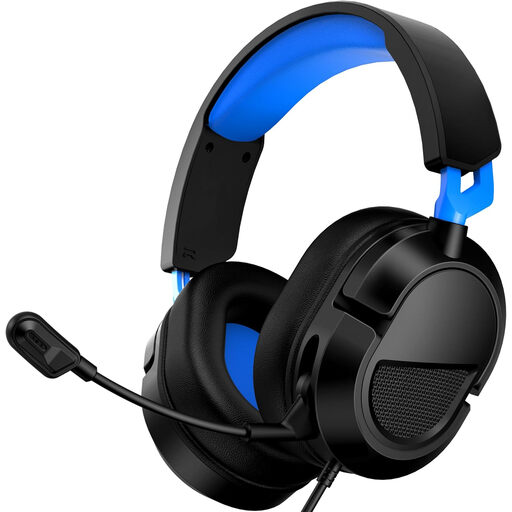 No image available
Worth considering if you’re looking for a wired gaming headset for a compatible device.
The product name lists PS5, Xbox Series X|S, Xbox One and PC; check that the connection works with your recording setup.
 No image available
A wired USB headset to consider if you record at a computer with a compatible USB connection.
The product name lists a USB headset in black; check your computer’s connection.
 No image available
A wired USB headset to compare if you use a computer setup with a compatible USB connection.
The product name lists the PC 960 model and a USB connection; check that it’s compatible with your recording equipment.
 No image available
A wireless stereo headset to consider if a wireless model suits your practice sessions.
The product name lists a wireless stereo model in black; check how it connects to your recording equipment.
 No image available
A stereo headset to compare if you also want to listen back to recordings while practising.
The product name lists model H150, the colour white and number 981-000350. Check the connection on your recording equipment and whether the required splitter is included.
No. Being able to play recordings through the earcups doesn’t prove that direct microphone monitoring is available. Audacity explains that software-based monitoring can cause audible delay; for live monitoring, check whether your recording equipment offers a direct monitoring route.
Try to position the microphone boom in the same place for every take. Shure recommends positioning the SM35 microphone at the corner of your mouth rather than directly in front of it to reduce plosive sounds; make a test recording to see how this works with your headset.
No. According to Audio-Technica, the standard BPHS1 has a separate 3-pin XLR connection for the microphone and a 6.3 mm plug for the headphones. Check whether your recording equipment has both connections; the BPHS1-XF4 has a different connection.
For online consumer purchases in the Netherlands, ACM ConsuWijzer says there is generally a 14-day cooling-off period from delivery, with some exceptions. You can also ask the seller for an appropriate solution if a product, under normal use, doesn’t do what you could reasonably expect. A manufacturer’s warranty doesn’t replace your statutory rights. Before opening the product, check whether an exception to the cooling-off period applies.